How do you catch a hwamei?
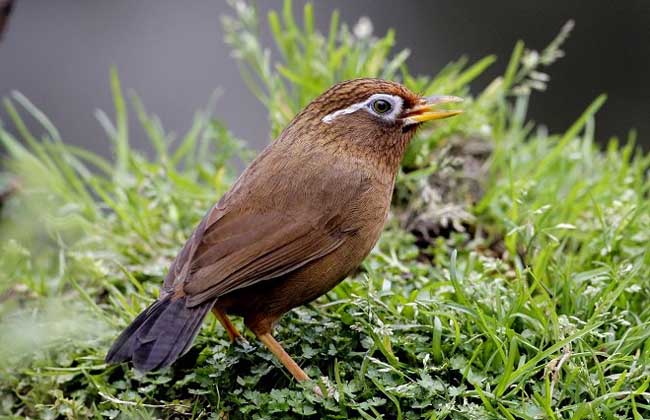
The hwamei is a famous song-type cage bird in China, and some are also kept for fighting. It is a bird of the genus Garrulax in the family Leiothrichidae, order Passeriformes, but it cannot yet be bred in captivity, so it can only be caught in the wild. There are many places in southern China that produce hwameis, and there are all kinds of capture methods. Let us take a look below at how to catch a hwamei!
Hwamei living habits
The hwamei lives in the mountainous forest areas south of the Yangtze River in China. It likes to fly through and perch in thickets, often forages in the grass under the forest, and is not good at flying long distances. It is omnivorous, but throughout the year its food is mainly insects, especially during the breeding season, most of which are agricultural and forestry pests, including locusts, stink bugs, pine caterpillars, scarab beetles, larvae of Notodontidae in Lepidoptera and larvae of other moths, etc. Its plant-based food is mainly seeds, fruits, grass seeds, wild fruits, strawberries, etc. During the breeding season, the parent birds catch large numbers of insects in order to feed the nestlings. In the non-breeding season, when insects gradually become scarce, they feed on various plant fruits, weed seeds or tender vegetables.
Catching adult hwameis
1. Snares: Use thin black nylon thread or horsehair to tie several slip nooses on a bamboo board. Each noose is about 3 cm in diameter, with a live insect set on it as bait, placed where hwameis often move about. In addition, the bird catcher hides nearby and blows a bird whistle to lure the male bird, or places a trained male bird near the snares to sing, so as to lure wild birds into the snares. Although this method saves trouble and money, the effect is not very good.
2. Glue: Apply prepared high-viscosity glue to the branches where hwameis often perch. When applying it, never strip off the leaves, and even more so never break the branches. Because the hwamei is very sensitive to the place where it perches, if it finds the branch abnormal, it will no longer perch there. After applying the glue, use whistles or a decoy bird to lure it.
Catching hwamei nestlings
1. The third to seventh months of the lunar calendar are the hwamei breeding season. They generally breed 2 times each year. From laying eggs to hatching to the chicks emerging from the shell, it takes about 19 days, and the nestlings are raised by both the male and female old birds. After 3 to 4 weeks the nestlings can leave the nest, but they need the parent birds to feed them until 6 to 7 weeks before they can fly and forage independently. The nest is generally built on small branches in bushes, bowl-shaped, woven from dry grass leaves and roots. It is coarse outside and fine inside, with an inner diameter of about 9 cm and a depth of about 8 cm. Each time 4 to 5 eggs are laid, light green, oval, weighing about 50 grams.
2. If you want to catch nestlings, you must pay attention to finding the nest and observing the time when the mother bird lays eggs. When you find an old bird flying with grass or insects in its beak, you can follow the direction it flies to search. In addition, if you find a lot of scattered bird droppings in bushes or near tree roots, you can also determine that there is a nest nearby.
3. After finding the nest and roughly grasping the egg-laying time, you can determine the capture time. It is generally best to catch nestlings about 15 days after they emerge from the shell. In order to protect the birds, it is best not to take all the nestlings away. You should pick out those with a large body shape, a triangular beak, large nostrils and a high nasal bridge, and leave the rest. But by all means do not turn things over casually, and do not damage the nest or the surrounding branches, trying as much as possible to keep them as they were.
4. If you find that the nestlings emerged from the shell too recently, you can go back to catch them a few days later. Before catching them, prepare the food for feeding the nestlings and the nestling nest. The nestling nest should be placed in a cardboard box or bamboo basket lined with cotton wadding or fine dry grass. Pay attention to keeping it warm, and do not move or shake it too much.
Note: The hwamei is a bird native to China. It is not only an important beneficial bird for agriculture and forestry, but also has a melodious, sweet and pleasant song, and can imitate the calls of other birds. It has long been kept by folk as a caged ornamental bird, and is known as the “king of the laughingthrushes” and famous at home and abroad. Therefore, every year large numbers are not only caught by folk for keeping and viewing, but also exported abroad in large quantities, causing the population to decline noticeably. Protection should be strengthened, and capture and hunting should be controlled.