A Detailed Guide to Silver Pheasant Breeding Techniques and Feeding Management Methods
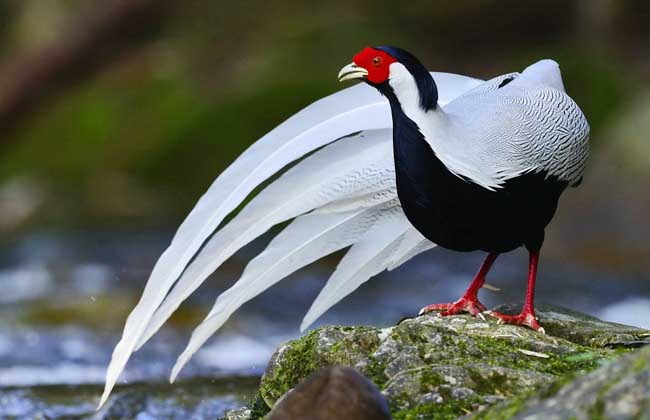
The silver pheasant, also known as the silver chicken, silver pheasant, Yue bird, Yue fowl, white pheasant, etc., is a large chicken-like bird of the genus Lophura in the family Phasianidae. The male has a total length of 100-119 cm, and the female 58-67 cm. In China it is mainly distributed in Guizhou, Yunnan, Sichuan, Hunan, Guangdong, Guangxi, Zhejiang, Anhui, Fujian, Jiangxi, Hubei, Hainan and other places. Let us take a look at the breeding techniques for the silver pheasant!
Domestic Distribution of the Silver Pheasant
In China, the silver pheasant is distributed in Guizhou, Yunnan, Sichuan, Hunan, Guangdong, Guangxi, Zhejiang, Anhui, Fujian, Jiangxi, Hubei, Hainan and other places. There are 9 subspecies distributed within China. The Rongjiang subspecies is distributed in northwestern Guangxi, southern Sichuan and within Guizhou; the western Yunnan subspecies is distributed in western Yunnan and other places; the northern Myanmar subspecies is only distributed in Lancang in southwestern Yunnan; the Shan State subspecies is distributed in western Yunnan; the southern Yunnan subspecies is distributed in southern Yunnan; the Emei subspecies is distributed in central and southern Sichuan; the nominate subspecies is distributed in southwestern Hunan, northern and central Guangdong, southeastern Yunnan and Guangxi, and may also be distributed in southeastern Guizhou; the Fujian subspecies is distributed across eastern Guangdong, southeastern Hunan, southeastern Hubei, and the vast areas of Jiangxi, Fujian, Zhejiang and southern Anhui; the Hainan subspecies is only distributed within 7 counties of Hainan.
Breeding Prospects of the Silver Pheasant
The silver pheasant is a national second-class key protected animal. It is not only a famous ornamental rare bird, but also has high medicinal value. A large-scale silver pheasant breeding farm requires many procedures, needs to be filed with the relevant departments, and also requires specialized technical personnel. In terms of market prices, young silver pheasants cost 100-150 yuan each, and adults 500-1000 yuan each. It has strong adaptability and can be raised throughout the country, so the prospects for breeding silver pheasants are very broad.
Morphological Characteristics of the Silver Pheasant
1. Male: The crest on the head and the underparts are blue-black, the face is bare and bright red, the upper body and both wings are white, and from the hind neck or upper back there is a dense pattern of "V"-shaped black markings. On the head there is a long, thick, dense black crest resembling hair, which drapes behind the head. The face is bare and bright red. The entire underparts are sooty black. The upper body and the long tail feathers behind the body are all on a pure white background densely covered with fine "V"-shaped black markings. What is especially distinctive is that the black markings on the tail feathers become smaller toward the rear and gradually disappear.
2. Female: The upper body of the female is brown or olive-brown, the crest is brown with a dark brown tip, the bare part of the face is small and bright red. The feather shafts of the back are paler and the edges darker; the flight feathers are brown, and the outer webs of the secondary flight feathers are dotted with black spots; the central tail feathers are brown, and the outer tail feathers are dark brown, densely covered with white wavy spots. The underparts are also brown or olive-brown, with slight black vermiculated markings behind the chest, and the undertail coverts are dark brown with white spots.
Living Habits of the Silver Pheasant
1. Social: Silver pheasants move in pairs or in small groups of 3-6, and in winter sometimes gather in groups of as many as 16-17 individuals. The group is composed of one strong male, several adult females, less strong or younger males, and young birds, with a strict hierarchical relationship within the group. Before the spring breeding season, fierce fights always occur.
2. Diet: The silver pheasant is omnivorous, mainly feeding on the tender leaves, young shoots, flowers, stems, berries, seeds, as well as roots and mosses of plants such as Castanopsis, raspberry, and passion fruit. Among these, the nuts of the South Asian castanopsis, Millettia, fern fronds, and Canna edulis are the most commonly eaten plants. It also eats animal foods such as click beetles, locusts, ants, earthworms, lepidopteran insects and larvae, beetles, ants, and snails.
3. Reproduction: The breeding season of the silver pheasant is April-May. Each clutch contains 4-8 eggs. The eggs are pale to brown and covered with white calcareous spots. Usually one egg is laid every other day. Incubation begins after the clutch is complete, and the incubation period is 24-25 days. The chicks are precocial and can leave the nest on the day they hatch to follow the parent birds.
Breeding Characteristics of the Silver Pheasant
1. Adaptability: The silver pheasant can adapt to various harsh climatic environments. Artificial domestication and breeding have gradually made it lose its unruly and wild nature, and it has a strong ability to adapt to flat rearing in netted enclosures.
2. Omnivorous: The silver pheasant has a wide range of feed sources. Depending on the season, it can eat plant leaves, roots, stems, fruits, as well as grains, beans, and insect larvae and eggs. It eats an average of 75 grams per day, and by May it can grow to 1-1.3 kg.
3. Reproductive ability: The silver pheasant lays eggs once a year, in March, with 2-16 eggs each time. The incubation period is 26 days. At a ratio of 1:5 (i.e., 1 male to 5 females), the fertilization rate of breeding eggs can reach 87%, and the hatchability rate can reach over 80%.
4. Disease resistance: As long as the rearing environment is kept hygienic, silver pheasants generally rarely become ill.
5. Easy to raise: After artificial breeding and rearing, the silver pheasant has lost its ability to fly well, so there is no need to worry about it flying away. A ventilated flat-rearing netted enclosure is sufficient.
Hatching Techniques for the Silver Pheasant
1. Natural incubation: In the cage, the female silver pheasant builds a nest on its own or uses an artificial nest to lay eggs and incubate. During incubation, the surrounding environment should be kept quiet. If frightened or invaded by enemies, the female's incubation will be affected. At this time, the male silver pheasant will make loud calls to draw the enemy toward itself and protect the female.
2. Artificial incubation: A fully automatic incubator can be used. Before incubation, breeding eggs should be screened and disinfected. The incubation temperature is 37.5-38.2°C, and the relative humidity is 55-65%. Turn the eggs once every 2 hours, with a turning angle of 90. After 18-19 days of incubation, the eggs need to be cooled, twice a day for 5-10 minutes each time, until the temperature feels slightly cool when tested with the eyelid. Two days before hatching, place them on the hatching tray, stop turning the eggs, and move the embryo eggs into the hatcher to wait for hatching.
Brooding Techniques for the Silver Pheasant
1. Temperature: After hatching, the chicks are moved into brooding pens and raised in groups, with 20 birds per group, using small-group rearing. Infrared lamps are used as the heat source for warmth. The starting temperature is 34-36°C, and then the temperature is gradually lowered as the days of age increase. At 30 days of age, the temperature is lowered to 28-30°C, at 60 days of age the temperature is 22-24°C, and afterward normal temperature can be maintained.
2. Light: Light can promote growth, stimulate and enhance gonadal development, and bring about sexual maturity earlier. For chicks 1-14 days old, light is provided for 24 hours, and for those 15-60 days old, light is provided for 12 hours.
3. Humidity: The suitable relative humidity for chicks is 50-55%. While ensuring temperature, proper ventilation should be provided to keep the air in the house fresh, but drafts should be avoided to prevent the chicks from catching cold.
4. Feeding: The hatchling weight of the chick is 27-28 grams. Twenty-four hours after hatching (before the first feeding), give an initial drink of 5% glucose water. Feed one hour after drinking. It is best to start feeding with breadworms, then feed with eight-tenths-cooked cornmeal mixed with cooked egg yolk. After 5 days, complete feed can be used, allowing free feeding, and small pelleted feed is suitable. Chicks are prone to B vitamin deficiency, so B vitamins can be added to the feed at 50 mg/kg. Cod liver oil, vitamin D, calcium, manganese, etc. can also be added to prevent leg bending disease. Green fodder should be washed and cut into thin strips before feeding.
5. Management: Brooding density can directly affect the survival rate, so partitions should be set up in the brooding box and divided into several small compartments, and then the chicks should be raised in groups according to size and strength. In particular, chicks that are prone to fighting and pecking should be separated to avoid pecking vice. When chicks with pecking injuries are found, they should be promptly cleaned and disinfected with 0.01% potassium permanganate solution, then coated with gentian violet or sprinkled with Yunnan Baiyao powder, etc., and raised separately. At about 1 month of age, beak trimming and wing trimming should be carried out.
Breeding Techniques for the Silver Pheasant
1. Breeding site construction: The shed for raising silver pheasants should be chosen in a quiet, dry, well-ventilated, well-drained place facing south. The cage is divided into an inner room and an exercise yard. The inner room is 8-12 square meters, and the exercise yard uses a cage-net structure and is 20-25 square meters. Nylon netting is best for the enclosure net to reduce collision injuries.
2. Preparation of daily ration: At present, there is no feeding standard in China for rare birds such as the silver pheasant. During the rearing process, the daily ration for silver pheasants is formulated according to their different nutritional needs at each growth and development stage and by referring to the daily rations of other rare birds, so as to achieve comprehensive nutrition, such as mainly using corn, soybeans, wheat, etc., then appropriately adding cooked egg yolk, breadworms, etc., and appropriately supplementing some green fodder.
3. Feeding during the breeding period: According to the different times of sexual maturity of silver pheasants, breeding silver pheasants should be well paired and appropriately grouped. The number of male silver pheasants in the same group should not be too many, and 2-3 is appropriate. To prevent fighting, eye masks can be put on the breeding silver pheasants so that the group can settle down as quickly as possible for mating and egg laying. Provide nest boxes for egg laying in advance, collect eggs promptly, and prevent breeding eggs from being pecked broken or secretly eaten by the silver pheasants. During the breeding period, the protein and calcium content in the daily ration should be increased to prevent soft-shelled eggs.
4. Feeding during the non-breeding period: In autumn, the temperature gradually decreases. At this time, the pheasant flock should be provided with nutritionally rich feed, and various vaccinations and internal and external deworming should be done well. Autumn is the best period for selling and selecting breeding silver pheasants. In winter, work should be done well in cold protection, warmth preservation and ventilation. Closed silver pheasant houses should have ventilation holes.