How much does centipede farming cost roughly?
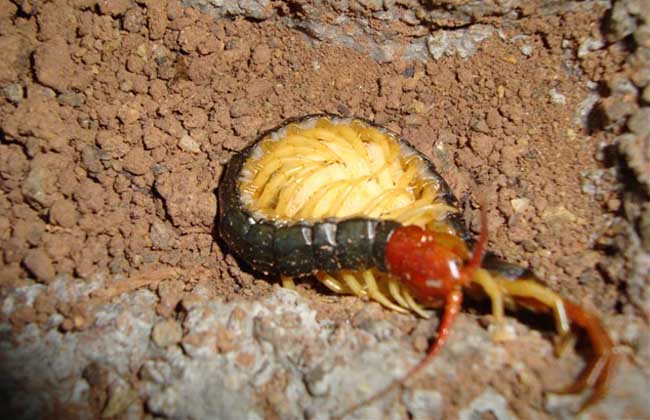
The centipede is a terrestrial arthropod, with a body made up of many segments, each bearing walking legs, which makes it a many-legged creature. Together with snakes, scorpions, spiders and toads, it is known as one of the "five poisons" and ranks first among them. It is commonly seen under bricks and stones in rural areas, and has relatively high medicinal value and farming prospects. Let us take a look below at how much centipede farming costs!
How much does centipede farming cost?
Centipedes have a very wide range of feed. Generally, animal offal, green vegetables, melons and fruit, and scraps from vegetable markets, restaurants and kitchens can all be used, so the cost is low. Taking yellow mealworm feeding as an example, 3 kg of rice bran raises 1 kg of yellow mealworms, rice bran costs 1.2 yuan per kg, so 3 kg costs 3.6 yuan, and 600 breeder centipedes eat an average of 60 g of yellow mealworms per day, totaling 0.216 yuan. The feeding cost per batch of breeders is 0.216 yuan × 90 days = 19.44 yuan; the feeding cost for 36,000 larvae (the total food intake of larvae is less than 1/2 that of breeders) is 19.44 yuan × 60 times × 0.5 = 583.2 yuan; the labor cost (1 hour of work per day) is 10 yuan per working hour × 90 days = 900 yuan; the average seed introduction fee is 1,200 yuan; the farming construction cost is 500 yuan; the drug and disinfection cost is 50 yuan. The total cost is 19.44 + 583.2 + 900 + 1,200 + 500 + 50 = 3,252.64 (yuan).
What is the farming profit of centipedes?
When centipedes are sold at 2 yuan each, the sale price of 36,000 centipedes is 72,000 yuan, and the profit is 72,000 - 3,252.64 = 68,747.36 (yuan). The above profit calculation is for each batch. If calculated at 4 rounds of indoor farming and breeding per year per batch, the annual profit is 68,747.36 yuan × 4 = 274,989.44 yuan.
What risks are there in farming centipedes?
1. Being subject to pharmaceutical companies: Demand for centipedes mainly comes from pharmaceutical factories, and they have little use elsewhere. Although overcapture in previous years consumed a great deal of wild centipede resources, it also increased the inventory of pharmaceutical factories. Many pharmaceutical factories have basically saturated demand for centipedes, and this situation will continue for some time, so farming centipedes at this time may not be very profitable.
2. Farming technology is difficult: When farming centipedes, there are certain requirements for temperature, humidity and farming facilities, and centipedes with high medicinal value grow slowly and have a long farming cycle. Investors must know the habits, mating and egg-laying times of centipedes like the back of their hand. These all require certain professional knowledge and practical experience, and a mistake in any link can ruin the earlier investment.
3. Preserving centipedes is relatively difficult: Usually the centipedes needed by pharmaceutical factories are bundled dried centipedes, which investors need to dry well before sale. During this period, dead centipedes are very prone to becoming infested with insects, and insect-infested centipedes fetch a low price, which undoubtedly further squeezes the profit margin of investors' centipede farming.
Summary: Farming centipedes requires care and caution. Without accumulated technical experience, investing relatively heavily in centipede farming projects carries relatively large risks.
What farming methods are there for centipedes?
1. Box farming: The farming box is made of wooden boards, and a size of 55 cm long, 45 cm wide and 30 cm high is more suitable. The inner wall of the box is lined with a layer of non-toxic plastic film, and an iron gauze box cover is fitted at the box opening. After the box is made, place it in a suitable position indoors; if there are multiple boxes, arrange them well. Place multiple layers of tiles at the bottom of the box, with a distance of about 1.5 cm between the tiles, and use cement to support the feet around the perimeter. Usually 5 to 6 tiles form one stack, so the gaps left between the tiles can provide habitat for centipedes. Before the tiles are put into the box, they must be washed clean with water and fully soaked so as to create a humid environment for the centipedes. Also, after a certain period, replace them with a batch of pre-made new tiles to keep them moist and clean.
2. Vat farming: Centipede vat farming usually uses ceramic vats, with a mouth diameter of 50 to 60 cm and a height of 80 to 100 cm. Place them in suitable positions indoors. Put a layer of crushed stone or broken tiles at the bottom of the vat, cover it with a layer of 30 cm thick fertile vegetable garden soil, level it slightly, and stack tiles on the soil surface in the same way as box farming. The topmost tiles should be about 20 cm from the vat mouth, and an iron gauze cover is used over the vat mouth to prevent the centipedes from escaping.
3. Pond farming: Pond farming is carried out by building ponds indoors or outdoors. The ponds are brick and cement structures, and the environment inside the pond must be warm, cool, humid and quiet. Indoor ponds are generally suitable at about 2 sq m each, rectangular, with a pond height of 50 to 60 cm. The inner walls are smoothed with cement without leaving any gaps, and are lined with agricultural film or inset with a ring of 20 cm wide glass at the upper part of the pond. The bottom of the pond is not paved with cement; first spread a layer of small clods of soil about 10 cm thick, then stack 5 to 6 layers of tiles on top, with 1.5 cm gaps left between the tiles for centipedes to inhabit and lay eggs and hatch.