How many legs does a centipede have? A guide to understanding centipede leg structure
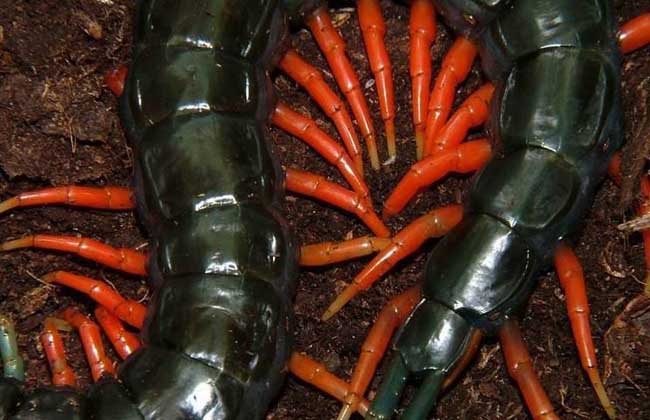
The centipede is also known as Tianlong, Baijiao, Wugong, Baijiaochong and so on. It is a terrestrial arthropod of the order Scolopendromorpha, family Scolopendridae. Its body is made up of many segments, each bearing walking legs. It is generally more commonly seen in rural areas, often in damp wall corners, under bricks, under rotting leaves, and in old, damp houses. Let us take a look below at how many legs a centipede has!
How many legs does a centipede have?
The centipede is a large chilopod myriapod, and like arthropods in general it is known for having many segmented appendages, usually with only 21 pairs of walking legs and 1 pair of maxillipedes. The "coin string" is a close relative of the centipede, scientifically named Scutigera coleoptrata (house centipede), and has only 15 pairs of walking legs and 1 pair of maxillipedes. The "stone centipede" (Lithobius) also has only 15 pairs of walking legs, and some centipedes have walking legs that are both numerous and short, with 35 pairs, 45 pairs, and at most 173 pairs.
How long is a centipede's lifespan?
A centipede's lifespan is only 6 years. After a centipede reaches sexual maturity, it generally mates in March to May and July to August on clear mornings after rain, and begins laying eggs after 40 days. The female centipede lays the fertilized eggs on her own back so they can hatch in time. Each female centipede releases eggs for 2 to 3 hours at a time, laying 30 to 60 eggs each time. The egg surface is rich in mucus, and the eggs stick to each other to form an egg mass. During the incubation period, the female centipede does not eat or drink until the young centipedes hatch, and then they grow into adults.
What do centipedes eat?
The centipede is a typical carnivore with a broad and varied diet. It is especially fond of eating various insects, such as yellow mealworms, crickets, scarab beetles, termites, cicadas, dragonflies, spiders, flies, bees, as well as their eggs, pupae, and larvae. It also eats li worms, earthworms, snails, and the meat, internal organs, blood, and cartilage of various livestock, poultry, and aquatic animals. It also eats fruit peels, potatoes, carrots, tender vegetables, and so on. Milk, bread, and the like can also serve as food for centipedes.
Is the centipede venomous?
The centipede is venomous. A bite from a small centipede causes only localized redness, swelling, and pain. A bite from a large tropical centipede can cause lymphangitis and tissue necrosis, sometimes with purple patches appearing on the entire limb, and in some cases headache, fever, dizziness, nausea, vomiting, and even delirium, convulsions, coma, and other systemic symptoms. A bite from a large centipede quickly produces intense pain; generally within 2 hours there is severe pain at the elbow joint, within 3 hours at the armpit, and after 4 to 5 hours there is a dull pain in the chest. However, there is no need to worry, as it generally does not cause a fatal risk, and the symptoms gradually disappear after 4 days. After a centipede bite, immediately wash the wound with soapy water, apply a cold wet compress to the wound locally, and you can also apply mashed Houttuynia cordata (fish mint) or dandelion externally. Those with systemic symptoms should go to the hospital promptly for treatment.