What Is a Centipede Afraid Of? A Rundown of the Centipede's Biggest Natural Enemies
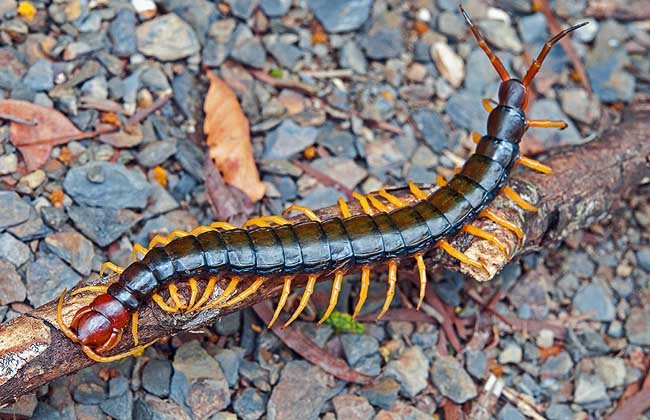
The centipede is a predatory terrestrial arthropod with venom glands, also known by names such as Tianlong, Baijiaochong, Shaqji Centipede, Wugong, and Jiiju. The common types include red-headed, blue-headed, and black-headed varieties. They are mostly found in damp wall corners, under bricks, under rotting leaves, and in old, damp houses. Let's take a look below at what centipedes are afraid of!
What animals are centipedes afraid of?
In nature, centipedes actually have many natural enemies. For example, roosters, which everyone knows about. In fact, insect-eating birds, mammals, reptiles, and amphibians all eat centipedes. Even scorpions prey on centipedes. There is another creature that everyone might find somewhat unbelievable, and that is the ant. Ants are also natural enemies of centipedes and are the greatest threat during the centipede's molting and hatching periods. When a centipede is molting, it has no ability to resist and its new skin is tender, which ants love. If a centipede encounters them, it is doomed. Therefore, when farming centipedes artificially, ants are also killed as an important pest.
What smells are centipedes afraid of?
1. Sulfur: Sulfur, also known as sulphur, colloidal sulfur, sulfur blocks, etc., appears as pale yellow brittle crystals or powder and has a distinctive odor. In production, sulfur is often processed into suspension concentrates for pest and disease control. It is safe for humans and livestock, does not easily cause crop damage, and is effective against centipedes.
2. Pyrethrins: Pyrethrins are a class of broad-spectrum insecticides capable of controlling many pests. Their insecticidal toxicity is 10 to 100 times higher than older-generation insecticides such as organochlorines, organophosphates, and carbamates. Their mechanism of action is to disrupt the normal physiology of insect nerves, causing them to go from excitement to convulsions to paralysis and death.
3. Dichlorvos: Dichlorvos is a broad-spectrum insecticide and acaricide. It has contact, stomach, and fumigant action. Its contact effect is better than that of trichlorfon, and it knocks down pests strongly and quickly, but it is toxic to humans and livestock, has relatively high toxicity to fish, and is highly toxic to bees. After spraying a diluted solution of dichlorvos on the floor and in the corners of a room, keeping the door closed for at least half a day has a good effect on driving away centipedes.
4. Lime powder: Lime powder is an air-hardening inorganic cementitious material mainly composed of calcium oxide. It is widely used in civil engineering. Sprinkle lime powder at doors and windows and in other places where centipedes might crawl in, because centipedes like damp environments.
What should you do if there are centipedes at home?
1. Remove moisture: Dampness is the environment centipedes like, so the most important thing at home is to keep things dry. Quicklime and similar materials can be used to remove moisture.
2. Remove dirt: Dirty places are where centipedes hide. Clean the home thoroughly, and the centipedes will naturally leave.
3. Place insect repellent: For example, insect-repellent medicines such as camphor balls. Place them in several spots such as wall corners and wardrobes to make the centipedes leave on their own.
4. Spray insecticide: Especially in corners, spray a little more to kill centipedes more effectively and keep them from coming back.
5. Leave no entry points: Centipedes come in from outside. We should try to avoid leaving passageways for them, which will also prevent centipedes from appearing.