How is the market for farmed toads? Read this market prospect analysis and you will understand
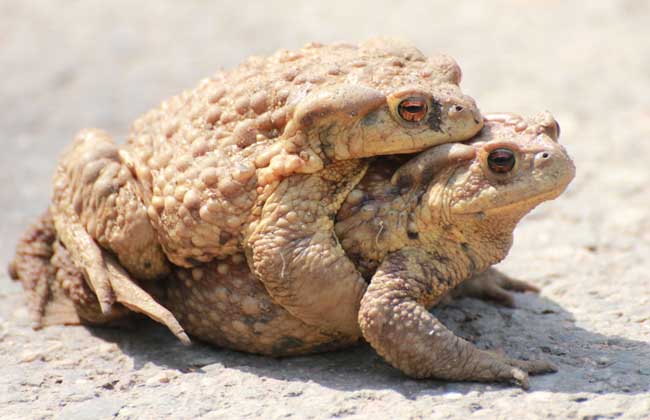
The toad is an economic animal with very high medicinal value. In China it is divided into two species, the Chinese toad (Bufo gargarizans) and the black-spectacled toad (Duttaphrynus melanostictus). Every part of it is treasure: toad venom (bufotoxin), dried toad skin, toad slough, toad head, toad tongue, toad liver, toad gallbladder and others are all medicinal materials, giving it extremely high farming value. But before farming, it is advisable to pay close attention to the market issue. Below let us take a look together at how the market for farmed toads is.
How is the market for farmed toads?
Toads are mainly used for medicine, and currently only pharmaceutical factories purchase them or actively go door to door to sell. On the market today, toad venom, toad slough, dried toad and the like are all slow-moving goods, with prices that are not particularly high and pitifully small shipment volumes. Taking the Anguo City traditional Chinese medicinal materials market as an example, the market price of toad slough is 0.5 to 2 yuan per piece, with annual demand of only a few hundred pieces; the market price of toad venom is 1800 yuan per kg, with annual demand of about 1 ton; the market price of dried toad is 5 to 6 yuan per kg, with annual demand so small it can be ignored. The small number of people buying toad slough is one reason, but more important is that a wild animal like the toad is protected by the state and cannot be caught casually; you must obtain a wild animal breeding permit before you can breed it.
Can farming toads make money?
1. Cost: 3000 toads of 100 grams each, purchased at 5 yuan per jin, totaling 3000 yuan. A breeding site for 3000 toads requires 1000 sq m, with site rent of about 1000 yuan, and plastic film around the perimeter to prevent escape, requiring about 500 yuan in funds.
2. Output value: A live toad can yield toad slough from April to October each year, shedding at least two sloughs per month. 3000 toads can produce 36000 pieces of toad slough over 6 months. Calculating at a single slough weight of 0.3 grams, this yields 10.8 kg of toad slough; at an intact-slough rate of 80%, this yields 8.46 kg of whole toad slough, at a minimum of 10000 yuan per kg, creating a value of 84600 yuan. It produces 2.16 kg of thin slough, at a minimum of 6000 yuan per kg, creating a value of 12960 yuan. That is, 3000 toads used for one year of collecting toad slough can profit 99360 yuan. If local toads are large in size and there are many wild toads, the benefit will be even higher.
Reasons why toad farming makes money
1. Simple technology: Toad farming technology is simple. The toad's feeding habits and behavior follow the same principles as raising frogs and raising fish, and the technology is easy to pick up. They can be farmed in paddy fields, in net cages, or under forest, without needing dedicated supervision, and can be managed in spare time.
2. No worries about site: Toad farming has no special requirements for the site. Idle rural old houses, abandoned factory buildings, courtyards, ponds, low-lying land, lotus root ponds, rice fields, cave dwellings, woods, vineyards, orchards, and greenhouse vegetable plots with mosquitoes, moths and other insects, and any dark, damp place will all do.
3. Wide range of bait: The toad's food is extremely wide-ranging. Ants, locusts, scarab beetles, cabbage caterpillars, ladybugs, earthworms, mosquitoes, flies and other insects are all fine. You can use fluorescent lamps to attract insects, or place garbage, pig and cattle manure and other organic matter in the site to raise earthworms and lure flies to breed maggots.
4. High reproduction rate: The toad has a high reproduction rate, with each toad laying 3000 to 5000 eggs, and under artificial farming conditions the survival rate is extremely high, making it very suitable for artificial large-scale farming.
5. Quick results: You can directly farm adult toads to collect medicinal materials, and see benefits in the same year. From tadpole to adult, they can be collected in one year, with substantial profits.
6. Strong adaptability: The toad has very strong adaptability and can be farmed in both the south and the north. Its characteristic of being free of pests and diseases makes toad farming a completely risk-free farming project.
7. Very high value: The toad is an economic animal of extremely high medicinal value. The white milky liquid secreted by the parotid glands is called “toad venom” and can treat heart failure, stomatitis, pharyngitis, sore and swollen throat, skin cancer and others, as in Liushen Pills, Toad Venom Lozenges, Toad Musk Heart-Saving Pills, toad venom, Shasyao Toad Venom Pills, Su Analgesic Plaster and others. The keratinous slough that the toad naturally sheds is called toad slough, and it has a miraculous effect on treating tumors and cancers and similar diseases.
8. Huge market: The unique medicinal components of the toad, toad venom and toad slough make them the best cancer-prevention products at this stage. Wild toads are being caught by humans, and their medicinal and edible value is constantly being tapped, causing sharp declines, which has brought unprecedented development opportunities to artificial toad farming
9. High return rate: Every part of the toad is treasure; live toads, dried toads, toad venom and toad slough are all treasure. Toad venom sells for more than 10000 yuan per kg, and a toad can shed at least two sloughs per month. 2000 toads over a 6-month farming period can produce 24000 pieces of toad slough, with a single piece weighing 0.6 grams and selling for as much as 10000 yuan per kg. Dried toads and live toads are also delicious delicacies in high-end hotels, sold through multiple channels, with an extremely high return rate!