How to kill leeches? These eradication methods are simple and effective
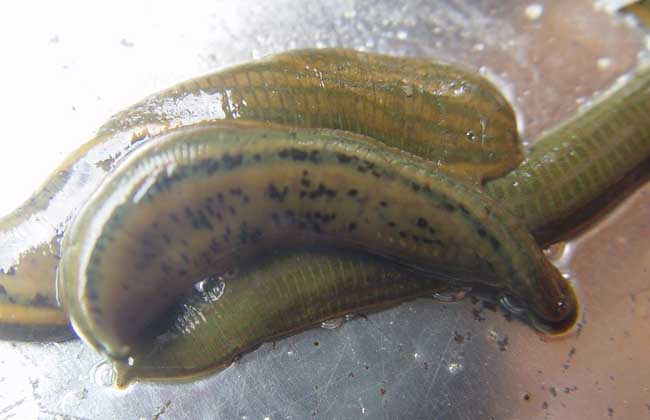
The leech is commonly known as shuizhi (bloodworm), mostly living in fresh water, with some terrestrial and amphibious species, and a few living in salt water; there are species that live by sucking blood or body fluids, and also carnivorous species that prey on small animals. The leech commonly seen in rice fields is called the Japanese medical leech (Hirudo nipponica). Let us take a look below at how to kill leeches!
What should you do if a leech bites you?
When a leech is biting you, never pull it off with your hands, because a leech has two suckers, and doing so may very likely backfire, making it suck even tighter, and at the same time pulling hard will make its mouthparts break off under the skin, causing infection. There are many ways to remove a leech: you can pat your arm, thigh or other bitten area, and this vibration will make the leech drop off; applying concentrated salt water to the leech's body is a common method. In addition, you can also apply soapy water, tobacco oil, liquor, vinegar, etc. to the leech's body, and it will quickly fall to the ground.
How do you kill leeches over a large area?
The most effective and pollution-free method for killing leeches over a large area is to spread dry lime powder. Killing them with highly toxic pesticides is very effective, but pesticide residues will affect the people farming and the plants grown afterward. Using low-toxicity, low-residue "DDVP" has effects that are not very ideal, so lime is the most reasonable eradication method. When a leech's body is contaminated with lime powder, it will rot and die, and in alkaline water bodies containing lime it will also die from physiological acid-base imbalance. The strong alkalinity of lime can only be maintained for a short period of time; after killing the pests it will spread and become diluted, and after dilution it also has a very good effect on improving strongly acidic old marsh soil.
What are leeches most afraid of?
The leech is a mollusk and has no skin protection. Skin is an animal's first protective barrier, and because it has no skin it is extremely sensitive to salt. After salt is sprinkled on a leech, the salt forms highly concentrated salt water with its body fluids. The highly concentrated salt water causes it to contract in a stress response, prompting its internal body fluids to seep out, leading to dehydration and death. So, after being bitten by a leech in the wild, do not panic. Drip highly concentrated salt water onto the leech's body, and it will quickly release its suckers, drop off and die from water loss.
What are the natural enemies of leeches?
The leech has very strong vitality and can grow in ponds, lakes, small streams and seedling fields, and it has no diseases. There are many animals that can kill leeches, such as crayfish, fish, rice-field eels, rodents and dragonfly larvae, etc., as well as snakes such as cobras, and frogs also eat leeches thanks to their powerful stomachs; some water birds also eat leeches, such as cranes.