Are Crocodiles Protected Animals? A Comprehensive Guide to Their Protection Status
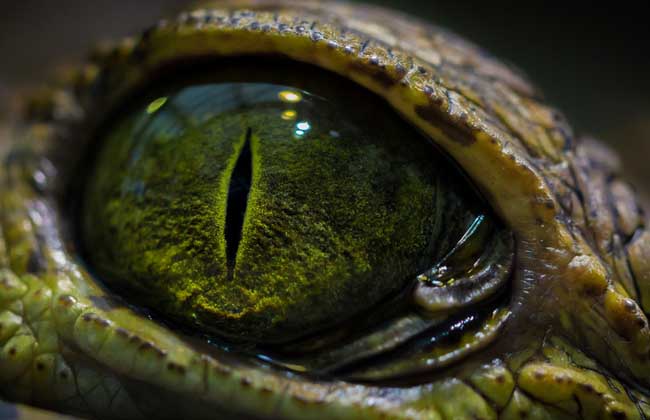
Crocodiles are one of the earliest and most primitive animals ever found alive. They appeared in the Mesozoic Era from the Triassic to the Cretaceous (about 200 million years ago), in the same era as dinosaurs. There are 23 recognized crocodile species, and they are wild animals of extremely high ecological, scientific, and economic value. Let's take a look below at whether crocodiles are protected animals!
Are crocodiles protected animals?
Crocodiles are protected animals. The Chinese alligator, the American crocodile, the South American caiman, the Amazon caiman, the narrow-snouted crocodile, the sharp-snouted crocodile, the intermediate crocodile, the Philippine crocodile, the Peten crocodile, the Nile crocodile, the gharial, the saltwater crocodile, the rhombifer crocodile, the Siamese crocodile, the alligator, the Malayan crocodile, the fish-eating crocodile and others are endangered wild fauna and flora species. They are internationally important protected species and are listed in Appendix I of CITES (the Convention on International Trade in Endangered Species of Wild Fauna and Flora), which prohibits their international trade.
What do crocodiles eat?
Crocodiles live in freshwater (the saltwater crocodile can live in seawater). Apart from a few that live in temperate regions, most live in rivers, lakes, and water-rich swamps in tropical and subtropical regions, and some live in shallows near the coast. Crocodiles are carnivorous animals, mainly feeding on fish, waterfowl, hares, deer, frogs, and so on. They have a strong chewing force and can crush hard shells. They usually mate in May to June, lasting several hours, while fertilization takes only 1 to 2 minutes. They lay eggs in July to August. The male crocodile monopolizes the territory and drives off intruders, and one male keeps a group of females.
Current population status of crocodiles
1. Indian gharial: The Indian gharial is on the verge of extinction. There are still a certain number in breeding farms in India, but breeding records in zoos are very rare.
2. Malayan crocodile: The Malayan crocodile is an endangered animal. It can be successfully bred in breeding farms in Thailand and at the Bronx Zoo and Miami Zoo in the United States.
3. Orinoco crocodile: The Orinoco crocodile has never been bred in zoos, but it can be bred in some private breeding farms.
4. American crocodile: The American crocodile is the most widely distributed and numerous of the crocodile subfamily in the Americas, but it is still an endangered species.
5. Cuban crocodile: The Cuban crocodile is an endangered species protected by government law. It can be bred in some zoos in the United States and in breeding farms in the United States and Cuba.
6. Morelet's crocodile: Morelet's crocodile is an endangered species. Although it is protected by law, it is still widely poached. It has already been successfully bred in some zoos.
7. Nile crocodile: Some populations of the Nile crocodile are listed as endangered, and some as vulnerable.
8. African slender-snouted crocodile: The African slender-snouted crocodile is an endangered species. It has been successfully bred at the Miami Zoo in the United States.
9. Marsh crocodile: The marsh crocodile is a vulnerable species. It is bred in relatively large numbers in zoos in India.
10. New Guinea crocodile: The New Guinea crocodile still has a fairly large population and is a vulnerable species. It can be bred in breeding farms.
11. Philippine crocodile: The Philippine crocodile is an endangered species, with only about one hundred left in the wild.
12. Siamese crocodile: The Siamese crocodile may already be extinct in the wild, but the number in captivity is still relatively large, and it can hybridize with the saltwater crocodile.
13. Saltwater crocodile: Although the saltwater crocodile is widely distributed, it is severely threatened due to the crocodile skin trade and is listed as an endangered species. It is also widely kept in captivity and can be bred in many zoos and breeding farms.
14. Australian freshwater crocodile: Although the Australian freshwater crocodile is threatened by poaching, it is relatively strictly protected. It is a vulnerable species, and it also breeds in large numbers in breeding farms.
15. African dwarf crocodile: The African dwarf crocodile is a moderately threatened or endangered species. Although it can breed in captivity, no breeding farms have yet been established.
16. Mississippi alligator: The number of Mississippi alligators has increased, and there is also a large amount of captive breeding, with the total reaching one million. It is no longer a threatened species.
17. Chinese crocodile: The Chinese crocodile, commonly known as the Chinese alligator, is an endangered species, with only a few hundred left in the wild, mostly concentrated in the Yangtze River, but the number in captivity is still fairly large. Apart from China, some zoos and breeding farms such as the Bronx Zoo in the United States have also bred it successfully.
18. Spectacled caiman: Two subspecies of the spectacled caiman are listed as endangered, and the others as vulnerable. It can be bred in captivity in many places. In Florida in the United States, some individuals originally introduced as pets escaped and can form small populations in parks and even drainage ditches.
19. Broad-snouted caiman: The habitat of the broad-snouted caiman is in areas of South America with high population density, and it is seriously threatened by human activities. It is an endangered species.
20. Paraguay caiman: Some scholars consider this species to be a subspecies of the spectacled caiman.
21. Dwarf caiman: The skin of the dwarf caiman is not suitable for use, and its existing population is still relatively large, so it is not a threatened species.
22. Smooth-fronted caiman: Like the dwarf caiman, the skin of the smooth-fronted caiman is not suitable for use, so its existing population is relatively large and it is not a threatened species.