Is hedgehog farming real? You'll understand after reading this
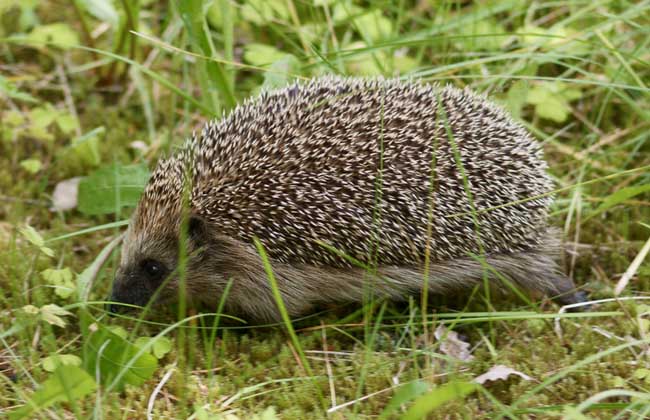
The hedgehog is also known as the hedgehog ball, hedgehog rat, melon-stealing badger, spiny one, etc. Its whole body is a treasure: the quills, fat, and meat are all valuable traditional Chinese medicines, with effects such as lowering qi and relieving pain, and can treat stomach disease, kidney disease, breast disease, hemorrhoids, burns, scalds, and stop bleeding and dispel leakage. The brain, heart, liver, gallbladder, and kidney can all be used as medicine, and the skin has even higher medicinal value. Let's take a look below at whether hedgehog farming is real!
Is hedgehog farming real?
Hedgehog farming is real. The hedgehog is a small medicinal animal with high economic value, can be farmed on a large scale, and there are quite a few such farms in China. The hedgehog is a precious wild economic animal used both as medicine and as a delicacy. As living standards rise for residents in coastal open areas and in large and medium-sized cities inland, demand for game meat is growing, while wild resources are shrinking sharply and supply falls short of demand, causing a prominent contradiction between market supply and demand. Therefore, developing hedgehog farming is of great significance for enriching residents' "food baskets," and the prospects for artificial hedgehog farming are broad.
Is the hedgehog a protected animal?
The hedgehog is a protected animal. As a protected wild animal in Beijing, the common hedgehog has become one of 136 species of second-class protected animals and is protected by law. This species has been included in the "List of Terrestrial Wild Animals under State Protection that Are Beneficial or of Important Economic or Scientific Research Value," issued by China's State Forestry Administration on August 1, 2000. Illegal hunting and killing or trading of wild animals under state protection will be subject to legal sanctions.
What certificates are needed for hedgehog farming?
To farm hedgehogs, you need to obtain a "Wild Animal Domestication and Breeding License" and a "Wild Animal Business License" from the forestry department. Without these two certificates, sales and transport are illegal, and once caught, the animals will be confiscated, fines imposed, and even criminal sentences handed down. In addition, farms selling special animals must also have an "Animal Epidemic Prevention Qualification Certificate" issued by the animal husbandry department; otherwise they violate regulations, the products cannot be used for breeding, and there will be problems in future production and sales.
What risks are there in raising hedgehogs?
1. Hedgehog farming requires a relatively large site (each pair of breeding hedgehogs needs at least 1.5 sq m of rearing space; generally a 100 sq m shed is suitable for raising 30 to 50 animals), and it needs to be in a relatively quiet place far from human disturbance.
2. Hedgehog farming requires a certain amount of breeding experience. Before preparing for large-scale farming, it is best to have some technical accumulation. Do not start large-scale hedgehog farming after just reading a few books or watching farming videos; the chance of success is very small and the chance of losing money is very large.
3. To obtain relatively high hedgehog farming profits, it is best to find a buyer for hedgehog skins and to develop a market for selling hedgehog meat.
4. Wild hedgehogs are second-class state-protected animals, and farming hedgehogs requires obtaining a "Wild Animal and Product Business License"; otherwise slaughtering or selling them may be illegal.