Are Hedgehogs Easy to Keep? Analysis of the Difficulty of Raising Hedgehogs
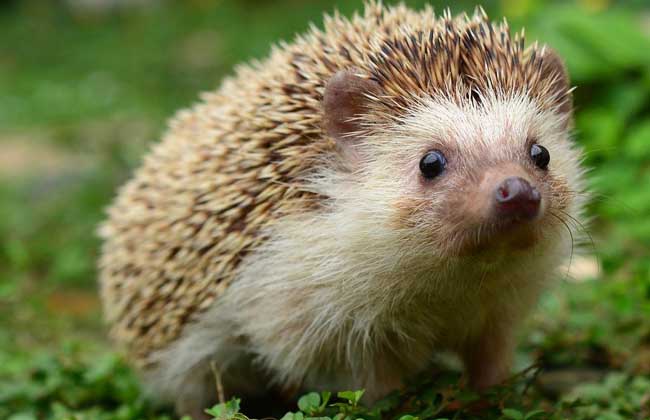
Hedgehogs belong to the order Erinaceomorpha among mammals and are heterothermic animals. The common hedgehog inhabits mountains, forests, grasslands, farmland, shrubland and other places. The most widespread is the "European hedgehog," which is widely distributed across Europe and northern Asia, and is also widely distributed in northern China and the Yangtze River basin. Let's take a look below at whether hedgehogs are easy to keep!
Are Hedgehogs Easy to Raise?
Hedgehogs are easy to raise. Hedgehogs have strong adaptability, suffer from fewer diseases, have no infectious diseases, will not bite people at random, and generally can live 4 to 7 years. As long as feeding management and hygiene measures are proper, they rarely get sick, and they can generally be treated with the corresponding human medications. Moreover, hedgehogs are not strict about their environment and can be kept on balconies, in courtyards, abandoned houses, open spaces, etc. It is enough to build a nest for the hedgehog and spread dry grass, pine needles or straw inside the nest.
What Do Hedgehogs Eat?
Hedgehogs are active at night and mainly feed on insects and worms. They can eat 200 grams of insects in one night, and they also eat young birds, bird eggs, frogs, lizards, etc., and occasionally eat crops. Every year from April they begin mating and breeding, with one litter per year. Newborn young have sparse, soft hair on their backs, but after a few days it can gradually harden and become spines. After winter begins, they enter hibernation and must sleep for a full five months before they are willing to come out and be active again.
Hedgehog Farming Techniques
1. Building the enclosure: The hedgehog enclosure should preferably be built on one side of a courtyard, or in a quiet spot at the base of a wall or behind a house. When building the enclosure, first use bricks or stones to build a small plot, with a wall height of 0.8 m. Then build a small house of 5 to 6 sq m in the plot. The roof and surroundings of the house must be tight and not leak rainwater, and some soft dry grass, leaves and other materials should be spread inside the house for use as a nest. On the open ground outside the house, build some mounds of earth or place some loose stones, tiles, bricks and other items, and a small rockery can also be built for activity, foraging and resting. The size of the plot and the number of houses should be determined according to the number being raised.
2. Catching and taming: Hedgehogs like to crawl out at dusk to look for food and return to hide in dark places the next morning, so they can be caught every morning and evening. After being caught, put them into the already-built enclosure and house for raising. Hedgehogs have very strong adaptability and will not have their mood or food intake affected by a change of residence. When feeding hedgehogs, a little table salt should also be added. Feeding once every evening is enough, but the amount fed each time should be appropriate. Under normal circumstances, the feeding amount is about 25 grams for a small hedgehog, about 50 grams for a medium hedgehog, and about 100 grams for a large hedgehog.
3. Mating and breeding: Hedgehogs generally reproduce by natural mating. During estrus, the female hedgehog appears restless, crawls back and forth, and has secretions from the genital area. After 30 days of pregnancy, body weight increases noticeably, and at around 50 days she appears very clumsy, and the genital area will become edematous. Before giving birth, she looks for grass to make a nest, and gives birth after 60 days of pregnancy. Each female generally gives birth to about 5 young, with a maximum of up to 8. The survival rate of the young is extremely high, almost reaching 100%, and their vitality is extremely strong. Newborn young have smooth bodies and weigh about 15 grams. At about 15 days after birth they open their eyes, at about 25 days they grow teeth and can walk, and at about 35 days they can eat food. The lactation period is 60 days. At about 100 days of age, the young can weigh about 350 grams. This period is the fastest period of growth and development for hedgehogs, so careful management and strengthened feeding are needed to lay a good foundation for improving the quality of the hedgehog skin.
4. Disease prevention and treatment: Common diseases of hedgehogs include gastroenteritis, ringworm and ascariasis. Hedgehogs suffering from gastroenteritis have dull spines, weak walking, diarrhea and refusal to eat. The amount of feed can be reduced, and oxytetracycline can be fed, with 1 tablet crushed and mixed into the feed per hedgehog per time, fed 3 times a day. Gentamicin can also be injected, with 25,000 units injected intramuscularly into the buttock each time. Hedgehogs suffering from ringworm shed white scaly skin. Ringworm ointment or skin-lightening ointment can be applied externally, or tobacco shreds can be soaked in vinegar for 24 hours and then trichlorfon (crushed and mixed in) added to apply to the affected area. Hedgehogs suffering from ascariasis have poor appetite and are sleepy and weak. Piperazine can be fed, 2 times a day, 1 tablet each time, for 2 consecutive days. Hedgehogs not suffering from ascariasis should also be dewormed twice a year to ensure healthy growth and improve reproductive capacity.