What is the simplest way to raise earthworms
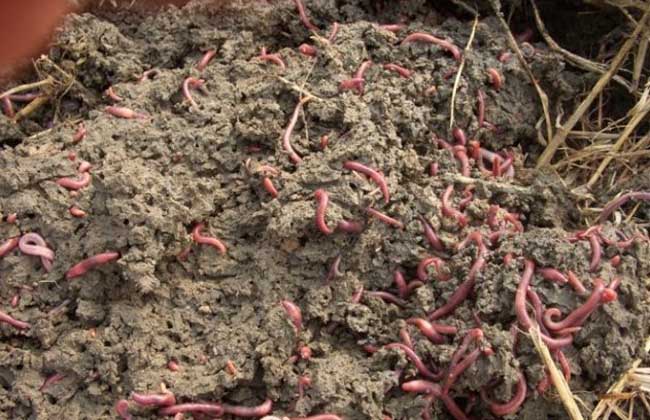
Earthworms are any of the terrestrial annelids in the class Oligochaeta, especially the various widely distributed, gradually tapering, segmented, hermaphroditic earthworms of the family Lumbricidae. More than 2,500 species of earthworms are known today, and in 1837 the biologist Darwin called them the most valuable animals on Earth. Let us take a look below at the simplest earthworm farming method!
Choosing a farming site
Artificial earthworm farming requires simple equipment and is easy to manage. Generally, the space in front of and behind a house, vacant courtyard land, old wooden boxes, waste buckets, pots and jars, bamboo baskets, brick pits, seedling hotbeds and the like can all be used to raise medicinal earthworms. Earthworms can also be raised in combination with vegetable fields, orchards and nurseries, allowing dual use and profit.
Choosing the farming species
Choose different earthworm species according to different regions, different needs and different conditions. Generally, choose species that are easy to raise and easy to breed and that suit the local soil and climate conditions. For example, in areas with many vegetable gardens, orchards and nurseries, blue earthworms (Metaphire species) can be chosen for farming, combined with field planting for dual use, which can both improve the soil and increase fertility, promoting higher plant yields, and also harvest earthworm animal protein feed. If the area has many old houses, much wasteland and little land, as well as for urban residents, red earthworms can be chosen for farming, using spare time or auxiliary labor and organic waste for feeding.
Indoor earthworm farming
1. Box farming method: Boxes, baskets, basins, jars, buckets and so on can be used. This is suitable for raising earthworms of the genus Eisenia, such as Eisenia foetida, and the red earthworms introduced from Japan such as Daping No. 2 and Beixing No. 2. Earthworms of this genus like to live in rotten grass, compost, horse and cow manure, and decaying dead branches and fallen leaves, rotten vegetables, melons and fruit, as well as the waste residue from papermaking, fiber and food processing plants and household garbage. Of course, the above organic matter, garbage or horse and cow manure must first be piled and fermented, and only after the temperature drops can it be used as the base material for raising earthworms. Put the base material into wooden boxes, bamboo baskets, porcelain basins or brick pits, then put in the earthworms and they can be raised. During the raising period, spray water frequently to maintain a humidity of 60-70%, and cover with straw mats, straw curtains and old burlap sacks to shade the light. They can grow normally at temperatures of 13-28°C.
2. Pit farming method: Earthen pits, brick pits, old pig pens, under eaves, at the foot of walls, in corners of rooms - any available place can be built into a farming pool with bricks and stones. Besides Eisenia species, this is also suitable for raising blue earthworms. The depth of the earthen pit or brick pool is generally 50-60 cm, and the area depends on need. Fermented feed is added in layers inside the pit or pool. First add 15-20 cm of base material to the bottom layer, spread a layer of 10 cm of soil on top, and then the earthworms can be introduced for farming. If there are many earthworms, add another 10 cm layer of feed on the soil, then cover with another 10 cm of fertile soil. Blue earthworms require the soil humidity to be maintained at about 30%. Old pig pens can also be converted into farming pools for stocking.
Field stocking of earthworms
1. Mulberry plantation farming method: Generally choose a mulberry plantation with relatively flat terrain that can be irrigated and drained. Dig trenches 40 cm wide and 20-25 cm deep along the rows between mulberry trees, add initially decomposed organic fertilizer such as horse and cow manure, straw, weeds, pig and sheep manure, dead leaves, rotten grass and so on, adding about 5,000-7,500 kg of organic material per mu, cover with 10-15 cm of soil on top, and put in breeder earthworms for farming. The stocking number depends on the earthworm species and individual size. Green manure or green feed can be planted between the rows, and a drainage ditch should be opened every 5 rows. The water content should be maintained at about 30%.
2. Feed field farming: This can be done in fields planted with comfrey (Symphytum), broad beans and other perennial green feed. When farming, choose a level feed field and open an irrigation and drainage ditch every 10 rows. Between the comfrey rows, dig trenches 15-20 cm wide and 15-20 cm deep, apply organic feed in the trenches, cover with about 10 cm of soil on top, and then blue earthworms can be put in for farming. Always pay attention to irrigation or drainage, and maintain the soil water content at about 30%.
3. Vegetable garden farming method: Vegetable gardens have sufficient water and fertilizer and are carefully managed, which is most conducive to the growth and reproduction of earthworms. In a vegetable garden used for raising earthworms, apply 7,500-10,000 kg of high-quality organic fertilizer or decomposed rotten vegetables, garbage and so on per mu. After the vegetable seedlings emerge, put in breeder earthworms for farming. In vegetable garden farming, the application of chemical nitrogen fertilizer and certain pesticides should be reduced. Mature earthworms can be harvested in stages along with vegetable management.
4. Orchard farming method: Using the vacant land under fruit trees to raise earthworms both makes full use of the land and promotes fruit tree production. For raising blue earthworms, the method is similar to the mulberry plantation farming method. For raising Eisenia foetida (red earthworm), pile decomposed cow, horse and pig manure under the fruit trees along the tree rows in beds 1.5-2 m wide and 0.4 m high as earthworm farming beds, leave a walkway between each farming bed, and open a drainage ditch every 2 farming beds. Cover the feed surface of the farming bed with rice straw or wheat straw. Maintain humidity at 60-70%. On rainy days, cover well with plastic film to prevent soaking by rainwater.
5. Air-raid shelter farming: Urban air-raid shelters are basements, warm in winter and cool in summer, with relatively high surrounding humidity, suitable for raising red earthworms. The farming method is the same as box farming and pit-pool farming. A lamp can be lit at night, which both prevents escape and provides a certain light source beneficial to earthworm growth.
Factory-scale farming
1. Feed processing area: The feed processing area includes space for piling and fermenting feed or sorting and crushing it. The size depends on the scale.
2. Farming workshop: A brick-and-wood structure or a plastic greenhouse can be used. The temperature is controlled at 18-28°C. For temperature control equipment, in winter a boiler heating system, solar water heater or waste heat from other factories can be used for insulation, and in summer measures such as ventilation, spraying water and reducing the size of the farming piles can be used to lower the temperature. The width of the farming workshop is preferably 4-5 m; a plastic greenhouse is about 7 m wide, and the length depends on need, such as 30 m, 60 m or 100 m, with a height of preferably 2 m.
3. Farming bed: The width is preferably 1.5 m. Build a low wall 40 cm high on one side, and set a small ridge 10 cm high on the side near the walkway. The bed surface should be slightly sloped, higher on the inside and slightly lower on the outside, to help discharge excess water from the feed. Around the farming bed, set a water trough 25 cm wide and 25 cm deep for drainage and to prevent harm from rodents and ants. Leave a 1.2 m walkway between two beds.
4. Feed fermentation pool: Inside the farming workshop, a feed fermentation pool can be set on the outer side of two beds. In winter, fresh horse, cow and pig manure can be put in, using fermentation heat to raise the greenhouse temperature; in summer it is used as a cocoon incubation bed.
5. Farming density: For raising earthworms with cow manure, the number of breeder earthworms should be controlled at within 10,000 per square meter. The producing earthworm population is 3 kg per square meter (20,000-31,000 worms); in the early stage, young earthworms number 30,000 per square meter, and later this drops to 20,000.
6. Timely supplementary feeding: Usually in about 20 days the earthworms can turn all the pig manure into vermicompost, at which point feed needs to be added. When adding feed, new material can be spread over the original feed. Determine the amount added according to the earthworms' food intake. The feed should be spread evenly, then add rice straw and water frequently to keep it moist.
7. Reasonable watering: In the process of raising earthworms, to ensure normal growth of the earthworms, especially in summer, water at least once a day. The water must not be polluted, and the water flow should not be too large. Be sure to water thoroughly so that the upper and lower layers of material connect. It is best to water in the early morning or evening when the temperature is lower.