What Kind of Animal Is the Alpaca? Understanding Alpaca Species Classification and Characteristics in One Article
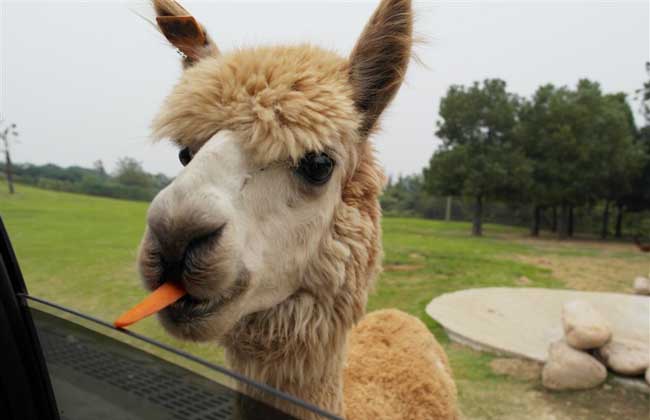
The alpaca, also known as tuoyang, caonima and so on, is an animal of the order Artiodactyla, family Camelidae. It is gentle in temperament, clever and responsive to people. Besides wild species, there are also a considerable number of domesticated breeds, widely used by Indigenous peoples as pack animals. Caonima is one of the top ten mythical beasts spoofed by Chinese netizens, and its prototype is the alpaca native to South America. It originated from the Baidu World of Warcraft forum, and the top ten mythical beasts, including caonima, were first published on Baidu Baike, after which they quickly went viral and spread widely in chat rooms and forums.
The alpaca has a slender body and neck. The head is small, and the ears are large and pointed. The fur coat is uniform or multi-colored. According to statistics from the "Alpaca Owners and Breeders Association," alpacas come in as many as 22 colors, from white to black and brown. In adult males, the upper and lower incisors and canines develop into fighting teeth or fangs that can reach 3 cm in length. In females, these teeth develop no less than in males. Apart from differences in tooth morphology, sexual dimorphism in alpacas is not obvious.
The alpaca's head resembles a camel's, with a raised bridge of the nose, upright ears, a slender neck and no hump. The fiber is long and crimped, with fiber length reaching 20-40 cm, fineness reaching 15-20 microns, and a lustrous quality; it can form large crimps, draping in waves along the alpaca's sides, soft and elastic. The tail characteristics are distinctive, and the body size is relatively large. An adult male alpaca stands 90-100 cm at the shoulder, has a body length of 200 cm, and can reach a body weight of 75 kg, while a female alpaca can reach a body weight of 65 kg.
The alpaca is native to central Peru in the Andes at altitudes of 3,000-6,500 m in the upper Amazon River region. It was once widely distributed across the South American continent, from the tropical coast to the cold high mountain regions; wherever there were people, there were alpacas. The especially harsh natural environment and open wild conditions with nowhere to hide cultivated the alpaca's extremely strong adaptability and tolerance for coarse feed. It generally lives in temperatures from -18°C to 22°C, inhabits plateaus at an altitude of 4,000 m, and feeds on alpine thorny plants.
The alpaca's temperament is very gentle, and it is timid. If a person goes to feed it, it will only eat after the person has walked away, even with an owner it knows very well. However, it sometimes loses its temper, and it knows what pain is. For example, when it encounters something unpleasant, it can, like a camel, spray secretions and feces from its nose, or spit at the faces of other animals, thereby venting the resentment in its chest. When it feels pain, it can also, like a camel, let out a mournful sound.
The caonima, about which people in China have so many sayings, is actually the alpaca. With its appearance resembling a sheep plus a blank, adorable expression, it quickly went viral online and became the leader of the "adorably cute" school. China's first seaside alpaca park settled in Yantai in 2014. As China's first seaside caonima ranch - Libeng Island Alpaca Park - it attracts one batch of tourists after another to go sightseeing and visit.