Is It Illegal to Hunt Turtle Doves? Understanding the Legal Consequences of Hunting Turtle Doves
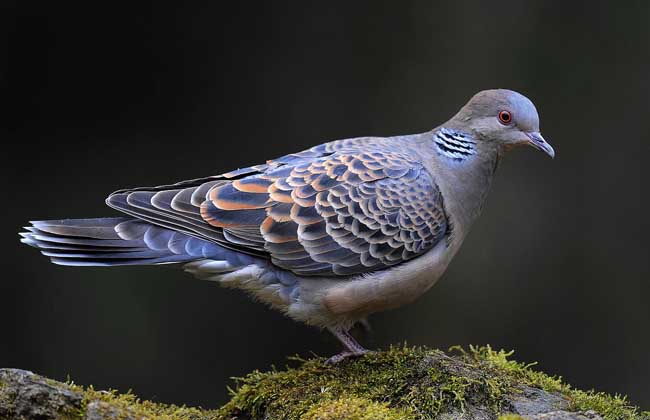
Turtle doves feed on sorghum, wheat seeds, rice grains and fruits, and sometimes also eat insect larvae. They build their nests in trees, generally 3-7 m above the ground, made of twigs with a simple structure. They overwinter in the north. Males and females have similar plumage. They mainly move in small groups of several birds at forest edges and nearby areas. In autumn and winter, turtle doves roost in flocks. They fly like pigeons and often glide. Let's take a look below at whether hunting turtle doves is illegal!
Is It Illegal to Hunt Turtle Doves?
Hunting turtle doves is illegal. Turtle doves are protected wild animals, and hunting more than a certain number can lead to a prison sentence. The state now regulates the hunting of wild animals very strictly. According to legal provisions, using prohibited tools or methods to hunt wild animals, with the number reaching 20 or more, constitutes illegal hunting.
Are Turtle Doves Protected Animals?
Wild turtle doves belong to the general protected category of animals and may not be sold. Wild turtle doves are "three-have" protected animals, meaning terrestrial wild animals that are beneficial, or have important economic or scientific research value, and are protected by the state. Protected turtle doves of the same genus include the European turtle dove, oriental turtle dove, Eurasian collared dove, spotted dove, laughing dove, and red turtle dove.
Birds Protected by the State
1. National first-class protected animals: short-tailed albatross, Christmas Island frigatebird, white stork, black stork, crested ibis, white-shouldered eagle, Pallas's fish eagle, white-tailed sea eagle, Steller's sea eagle, cinereous vulture, Chinese merganser, Siberian grouse, hazel grouse, snow partridge, Sichuan partridge, Hainan partridge, Satyr tragopan, Temminck's tragopan, Blyth's tragopan, monal (all species), brown eared pheasant, black-necked long-tailed pheasant, white-necked long-tailed pheasant, black long-tailed pheasant, peacock pheasant, green peafowl, white-naped crane, red-crowned crane, Siberian crane, sarus crane, bustard (all species).
2. National second-class protected animals: pelican (all species), booby (all species), sea cormorant, Pacific reef heron, Hainan tiger bittern, little bittern, painted stork, white ibis, white spoonbill, black-faced spoonbill, red-breasted goose, white-fronted goose, swan (all species), Falconidae (all species), Accipitridae (all other eagles except first-class ones), black grouse, willow ptarmigan, rock ptarmigan, snowcock and blood pheasant, satyr tragopan, Tibetan eared pheasant, blue eared pheasant, red junglefowl and koklass pheasant, white-crowned long-tailed pheasant and golden pheasant (all species), common crane, demoiselle crane, corncrake, Baillon's crake, brown-backed crake, band-bellied crake, Nordmann's greenshank, grey pratincole, little gull, black tern, yellow-billed river tern, black-bellied sandgrouse and green pigeon (all species), black-chinned fruit dove and imperial pigeon (all species), band-tailed wood pigeon, coucal (all species), Strigiformes (all species), grey-throated needletail, crested treeswift, orange-breasted trogon, black-breasted bee-eater, green-throated bee-eater, Bucerotidae, white-bellied black woodpecker, broadbill, pelargopsis kingfisher, Psittacidae (all species), little curlew, white-naped crane, hazel grouse, Chinese egret, painted ibis and silver pheasant, black-necked cormorant, Pittidae (all species), black ibis, blue-eared kingfisher, cuckoo-dove (all species), Chinese crested tern, pheasant-tailed jacana, sandhill crane, black pheasant, sickle-winged grouse, mandarin duck, serpent eagle.