Are Turtle Doves Protected Animals? Understanding the Protection Level of Turtle Doves
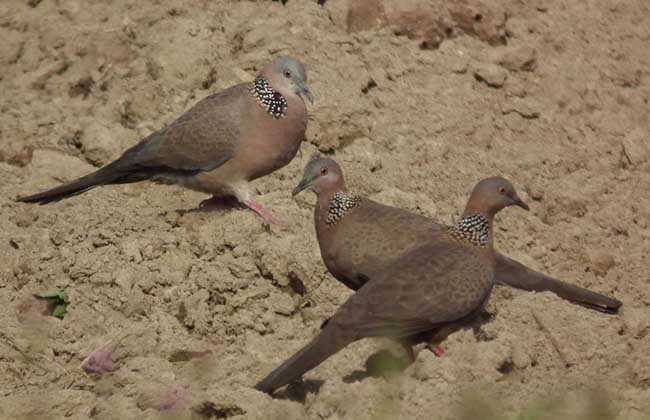
The turtle dove is a bird of the genus Streptopelia in the family Columbidae, native to Europe and North Africa, also known as spotted chicken, partridge cone and so on. It is distributed across most parts of China, but due to urban development, turtle doves are rarely seen within cities and mostly appear in low-altitude non-urban areas. Common species include the red turtle dove, spotted dove, oriental turtle dove and the artificially bred white turtle dove. Let's take a look below at whether turtle doves are protected animals!
Are turtle doves protected animals?
Wild turtle doves are generally protected animals, and their sale is not permitted. Wild turtle doves are "three-have" protected animals, meaning terrestrial wildlife that is beneficial, or has important economic or scientific research value, under state protection. Protected turtle doves of the same genus include the European turtle dove, oriental turtle dove, Eurasian collared dove, spotted dove, laughing dove, red turtle dove and others.
Is it illegal to hunt turtle doves?
Hunting turtle doves is illegal. Turtle doves are protected wild animals, and hunting more than a certain number can result in a prison sentence. The state now regulates the hunting of wild animals very strictly. According to legal provisions, using prohibited tools or methods to hunt wild animals, with the number reaching 20 or more, constitutes illegal hunting.
What kinds of turtle doves are there?
1. European turtle dove: The European turtle dove is a slightly small, pinkish-brown dove with patches of many fine black-and-white lines on the sides of the neck, dark brown wing coverts with pale tan scaly patterns. It differs from the red turtle dove in being smaller in size, paler in color, lacking white tips on the wing coverts, having denser brown on the back and nape, whiter markings on the neck and sides of the tail, and a more wine-red chest. The bare skin around the eye is red. It inhabits various forests such as broadleaf forests, mixed forests and coniferous forests in plains and low hilly areas, feeding on the fruits and seeds of various plants, and also eating mulberries, corn, sesame, wheat and other crops as well as a small amount of animal food.
2. Oriental turtle dove: The oriental turtle dove is a bird of the genus Streptopelia in the family Columbidae, with a body length of about 32 cm. Its bill and claws are straight or slightly curved, the base of the bill is soft and covered with a cere, and the tip of the bill is enlarged and horny. The neck and legs are both relatively short, and the tarsus is fully feathered. The dark scalloped markings on the upper body have brown feather edges, the rump is gray, the tail feathers are nearly black, and the tail tip is light gray. The underparts are mostly pinkish, and the feet are red. When taking off, it makes a high-frequency "puff-puff" sound. It moves in pairs or alone, mostly in open farming areas, villages and around houses, temples, or near small ditches, feeding on the ground, with food mostly consisting of whole grains.
3. Eurasian collared dove: The Eurasian collared dove is a "three-have" protected animal, medium-sized at 32 cm, a bird of the genus Streptopelia in the family Columbidae. It is widely distributed, but its population is scarce and it is uncommon. Its whole body is grayish-brown, with blue-gray patches on the wings, white tips on the tail feathers, and a black neck ring on the back of the neck surrounded by white feathers. The iris is red, the eyelid is also red, the bare skin around the eye is white or light gray, the bill is nearly black, and the feet and toes are dark pink. In China it is distributed in North China and the Northwest region, and there are also records from the lower reaches of the Yangtze River and South China.
4. Spotted dove: The spotted dove, also known as partridge carving, partridge bird, middle dove, flower dove, flower-necked dove, pearl dove, spotted-necked dove, pearl-necked pigeon, spotted shell and so on, is a common turtle dove distributed in South Asia, Southeast Asia and the vast areas of southern China. It inhabits plains, grasslands, low hills and farmland areas with sparse trees, and often appears in mixed woods near villages, bamboo forests, trees at field edges or near homes.
5. Laughing dove: The laughing dove is a bird of the genus Streptopelia in the family Columbidae, distributed in Africa, the Arabian Peninsula, Iran, the former Soviet Union, Afghanistan, Pakistan, India, Nepal, possibly introduced artificially to Turkey, Palestine, Syria, Australia, and ** and other places in mainland China. It generally inhabits deserts, semi-deserts, and places with oases and low thickets.
6. Red turtle dove: The red turtle dove, also known as red dove, red spotted dove, spotted shell, red ka zhui, fire partridge quail and so on, inhabits the tropical zone of southern Asia and is a small pigeon commonly seen foraging in flocks in plains and grasslands. It is distributed in India, Nepal, Bhutan, Bangladesh, Myanmar, Indochina, the Philippines, and various places in mainland China from north China southward, west to Sichuan, Tibet, and areas north of the Yangtze River, mainly inhabiting open fields and areas near villages.