Key Technical Points and Management Methods for Cobra Farming
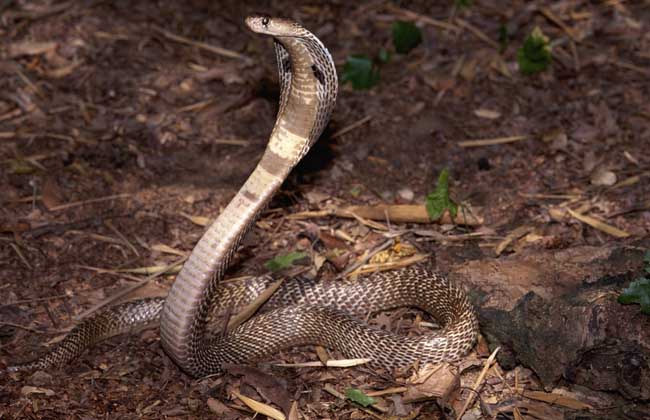
The cobra is an animal that inspires awe, mainly because of its potent venom, as a cobra bite can be life-threatening. However, farming cobras artificially offers high economic returns and broad market prospects. Moreover, young snakes are easy to start feeding, the seedlings are relatively cheap, and market prices keep rising steadily, giving them extremely high farming value. Let's take a look at cobra farming techniques together below!
The Living Habits of Cobras
Cobras often prefer to live in shrublands or bamboo forests in plains, hills and mountainous areas, and are also commonly seen on hillside grave mounds, by the water at the foot of hills, beside streams and fish ponds, in fields, and near dwellings. They are a diurnal snake species, mainly going out during the day to move about and forage. They can withstand high temperatures, and in the hot environment of 35-38°C they still do not avoid the sunlight and remain active everywhere, but their tolerance for low temperatures is poor. In winter they all like to hibernate in clusters, and when the temperature drops below 9°C they are prone to being frozen to death.
Feeding Techniques for Cobras
1. In spring and autumn, cobras mostly move about in burrows and feed mainly on rats, while in summer and early autumn (May to September) they disperse to the foot of hills, fields, riverbanks, ditch sides, rice paddies, vegetable gardens, wall bases and other places, and even crawl into houses. They have a broad diet, feeding on rodents, birds and bird eggs, lizards, snakes, frogs, loaches, eels and other small fish.
2. Cobras have a strong tolerance for hunger, and it is often seen that they go several months or even a year without eating. However, when raising snakes, one must not neglect the supply of feed, and should try to feed them well and to satiation. Generally, snakes can be fed once about every half month, and in seasons when snakes are frequently active, they can be fed 2-3 times per month, or once a week.
3. The food fed to cobras is live animals, provided for the snakes to prey on. For some young snakes that cannot prey, artificial force-feeding should be carried out when necessary. Snakes generally have a large food intake; for example, the black-browed ratsnake can eat 4-5 small mice in a row at one time. When feeding snakes, clean drinking water should also be supplied, because snakes generally are fond of drinking water, and when there is water but no food, they can endure hunger for a longer time. If farmed snakes lack both food and water for a long time, their bodies will become weak and they will be prone to illness.
Hatching Techniques for Cobras
1. Prevent natural enemies: rodents, domestic dogs, weasels, ants and other animals will all get inside and eat the snake eggs, so the mouth of the jar should be covered or protected with gauze netting to prevent the snake eggs from being harmed.
2. Do not mix eggs for incubation: the incubation time of eggs from different species of cobras is clearly different. Even for snakes of the same species, due to differences in living environment or physique, the egg-laying times differ, and the incubation times are also different. In artificial incubation of snake eggs, most people place eggs of the same species in the same incubation jar or container, which makes it convenient to control incubation temperature and humidity and is beneficial for the snake eggs to hatch. If snake eggs with different incubation periods are mixed together for incubation, it will inevitably make incubation techniques and incubation conditions difficult to control.
3. Temperature and humidity: generally, the suitable incubation temperature for snake eggs is 20-30°C. For convenience of temperature measurement, a thermometer can be hung on the rim of the jar. If the temperature is too high, the lid can be opened to dissipate heat; if the temperature is too low, a hot water bag can be hung to remedy this, but it must not touch the snake eggs. In the process of artificially incubating snake eggs, practice has found that, due to different incubation temperatures, snake eggs will directly affect the male-to-female ratio of the young snakes after hatching.
4. Controlling male and female: artificial egg incubation can completely change the sex of the young snakes by human intervention. If you want to increase the proportion of female snakes, you only need to control the incubation temperature at 20-24°C and the relative humidity at about 90%, and most of those hatched will be female snakes. When the incubation temperature is above 27°C and the humidity is below 70%, most of those hatched will be male snakes. If the temperature is controlled at 24-27°C and the environmental relative humidity is controlled at 50%-70%, the young snakes hatched will be about half female and half male.
5. Prevent mold on snake eggs: once mold spots are found on the eggshell surface, they can be gently wiped away with a flannel cloth. At the places where mold spots appear, use a writing brush dipped in a little griseofulvin to apply, and after it is completely air-dried, put it back in place. Never use antibiotic ointment to apply, otherwise the grease will block the air pores on the eggshell, causing the embryo to suffocate and die, becoming a dead embryo.
6. Choose covering material: in order to regulate and maintain suitable humidity for snake eggs during incubation and increase the hatching rate of snake eggs, fresh, clean lotus leaves, parasol tree leaves or moss vegetation should be chosen to cover the snake eggs, generally replaced once every 2-4 days or so. Some people are used to covering snake eggs with wet straw or wet cotton wadding, which often fails to achieve the ideal effect; with a little carelessness, it will cause the snake eggs to mold and spoil, affecting normal incubation, so it is not advisable to use this.
7. Check eggs at the proper time: during the incubation process, unfertilized eggs or dead embryo eggs, if left too long, will spoil, swell with gas and rupture, contaminating the other fertilized eggs. To avoid this phenomenon, measures can be taken to check the eggs at the proper time to ensure the normal incubation of fertilized eggs. When checking eggs, you can use a wooden box with a light bulb inside, open a hole in the box slightly smaller than the snake egg, place the egg in front of the hole and shine light on it, and then you can check whether the snake egg is fertilized. If it is difficult to decide on one or two individual snake eggs for the moment, they can be placed aside separately and rechecked after some time.
8. Learn to keep records: during the process of artificial incubation, a detailed record of the incubation situation should be made every day. After the young snakes hatch, records should also be kept of the young snakes' species name, body length, weight, feeding, molting and other relevant data. Doing so helps to continuously improve incubation techniques and feeding methods.
Precautions for Cobra Farming
1. Do not frequently provide water: placing a water dish once about every ten days is enough. The main purpose is to let the snakes moisten their skin to facilitate shedding, not to drink water. Controlling their water intake forces the snakes to increase food intake to obtain supplementary moisture for the body. When food intake is greater, the snakes' growth rate also speeds up, and it can also keep the snake nest dry and prevent the chance of skin diseases occurring.
2. Feed every other day: let the snakes get used to having plenty of food during a certain time period and no food during another time period, so cobras will try to eat as much as possible when food is plentiful. When full of food and drink, they can sleep soundly, and at the same time the food in their stomachs also has time to digest.
3. Do not force cooling: cobras are generally afraid of cold but not of heat. When the outside temperature is 35°C, the temperature in the snake nest is only about 30°C, so there is no need to worry that the temperature in the snake house is too high. Keeping the snake house naturally ventilated is enough. A sudden drop in temperature will cause discomfort to the snakes, leading to colds and triggering pneumonia.
4. Separate into pens on time: clean the snake pens once every two months, and raise them in groups according to size. This is beneficial for even growth of the snakes and avoids the phenomenon of large snakes eating a lot while small snakes get nothing to eat.
5. Choose indoor farming: it is best to raise commercial cobras indoors (except for cobra breeding snakes), which can avoid skin diseases in cobras and excessive temperature differences caused by weather changes or the rainy season.
6. Prevent bites: early symptoms of a cobra bite include drooping eyelids, double vision, difficulty swallowing, dizziness, facial paralysis, vomiting, and then gradually respiratory muscle paralysis. The general treatment method is to use antivenom serum, and artificial assisted ventilation may be needed until the venom degrades and the patient can breathe on their own. If treatment is ineffective, the patient mostly dies 6-12 hours after the bite, with the cause of death mostly being suffocation due to respiratory paralysis.