What kind of snake is the Cape cobra? A comprehensive introduction
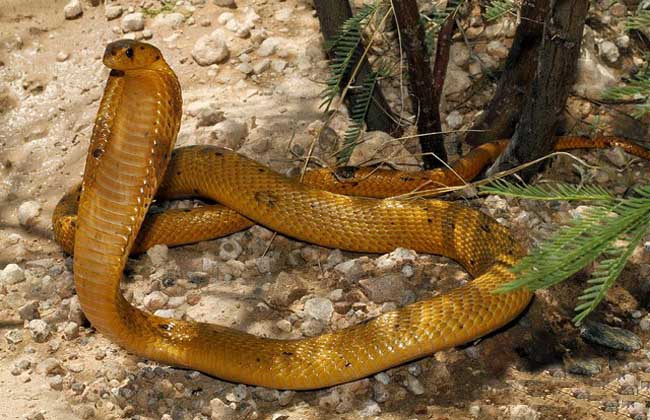
The Cape cobra, also known as the yellow cobra, Cape cobra and other names, is a snake of the genus Naja in the family Elapidae. Its total body length is 1.2 to 1.4 m. It is one of the venomous snakes responsible for the most snakebites in Africa. It is active during the day and in the evening each day, feeding mainly on small mammals, and it also preys on frogs and lizards. It is distributed in South Africa, Namibia, Botswana and Lesotho in southern Africa.
The Cape cobra is one of Africa's most deadly large venomous snakes, with an average body length of 1.2 to 1.5 m and a maximum length of 1.87 m. It is neither the most widely distributed venomous snake in Africa nor the longest venomous snake in Africa, being found only in one densely populated area at the southwestern tip of Africa, yet it is one of the venomous snakes responsible for the most snakebites in Africa. Most residents there in South Africa are farmers, so in addition to causing great disturbance to people, the Cape cobra also poses a certain threat to livestock.
The Cape cobra lays eggs from November to January, laying 8 to 20 eggs per clutch, with an incubation period of 65 to 70 days. The hatchlings are 34 to 40 cm long. The Cape cobra is also a venomous snake with rather distinctive coloration: besides being golden yellow all over, as its name suggests, some subspecies are brown to black and also have black spots on their bodies.
The Cape cobra is active during the day and in the evening each day, feeding mainly on small mammals, and it also preys on frogs and lizards. In addition, it occasionally slips into farmhouses to catch poultry. When disturbed, the Cape cobra responds quickly and strikes fast, using its potent venom and repeated strikes to make enemies retreat.
The venom of the Cape cobra, like that of other cobras, is a neurotoxin, and its toxicity ranks among the most severe members of the cobra family, second only to the Philippine cobra. It mainly attacks the enemy's respiratory system, and usually within 2 hours the victim dies from difficulty breathing. Without antivenom, the local mortality rate can reach 60%. By comparison, the black mamba has a relatively higher mortality rate, but the Cape cobra's record of attacks is higher than that of the black mamba, which shows that a high mortality rate does not equal a large number of attacks.
The venom produced by a single bite from the Cape cobra is enough to kill 6 people. When disturbed, it responds quickly and strikes fast, using its potent venom and repeated strikes to make enemies retreat. Ordinary venomous snakes usually stop attacking or flee after one strike, but the Cape cobra is unusually fierce and will keep attacking until its opponent stops moving before it stops.