Why can a rattlesnake still bite after death? The reason revealed
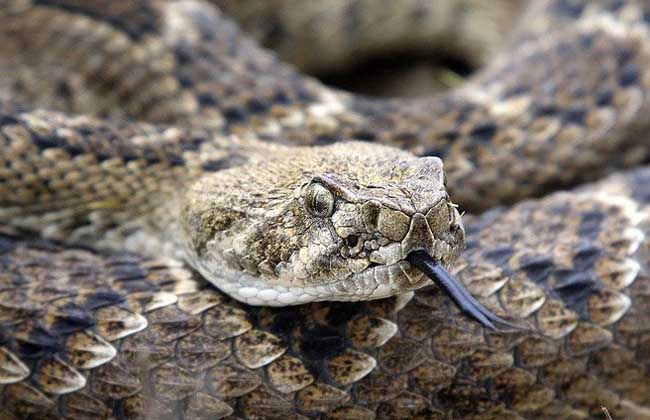
The rattlesnake is extremely venomous, enough to put a person it bites to death, but a dead rattlesnake is just as dangerous: even within an hour after death it can still lunge and strike. Researchers at the "Good Samaritan Regional Medical Center" in Phoenix, Arizona, USA, found that rattlesnakes have a reflex ability for the biting action, and it is not controlled by the brain.
The researchers interviewed 34 victims who had been bitten by rattlesnakes, of whom 5 said they had been bitten by dead rattlesnakes; even after these rattlesnakes had been killed by people, or even after their heads had been cut off, they still had the ability to bite. Scientists had long known only that the rattlesnake's head possesses special organs that can use infrared rays to sense nearby warm-blooded animals. The biting ability of a rattlesnake after death comes from the reflex action of these infrared-sensing organs.
Even if the rattlesnake's other bodily functions have stopped, as long as the sensory organ tissue in the head has not yet decayed, that is, within one hour after death, the rattlesnake can still detect living things that emit heat within 15 cm nearby and automatically make a striking response. Based on this principle of rattlesnakes biting after death, scientists have invented many related products, widely used in the military.
The "heat eyes" of snakes such as rattlesnakes and pit vipers are all located in the area called the pit organ between the eyes and the nostrils. The pit organ is generally 5 mm deep and only one cm long. This pit organ is trumpet-shaped, with the trumpet opening angled forward, and it is divided by a thin membrane into two parts, inner and outer. The inner part has a thin tube connecting it to the outside, so the temperature inside is the same as the temperature of the surrounding environment where the snake is. The outer part, however, is a heat collector.
If there is a hot object in the direction the trumpet opening of the rattlesnake's heat eye is facing, infrared rays shine through here onto the outer side of the membrane. Obviously this is at a higher temperature than the inner side of the membrane, and the nerve endings spread all over the membrane sense the temperature difference and generate a bioelectric current, which is transmitted to the snake's brain. Once the snake knows what position ahead has a hot object, the brain sends out the corresponding "command" to capture this object.