Where on its body is a rattlesnake's heat eye located?
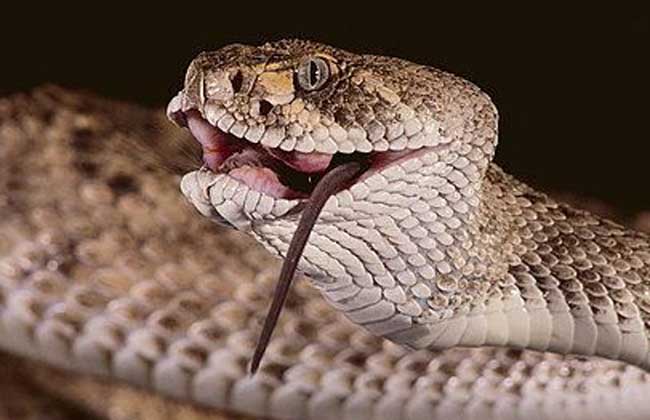
The rattlesnake is a venomous snake with tubular fangs in the family Viperidae, class Reptilia. Its venom is a hemotoxin. It generally measures about 1.5 to 2 m in length, with a yellow-green body and diamond-shaped dark brown markings on its back. It gets its name from the string of horny rings at the tip of its tail, whose rattling can produce a loud sound for a long time, keeping enemies at bay or frightening them off. Now let us take a look together at where a rattlesnake's heat eye is.
Where is a rattlesnake's heat eye?
In rattlesnakes and pit vipers, the “heat eye” is located in the pit organ between the eye and the nostril. The pit is generally 5 mm deep and only one cm long. This pit is trumpet-shaped, with the opening angled forward, and is divided by a thin membrane into an inner and an outer part. The inner part has a thin tube connecting it to the outside, so its temperature is the same as that of the surrounding environment where the snake is. The outer part, however, is a heat collector. If there is a warm object in the direction the trumpet opening of the rattlesnake's heat eye is facing, infrared radiation passes through and strikes the outer surface of the membrane. This is clearly higher in temperature than the inner surface of the membrane, so the nerve endings spread across the membrane sense the temperature difference and generate a biological current, which is transmitted to the snake's brain.
Does a rattlesnake bite after death?
The rattlesnake is extremely venomous, enough to put a bitten person to death, but a dead rattlesnake is equally dangerous: even within one hour after death it can still lunge up and strike. The rattlesnake has a reflexive ability when it comes to biting, and this is not controlled by the brain. A rattlesnake's head has special organs that can use infrared radiation to sense nearby warm-blooded animals. The biting ability of a dead rattlesnake comes from the reflex action of these infrared-sensing organs. Even if other bodily functions have stopped, as long as the sensory organ tissue in the head has not yet decayed, the rattlesnake can still, within one hour after death, detect living things giving off heat within 15 cm nearby and automatically make an attacking response.
How potent is a rattlesnake's venom?
After a person is bitten by a rattlesnake, there is immediately a severe stinging and burning sensation, like the bite of a large insect, followed by fainting, but these are only the initial symptoms. The fainting lasts from as short as a few minutes to as long as several hours. After regaining consciousness, the person feels that their body is heavier, the bitten area is swollen and purplish-black, body temperature rises, and hallucinations begin, with all objects in view appearing in a single color (mostly brownish-red or dark purple). Any rattlesnake bite must be treated as a life-threatening emergency and the person must be sent to a hospital immediately for treatment by professional doctors.