What are the main functions of a rattlesnake's tail?
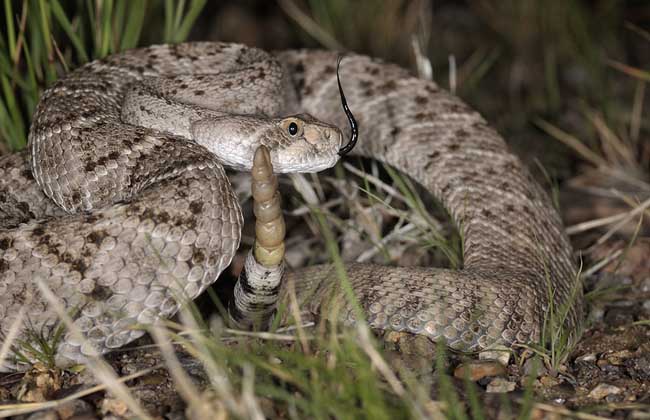
The rattlesnake is a venomous snake with hollow fangs belonging to the subfamily Crotalinae (pit vipers) of the family Viperidae, order Squamata. Actually, what leaves the deepest impression about the rattlesnake is its sound-producing tail, which is unique to rattlesnakes. Snake enthusiasts who are unfamiliar with the rattlesnake's tail are very curious, wondering how they produce sound and even more so why they make sound. Let's take a look below at what the rattlesnake's tail does!
What is the purpose of a rattlesnake's tail?
The typical feature of a rattlesnake is the rattle at the end of its tail. The rattle resembles a string of dry, hollow beads; when shaken, the segments rub against each other and vibrate the air, producing a hissing sound that warns intruders that being bitten will cause poisoning. The longer the rattle string, the louder the sound produced, which also indicates that the rattlesnake is older. Young rattlesnakes that do not yet have a rattle cannot produce a warning sound, so they launch attacks without warning when encountering intruders. At the same time, the rattlesnake's tail can mimic the sound of flowing water, attracting thirsty small animals in the desert.
Why does a rattlesnake's tail rattle?
During its growth, a rattlesnake needs to shed its skin. Each time it sheds a layer, a keratinous ring is left at the tail. The tail tip of an adult rattlesnake has a string of keratinous rings, which are the keratinized epidermis left behind after multiple molts. This keratinized epidermis forms a hollow cavity, and the cavity is further divided by keratinized epidermis into two ring-shaped hollow chambers, which are essentially two air vibrators. When the rattlesnake's tail shakes, an airflow forms within the hollow chambers. As the airflow vibrates back and forth with each entry and exit, the hollow chambers produce a “clack, clack” rattling sound.
Just how potent is rattlesnake venom?
Rattlesnake venom is extremely toxic. After being bitten, a person immediately experiences severe stinging and burning sensations, like the bite of a large insect, followed by fainting, but these are only the initial symptoms. The period of unconsciousness can range from as short as a few minutes to as long as several hours. After regaining consciousness, the person feels that their body has become heavier, the bitten area swells and turns purplish-black, body temperature rises, hallucinations begin, and all objects in their line of sight appear to be a single color (mostly brownish-red or dark purple). Any rattlesnake bite must be treated as a life-threatening emergency and the victim must be taken to a hospital immediately for treatment by a professional doctor.
Why can a rattlesnake still bite after death?
The venom of a rattlesnake is enough to put a bitten person to death, but a dead rattlesnake is equally dangerous: even within one hour after death, it can still lunge and strike. A rattlesnake has a reflex ability for the biting action, and this is not controlled by the brain. The head of a rattlesnake possesses special organs that can use infrared sensing to detect nearby warm-blooded animals. The biting ability of a rattlesnake after death comes from the reflex action of these infrared-sensing organs. Even if other bodily functions have stopped, as long as the sensory organ tissue in the head has not decayed, the rattlesnake can still detect warm-blooded creatures emitting heat within 15 cm nearby within one hour after death and automatically make an attack response.