What Kind of Animal Is a Sea Cucumber? Understanding the Biological Characteristics of Sea Cucumbers in One Article
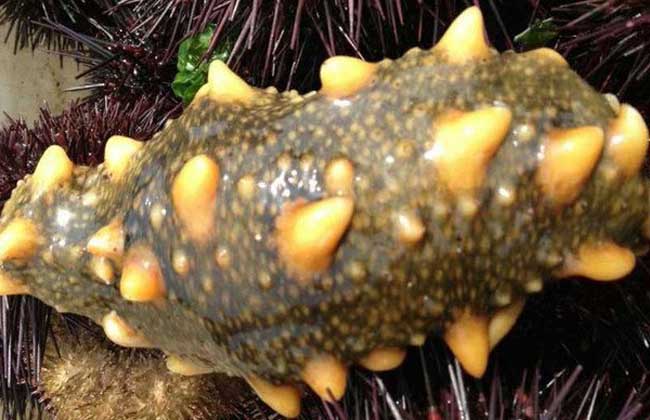
The sea cucumber is a marine echinoderm of the class Holothuroidea and the genus Holothuria, living in the ocean from the seashore to depths of 8000 m, with a history dating back more than 600 million years. It feeds on seabed algae and plankton, and its entire body is covered with fleshy spines. It is widely distributed across the world's oceans, with relatively many species along the coast of the South China Sea in China, where about twenty or more species of sea cucumber are edible. It ranks alongside ginseng, bird's nest and shark fin as one of the world's eight great delicacies.
The sea cucumber's body is cylindrical, 10-20 cm long, with exceptionally large ones reaching 30 cm, dark in color and mostly covered with fleshy spines. The tentacles are arranged in a wheel shape, 17-30 in number, usually 20. The tentacles and tentacle ampullae are well developed. Sea cucumbers appeared on Earth earlier than primitive fish, having existed since roughly the Precambrian more than 600 million years ago. They are the earliest surviving biological species and are known as living marine fossils. They survived several great global extinctions and have witnessed Earth's changes many times over.
The sea cucumber's mouth is at the front end, mostly toward the ventral side, and the anus is at the rear end, mostly toward the dorsal side. The dorsal side generally has papillae, and the ventral side has tube feet. The endoskeleton has degenerated into tiny ossicles. Many species have five rows of tube feet running from mouth to anus. The anal pore serves both for respiration and for expelling waste. Around the mouth are 10 or more retractable tentacles used for feeding or burrowing. Many species can discharge their internal organs through the anus and then regenerate new ones, possibly to escape predators. The cloaca often hosts commensal pearlfish of the genus Carapus, and many species can release toxins lethal to small animals, though they pose no life-threatening danger to humans.
The reproductive capacity of sea cucumbers is quite astonishing. To ensure the species is not driven to extinction, through long-term natural selection and evolution, sea cucumbers have acquired an extremely strong reproductive ability. A single adult sea cucumber over 4 years old can release about 5 million eggs at one time during the spring breeding season. Thus, even with a survival rate of one in ten thousand, the continuation of the species can still be ensured.
Sea cucumbers are distributed in the United States, Alaska, Japan, Iceland, China and other places. When the water temperature reaches 20°C, the sea cucumber moves to crevices in deep-sea reefs or hides beneath rocks, neither eating nor moving, its whole body contracting and hardening like a spiny ball. Ordinary animals will not eat it. It sleeps through an entire summer and only wakes up after autumn to resume activity.
The sea cucumber is not only a precious food but also a valuable medicinal material. According to the Supplement to the Compendium of Materia Medica: the sea cucumber is sweet and salty in taste, tonifies the kidneys, benefits the essence and marrow, controls urination, strengthens yang and treats impotence; its nature is warm and tonifying, fully comparable to ginseng, hence the name sea cucumber (haishen, "sea ginseng"). Sea cucumbers have effects such as improving memory, delaying gonadal aging, preventing arteriosclerosis and anti-tumor activity. With the spread of knowledge about the value of sea cucumbers, they have gradually made their way onto ordinary people's dining tables.