What food do ground beetles eat? Understanding the types of feed for ground beetles in one article
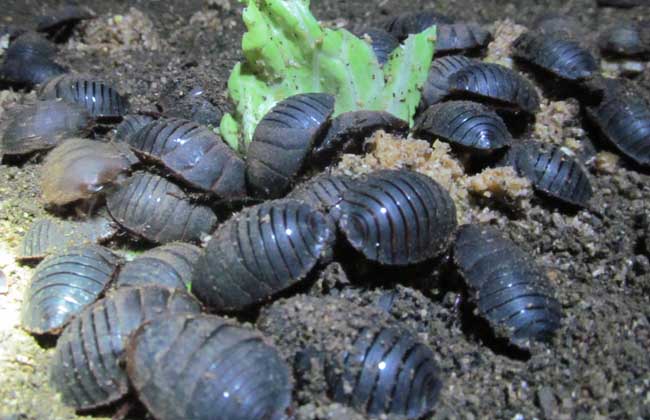
The scientific name of the ground beetle is Eupolyphaga sinensis, also known as the ground beetle insect, soil turtle, street-crosser, dung-turning insect, soil fertilizer beetle, etc. It often lives in the soil at the base of walls of old-style earthen houses and is a traditional Chinese medicinal material in short supply on the market. With the destruction of the natural environment and the year-by-year expansion of market demand at home and abroad, it is especially famous far and wide for its excellent quality. Below let us take a look together at what food ground beetles eat!
What food do ground beetles eat?
The ground beetle is an omnivorous insect, and its feeding characteristics include a preference for fresh food. It most likes to eat bran and rice bran, followed by cornmeal, crushed miscellaneous grains, peanut cake, soybean meal, miscellaneous fish, meat, and various coarse materials such as green grass and vegetable leaves, melon and fruit peels, chicken manure, and cow dung. If fed only with feed such as green grass, it grows slowly. A complete feed can use 72% wheat bran, 20% cornmeal, 5% soybean cake, and 3% animal-based feed (fed cooked). When feeding, it should be scalded with boiling water, and 30-40% green vegetables or melons and fruits should be added. When raised with complete feed for 5-6 months, individuals can grow into adults.
The growth cycle of the ground beetle
The ground beetle is an insect with incomplete metamorphosis. The phenomenon in which an insect transforms from larva to adult is called metamorphosis. Incomplete metamorphosis means that the larva (nymph) hatched from the egg of the ground beetle is similar to the adult in morphology and living habits, except that the nymph's wings are not fully developed, its body has not yet grown large, and its reproductive system has not yet matured. With each molt, the wings and reproductive organs gradually develop and grow, and finally it grows into an adult. The ground beetle requires three stages to complete one generation: egg, nymph, and adult. The male takes about 8 months from nymph to growing wings. The female has no wings and takes about 9-11 months to mature. The male dies 5-7 days after mating. The female can lay eggs one week after mating, and after mating once, she lays eggs for life.
Breeding techniques for ground beetles
1. Rearing conditions: Ground beetles live in dark, humid, loose soil rich in humus. They fear sunlight, hide during the day, and are active at night. The most suitable temperature for growth is 28-30°C. Below 0°C or above 38°C will cause mass death of adults and nymphs. When it drops to 8°C, they stop activity and enter dormancy. When rearing, the scale can be chosen according to the breeding scale; the size is flexible and the forms are many. Breeding can be done in jars, pits (ponds), basins, cabinets, boxes, etc.
2. Breeding facilities: The equipment used for raising ground beetles is relatively simple. For small-scale rearing, plastic basins are sufficient. To raise ground beetles on a large scale, a three-dimensional multi-layer rearing platform can be used. Build bricks against the wall inside the house, with each layer height kept at about 30-38 cm. The layer boards are best made of cement boards. Each wall can have 5-7 layers of rearing platforms. Practice has proved that this kind of rearing platform can make the indoor temperature 6-10°C higher than that of flat pools, significantly speed up the growth and development of ground beetles, complete one generation in only about 7 months, and significantly increase annual output.
3. Rearing soil: In winter, choose loose and fertile garbage mud, vegetable garden soil, ditch mud, stove-foot soil, sandy soil, loam soil, etc. rich in humus, mix in 20-30% chicken manure, pig manure, cinder ash, or plant ash, etc., and expose it to sunlight. For instars 1-4, use 7-10 cm; for instars 5-8, use 16-20 cm; for nymphs above instar 9 and adults, use 20-26 cm.
4. Temperature and humidity: The suitable environmental temperature for ground beetle growth is 25-30°C. Above 10°C they begin to move and seek food; below 10°C they burrow into the soil to hibernate; at -5°C they will die. Therefore, in winter, some warm materials such as rice straw and chicken feathers should be placed in the pool, and promptly removed during the next year's foraging period. The relative humidity should be 75-80%.
5. Feed configuration: Ground beetles are omnivorous animals. Animal-based feed includes earthworms, crickets, mole crickets, and various animal scraps, etc. Plant-based feed includes wheat bran, rice bran, cake meal, powder residue, tofu residue, corn, broken rice, and green vegetable leaves, cabbage leaves, pumpkin flowers, mulberry leaves, melon and fruit peels, etc.
6. Timely separation of young: During the breeding process, female ground beetles often eat larvae and eggs. Therefore, after the larvae can move and seek food on their own (referring to nymphs above instar 5), the female ground beetles should promptly be placed in another pool. At the same time, the larvae should also be raised in separate grades.
7. Rearing density: Per square meter, ground beetles can be raised as 1.5 kg of adults, 0.15 kg-0.5 kg of instar 1-3 nymphs, 0.6 kg-1.2 kg of instar 4-6 nymphs, and 0.6 kg-0.9 kg of nymphs above instar 6.
8. Feeding young larvae well: Young nymphs mainly refer to instar 1-4 nymphs. They are small and weak, so concentrated feed should be the main feed. The feed can be evenly scattered on the surface of the feed soil, then use the hand to reach about 2 cm into the central soil and rake the soil, mixing the feed into the surface layer of the soil. Also pay attention to preventing escape.
9. Scientific management: Scientific management in artificial rearing of ground beetles is the key to success. Mites are common parasites in ground beetle rearing. Control methods include using a 1:400 dilution of trichlorfon and 20% ovochlor powder mixed into the rearing soil, and mites can also be removed by promptly replacing the rearing soil or using fried dough sticks, bones, and pumpkin flowers as bait.