Is the Oriental rat snake a protected animal? The answer is here
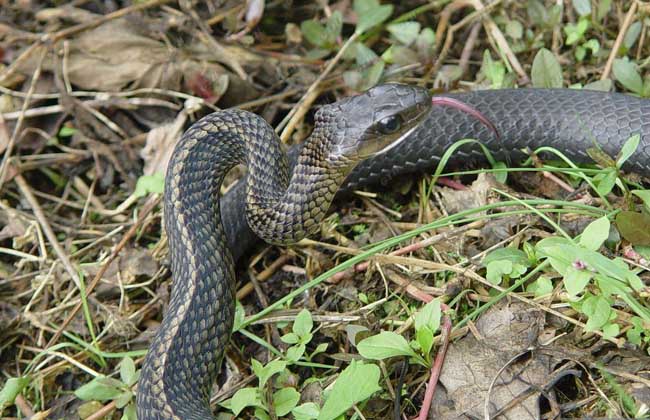
The Oriental rat snake (Zaocys dhumnades) is a relatively large snake of the genus Zaocys in the family Colubridae. It mostly inhabits plains, low mountain areas or hills, and can also often be seen in fields and farmhouses. From late spring to early autumn it frequently appears near farmland and farmhouses. It is agile; at the slightest unusual noise, whether friend or foe, its best strategy is to beat a retreat. Let us take a look below at whether the Oriental rat snake is a protected animal!
Is the Oriental rat snake a protected animal?
The Oriental rat snake is not listed in the national key protected animal directory and does not belong to the national protected animals. The Oriental rat snake inhabits hilly areas below 1600 m in altitude, feeding on frogs, lizards, fish, rodents and so on. It is often found near farmland and ditches, and sometimes also in villages. It moves quickly, reacts agilely, is gentle in temperament and does not bite people. Due to habitat destruction and massive human hunting, its wild population has greatly decreased and it should be protected.
Is the Oriental rat snake actually venomous?
The Oriental rat snake is not venomous. The Oriental rat snake is a snake of gentle temperament, with a body dorsum that is greenish-brown or brownish-black and brownish. There is a yellow longitudinal stripe down the center of the back, and two black longitudinal stripes on each side of the body, which disappear toward the rear of the body. In subadults the longitudinal stripes over the whole body are obvious. It does not bite people when it has not been attacked, but like many snakes, it only bites when forced into a corner or when it is overly frightened after being caught.
How long is the lifespan of the Oriental rat snake?
An adult Oriental rat snake can reach a total length of more than 2.5 m. Its lifespan is not very long, estimated at around 20 years; if the living environment is good, 25 years is also possible, while in a harsh environment it may die young at 10 years. Generally, the lifespan of small snakes is around 2 to 5 years, medium-sized snakes around 5 to 12 years, and large snakes 10 to 20 years. Pythons can live to 30 to 40 years, or even longer. The longest-lived is the anaconda, which can live more than 100 years. However, in the wild, because the habitat is rather unstable, food is sometimes scarce, and natural enemies and diseases take a serious toll, snakes do not live as long as under captive breeding conditions, and many scientists' experiments have also proved this point.