What does the Oriental rat snake eat? Let us show you its dietary habits
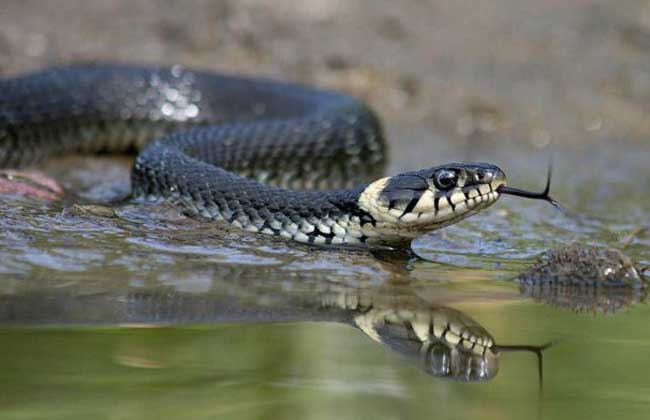
The Oriental rat snake, also known as the black snake, black wind snake, sword-ridge snake, black wind snake, yellow wind snake, etc., is a relatively large snake of the genus Ptyas in the family Colubridae. It has a very wide distribution range and is a non-venomous snake. It grows fast, has strong adaptability, high disease resistance, sells well on the market, and is very suitable for artificial breeding. It has high breeding value. Let us take a look below at what the Oriental rat snake eats!
What does the Oriental rat snake eat?
The Oriental rat snake moves quickly, reacts agilely, and is good at escaping. It is gentle by nature and usually feeds on frogs (its staple food), lizards, fish, rodents, etc. (a snake with a narrow diet). Under artificial breeding conditions, the bait of the Oriental rat snake is mainly frogs, supplemented by small miscellaneous fish, loach, and rice field eel. Because the market price of rice field eel is sometimes slightly higher, it is rarely fed during large-scale breeding.
The distribution environment of the Oriental rat snake
The Oriental rat snake lives in the central, eastern, southeastern, and southwestern parts of China in middle and low mountain zones below 1,600 m in altitude, plains, hilly areas, or low mountain areas. Its vertical distribution range is 50 to 1,570 m in altitude. It often crawls in farmland or along the ridges on the inner side of paddy fields, near vegetable plots and ditches. It sometimes also basks in the sun beside grass along mountain paths and is found in villages. In China, it is distributed in Hebei, Henan, Shaanxi, Shandong, Gansu, Sichuan, Guizhou, Hubei, Anhui, Jiangsu, Zhejiang, Jiangxi, Hunan, Fujian, Taiwan, China, Guangdong, and Guangxi. No reports have been seen abroad.
How long is the lifespan of the Oriental rat snake?
The lifespan of the Oriental rat snake is not very long, estimated at around 20 years. If the living environment is good, 25 years is also possible. If it lives in a harsh environment, it may die young at 10 years. Generally, the lifespan of small snakes is around 2 to 5 years, medium-sized snakes around 5 to 12 years, and large snakes 10 to 20 years. Pythons can live to 30 to 40 years, or even longer. The longest-lived is the anaconda, which can live to more than 100 years. However, in the wild state, due to a relatively unstable habitat environment, occasional food shortages, and the serious harm of natural enemies and diseases, the lifespan of snakes is not as long as under artificial breeding conditions. Many scientists' experiments have also proven this point.