Key Points and Detailed Methods of Oriental Rat Snake Farming Technology
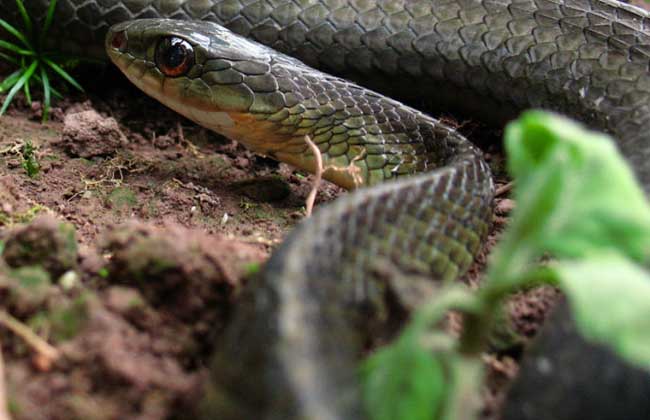
The Oriental rat snake (Zaocys dhumnades) is a relatively large snake of the genus Zaocys in the family Colubridae. It is a non-venomous snake species, with adults reaching a total length of more than 2.5 m. It moves swiftly, reacts agilely, and is good at escaping. It feeds on frogs, lizards, fish, rodents, and so on. It grows fast, has strong adaptability, high disease resistance, and sells well on the market, making it very suitable for artificial farming. Let us take a look at Oriental rat snake farming technology together below!
Construction of the Oriental Rat Snake Breeding Ground
1. Indoor breeding ground: The indoor breeding ground for Oriental rat snakes can be specially built or converted from an ordinary house. The roof is ventilated on all sides and enclosed with wire mesh to prevent escape. The wall height shall not be less than 2.5 m. The walls and floor are coated with cement and required to be smooth and seamless. No windows are opened in the house. Water pools, water ditches, and water basins are set up, and drinking water is kept clean at all times. The snake house is provided with double doors to prevent the snakes from escaping.
2. Outdoor breeding enclosure: The outdoor breeding wall for Oriental rat snakes is 1.5-2 m high, and the wall surface is smooth to prevent the snakes from climbing out. The wall foundation is more than 0.5 m deep to prevent rodents from burrowing. Some snake nests are built in the enclosure, with a diameter and height of 0.5 m each, and a cover is added on top to facilitate observation and snake retrieval. Part of the bottom layer extends into the ground, and sand and soil are spread inside the nest. Each nest has at least 2 openings connected to the ground of the snake enclosure. Small ponds, water ditches, and stone piles are set up in the enclosure, and some plants are planted. Frogs, earthworms, loaches, and rice field eels are raised to provide the snakes with prey at any time.
Breeding Technology of the Oriental Rat Snake
1. Male and female identification: The male Oriental rat snake has a larger head and a pair of "hemipenes" that are slightly swollen. Turn the ventral side of the rear part of the Oriental rat snake upward, locate its anal opening, then press with the thumb a few centimeters behind the anal opening, squeezing from back to front, and a pair of "hemipenes" will protrude from the anal opening. The head of the female snake is slightly smaller than that of the male snake. When pressing with the thumb a few centimeters behind the anal opening and squeezing from back to front, no pair of "hemipenes" protrudes.
2. Selection of breeding snakes: In order to improve breeding efficiency, excellent breeding snakes should be selected that are over 3 years old, weigh more than 400 g, have a strong physique, no injuries or diseases, good growth and development, are lively and active, crawl flexibly, have strong coiling ability, move swiftly and powerfully, and have strong reproductive capacity. The ratio of female to male snakes for mating can be 5-8:1.
3. Mating and egg laying: The breeding period of the Oriental rat snake is from May to July each year. When the snakes are in estrus, male breeding snakes are placed into the group of female breeding snakes according to the ratio, allowing them to mate freely. Female snakes have no fixed location for laying eggs. Once snake eggs are found, they should be collected promptly for incubation to prevent the snake eggs from being exposed to prolonged sunlight and wind and rain, which would reduce the hatching rate of the snake eggs due to factors such as uneven temperature and humidity.
4. Artificial incubation: A layer of clean sand and soil about 30 cm thick is placed at the bottom of the Oriental rat snake incubator. Then the fertilized snake eggs are laid horizontally (not vertically) on the sand and soil in the container. About 10 cm of sand and soil is added on top of the eggs. The effective incubation temperature of 28-30 degrees C or above is kept relatively stable, and water should be sprayed frequently so that the absolute humidity of the sand and soil remains at about 15%. Turn the eggs once every 7-10 days, inspect the eggs to check their embryonic development, and promptly remove unfertilized eggs or eggs with dead embryos.
Feeding and Management of the Oriental Rat Snake
1. Food feeding: The Oriental rat snake eats fish, lizards, frogs, earthworms, loaches, rice field eels, and so on, with frogs as its main food. Generally, bait is provided once every two weeks, and leftover bait should be removed promptly to avoid rotting and stinking. For snakes with poor prey-catching ability or those unwilling to catch prey, artificial force-feeding can be carried out when necessary. Snakes stop feeding during hibernation. In the 15-20 days before entering dormancy or after emerging from dormancy, they basically do not eat. After laying eggs, they eat the most within 7 days. Newly hatched snakes live on yolk for their own nutrition within 7-10 days and generally do not eat. After 10 days, they begin to eat a small amount, but they are rather picky about food.
2. Temperature and humidity control: The Oriental rat snake is a poikilothermic animal, and its body temperature changes with the ambient temperature. Too high or too low a temperature is unfavorable to the life of the Oriental rat snake. The suitable air temperature for the growth and activity of this snake is 13-30 degrees C. In hot weather, shading equipment should be provided, and measures such as spraying water can be taken when necessary to lower the temperature. In cold winter weather, soil should be banked up around the snake nest in time to keep it warm. Dry air will also affect the life of the snake, and the relative air humidity should preferably be kept above 50%.
3. Sanitation management: The Oriental rat snake enclosure should be cleaned frequently to remove animal carcasses and food residues. Snakes found to have difficulty moving, red and swollen mouths, festering bodies, or other diseases should be treated or culled in time. For snakes with red and swollen mouths, Rivanol solution can be used to rinse the mouth, and for those with skin wounds, gentian violet can be applied. At the same time, attention should be paid to preventing the snake's natural enemies, such as eagles and hedgehogs, from entering the snake enclosure and causing harm. The number of snakes released should be checked frequently, and if any are found missing, the cause should be identified immediately.
4. Preparation for overwintering: Within 1-2 months before overwintering, the Oriental rat snake should be given sufficient and varied feed to increase the nutrients and fat thickness in the snake's body and improve its comprehensive ability to resist cold and disease. Several Oriental rat snakes of similar size can be placed together for hibernation. Clustered hibernation can raise the temperature around the snake bodies by about 1-2 degrees C and effectively reduce water loss. The snake nest should be dry and avoid moisture, and must have good moisture retention and good heat preservation performance. The temperature inside the nest should preferably be kept at 6-10 degrees C, and the humidity should preferably be between 50-60%.
5. Overwintering management: During the hibernation period of the Oriental rat snake, in addition to regularly checking the temperature and humidity changes in the nest, the health status of the snakes should also be checked regularly. If sick snakes or undesirable snakes are found, they should be isolated and treated promptly to avoid mutual infection. If bite wounds are seen on the snakes' bodies or the number decreases, a thorough inspection should be carried out and the cause identified, rodent damage and other natural enemies should be eliminated, safety precautions should be strengthened, and rats and natural enemies should be prevented from invading again.