How Lazy Are Sloths Really? Unveiling the Lazy Daily Life of Sloths
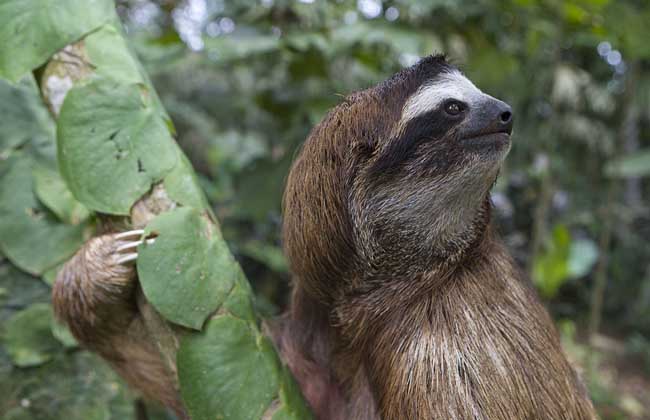
The sloth is slightly monkey-like in shape, with slow movements. It often hangs upside down from tree branches with its claws for hours without moving, living in trees all year round, hooking its claws onto branches to suspend its body upside down and moving about in the trees. This helps it guard against attacks from carnivorous beasts. Its natural enemies are pythons and birds of prey. It has a keen sense of smell, while its sight and hearing are not very well developed. It feeds on leaves and fruit. Now let us take a look at just how lazy sloths really are!
How lazy are sloths really?
The sloth is an exceptionally lazy mammal, too lazy to do anything, even too lazy to eat or play. It can endure hunger for more than a month. When it absolutely must move, its movements are languid and extremely slow. Even when being chased or captured by people, it seems utterly unconcerned, crawling along at a leisurely pace. It is said that after feeding a sloth leaves for half a month, if you pry open its mouth, the leaves are still inside, only slightly rotten, because it is actually too lazy to chew the leaves and simply lets its saliva slowly digest them.
How slow are sloths really?
The sloth is the only wild animal that has plants growing on its body. Although it has feet, it cannot walk and relies on dragging its body forward with its forelimbs. People often compare slow movement to a turtle crawling, but in fact sloths crawl even more slowly than turtles. A sloth usually travels no more than 38 meters a day, needs 1 month to move a distance of 2 kilometers, and even its escape speed does not exceed 0.2 m/s.
Why sloths survive
The reason sloths survive comes down to one word: "laziness." They almost never groom their fur, and their bodies are covered with all kinds of algae. In the humid wild environment, they are almost entirely green, and combined with the fact that they barely move, they are very hard to distinguish from the surrounding branches. In addition, sloth meat does not taste good, which is a survival benefit brought by evolution. Generally, animals with conspicuous colors and a lack of means to defend against enemies taste very bad, and predators will not waste their energy eating unpalatable prey.