How Slow Is a Sloth Really? A Guide to Sloth Movement Speed
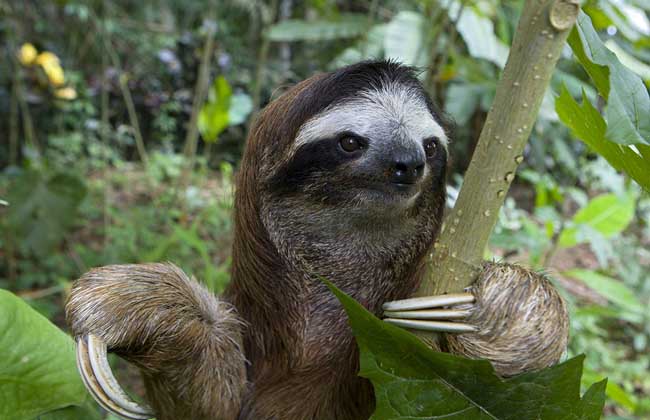
The sloth is the general name for animals in the suborder Folivora under the order Pilosa within the class Mammalia, with a total of 2 families, 2 genera and 6 species. It resembles a monkey in shape, moves sluggishly, lives in trees year-round, and feeds on leaves and fruits. Its fur is grayish-brown all over, appearing green because algae grow on the hair. Its most striking impression is slowness. Let's take a look below at just how slow a sloth really is!
How slow is a sloth really?
The sloth is the only wild animal that has plants growing on its body. Although it has feet, it cannot walk, relying instead on its forelimbs to drag its body forward. People often compare slow movement to a turtle crawling, but a sloth is even slower than a turtle. A sloth usually travels no more than 38 m in a day, needs 1 month to move a distance of 2 km, and even its escape speed does not exceed 0.2 m/s.
How lazy is a sloth really?
The sloth is an extraordinarily lazy mammal, too lazy to do anything, even too lazy to eat or play. It can endure hunger for more than a month, and when it absolutely must move, its movements are languid and extremely slow. Even when being chased or captured, it still crawls slowly as if nothing were happening. It is said that after feeding a sloth leaves for half a month, if you pry open its mouth, the leaves are still inside, only slightly rotten; it is actually too lazy to chew the leaves and simply lets its saliva slowly digest them.
Why are sloths slow?
Sloths move slowly to conserve energy. In fact, sloths move more slowly than any other mammal on Earth, and they are famous for traveling no more than 38 m in a day. Yet their lazy nature allows them to make the most of the resources around them. Because sloths are herbivores, they have very little energy available for moving quickly. Sloths feed on many tree species, possibly including fruits, buds and twigs and leaves, but these foods cannot provide much nutrition. To make up for the energy shortfall, they can only survive on a poor diet through adaptations such as slow movement.