Are sloths protected animals? The answer is here
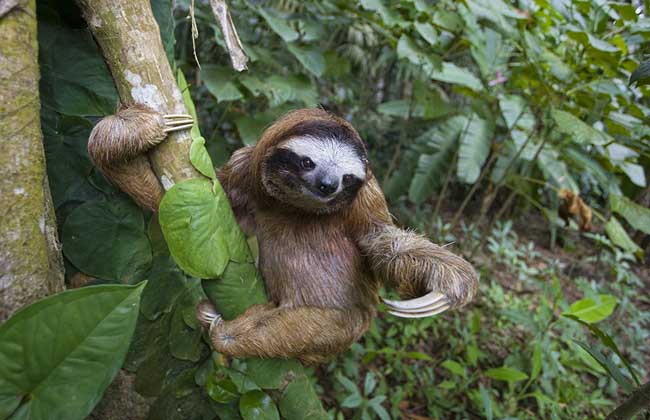
Sloths are native to the tropical forests of Central and South America. They are somewhat monkey-like in shape, move slowly, and have become highly specialized for an arboreal life, having lost the ability to move on the ground. They usually hang upside down from tree branches, with shaggy fur that grows in a reversed direction, and algae growing on the fur give them a green color that makes them hard to spot in the forest. Let us take a look below at whether sloths are protected animals!
Are sloths protected animals?
Sloths are protected animals. Sloths are distributed in Central and South America, including Venezuela, Guyana, Colombia, Ecuador, Peru, Brazil, Honduras, Nicaragua, Costa Rica, Panama, Venezuela, Bolivia, Guyana, Suriname, French Guiana and other places, with a total of 2 families, 2 genera and 6 species, all listed in the IUCN Red List of Threatened Species 2012 ver3.1——Critically Endangered (CR).
How do sloths defend against natural enemies?
The survival of sloths is not threatened by natural enemies. Their fur is very dense and can generally defend against the scratching and biting of small and medium-sized carnivores. They also live in trees, so they have relatively few natural enemies and are not easy to find. Moreover, sloth meat is not tasty, which is an evolutionary benefit for survival. Predators will not waste their energy eating prey that tastes bad. At the same time, a sloth's claws are very formidable, powerful and sharp, and are also a means of defense. However, human destruction of American forests would bring disaster to sloths.
How slow is the movement of a sloth?
The sloth is the only wild animal that has plants growing on its body. Although it has feet, it cannot walk, and relies on its forelimbs to drag its body forward, so to move a distance of 2 km it needs 1 month. It is also an incredibly lazy animal that cannot be bothered to do anything, even to eat or play. It can endure hunger for more than a month, and when it absolutely must move, its movements are also lazy and extremely slow. Even when being chased or caught by people, it seems as if nothing is happening, crawling slowly, and its escape speed does not exceed 0.2 m/s.