What natural predators do sloths have in the wild?
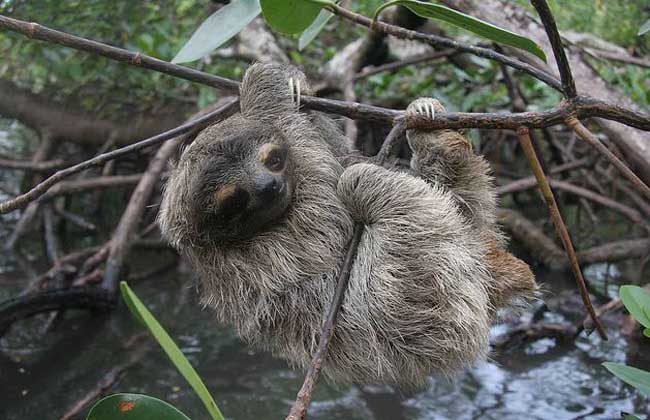
The sloth is the general name for animals of the suborder Folivora under the order Pilosa in the class Mammalia. It lives in trees year-round, hanging upside down with its claws hooked onto branches, feeding on leaves and fruit, and moving about in the trees. This can guard against attacks by carnivorous beasts. It has a keen sense of smell, while its sight and hearing are not very well developed. Its natural predators include pythons, jaguars, harpy eagles, and so on. Let us take a look below at what predators sloths have!
Harpy eagle
The harpy eagle is the largest bird of prey, also known as the Harpy eagle or the American harpy eagle. It actively captures prey, mainly mammals that perch in trees, such as howler monkeys, coatis and sloths, and it also attacks other birds, such as macaws; sometimes even large pythons cannot escape its talons. Its talons are extremely strong and can pin down prey, and can also lift prey weighing more than three-quarters of its own body weight. Its flight speed is very fast, capable of reaching 80 kilometers per hour in a short time. Although it is huge in size, the sound it makes in flight is very slight, so that even when it sweeps over the top of its prey's head, it is not easily noticed.
Jaguar
The jaguar is a large felid living in the Americas, also known as the American tiger. It weighs 70 to 160 kilograms, and its bite force can reach 1250 pounds. It is the third-largest extant felid. Its markings resemble those of a leopard, but its overall body shape is closer to that of a tiger. Among felids, its size is second only to the lion and the tiger. Its food includes fish, sloths, capybaras, deer, agoutis, wild boars, arapaimas, anteaters, monkeys, freshwater turtles, crocodiles, and so on, and it occasionally preys on the enormous green anaconda.
Ocelot
The ocelot inhabits dense tropical rainforests, high mountain forests of the Andes at an altitude of 3800 meters, thick shrubland, semi-desert areas with sparse vegetation, coastal mangroves, and so on. It is mostly active at night and is territorial. Its hunting method is the same as that of most felids, and it is likewise good at swimming and climbing trees. Its food includes monkeys, armadillos, iguanas, turtles and snakes, rodents such as agoutis, fish, land crabs, amphibians and birds, and it sometimes also preys on domestic piglets and poultry.
Python
The python is one of the more primitive snake species in the world today. On each side of its cloaca there is a small claw-like trace, a remnant of degenerated hind limbs. It belongs to arboreal or aquatic snakes, lives in tropical rainforests and humid subtropical forests, and is a euryphagous snake. It often feeds on small muntjacs, small wild boars, rabbits, squirrels and poultry, and can swallow an animal equal to or greater than its own body weight in one meal. Except for the fur of its prey, everything can be digested, but after eating its fill it can go without food for several months.