What Do Sloths Eat? A Comprehensive Analysis of Sloth Dietary Habits
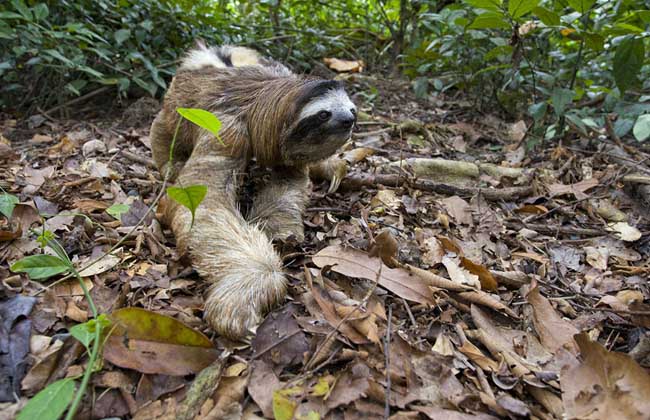
The sloth is the general name for animals of the suborder Folivora under the order Pilosa within the class Mammalia. It resembles a monkey in shape and moves slowly. It got its name because it often hangs upside down from tree branches with its claws for hours without moving. It lives in trees year-round, has a keen sense of smell, and its vision and hearing are not very well developed. Its natural enemies are pythons and birds of prey. Let's take a look below at what sloths eat!
What do sloths eat?
Sloths are strict arboreal animals and pure herbivores, mainly eating leaves, young shoots, and fruit. For sloths, the best food is low-calorie leaves. Eating just a little takes several hours to digest. Once full, they hang upside down from tree branches and sleep lazily. You could say they make their home in trees. They can endure hunger for more than a month. When they absolutely must move, their movements are also lazy and extremely slow.
The movement speed of sloths
The sloth is an unusually lazy mammal. It is too lazy to do anything, even too lazy to eat, too lazy to play. Even when being chased or caught by people, it seems indifferent, crawling slowly. When facing danger, its escape speed cannot exceed 0.2 m/s. People often compare slow movement to a turtle crawling, but in fact sloths crawl even more slowly than turtles.
The distribution range of sloths
Sloths inhabit tropical environments, and their thermoregulatory function is incomplete. At rest, their body temperature fluctuates between 28 and 35°C, and when the ambient temperature drops to 27°C, they show shivering. They have become highly specialized for arboreal life and have lost the ability to move on the ground. They usually hang upside down from tree branches. Their fur is fluffy and grows in a reversed direction, and algae attached to the fur make it appear green, making them difficult to spot in the forest. The three-toed sloth has a relatively wide distribution, from Honduras in the north to northern Argentina in the south. The two-toed sloth has a slightly narrower distribution, from Nicaragua in the north to northern Brazil in the south.