Key Points of Butterfly Farming Technology and Rearing Management Methods
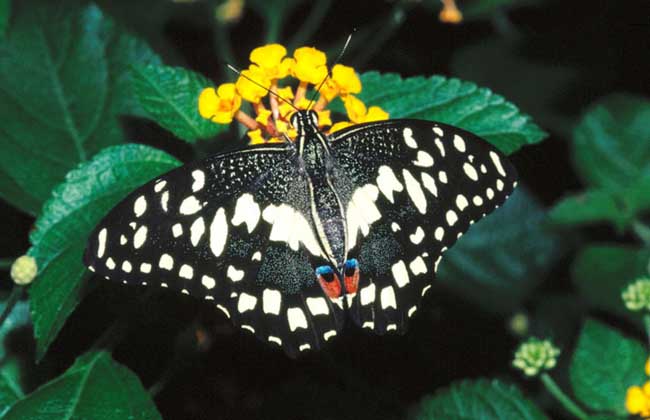
Butterflies are generally brightly colored, with many stripes on their bodies and rich colors, and various markings on their wings and bodies, giving them high ornamental value. According to predictions by relevant departments, artificial butterfly farming will become an emerging farming project in the coming years. The butterfly commodity trade has enduring popularity on the international market, with some rare specimens being priceless. Artificial butterfly farming yields very significant economic benefits.
Butterfly Feeding Habits
1. Larvae: The feeding targets of butterfly larvae vary by species. Most larvae feed on leaves. Some species, such as the pollen butterfly (Aporia crataegi) and the orange-banded orange tip (Anthocharis cardamines), feed on flower buds. Some species bore into tender pods or young fruits; for example, the bean pod lycaenid (Lampides boeticus) bores into tender bean pods, and the gardenia lycaenid (Pseudozizeeria maha) bores into young gardenia fruits. In addition, among the Lycaenidae, a few species of larvae are carnivorous; for example, the coffee scale lycaenid feeds on coffee scales, and the bamboo aphid lycaenid feeds exclusively on bamboo aphids. Such carnivorous species are rare beneficial insects among butterflies.
2. Adults: Most butterflies feed on nectar. As for butterflies that feed on nectar, they not only feed on nectar but also prefer the nectar of certain specific plants. For example, the blue swallowtail (Papilio paris) prefers nectar from Liliaceae plants, the cabbage white (Pieris rapae) prefers nectar from Brassicaceae plants, and the leopard fritillary (Argynnis spp.) prefers nectar from Asteraceae plants, etc. Some butterflies that do not feed on nectar include the bamboo eye butterfly (Lethe spp.), which feeds on the sap of Ficus plants, and the pale purple emperor (Sasakia spp.), which feeds on the sour sap of diseased oak and poplar trees. Some butterflies also feed on the flesh of grapes, and are commonly seen feeding in vineyards.
Butterfly Growth Cycle
1. Eggs: Butterfly eggs are generally round or oval, with a waxy shell on the surface to prevent water evaporation, and a small pore at one end as the passage for sperm to enter. The egg size varies greatly among different butterfly species. Butterflies generally lay eggs on the leaf surface of plants that larvae prefer to eat, preparing food for the larvae.
2. Larvae: After hatching, the main activity of larvae is feeding; they consume large amounts of plant leaves. Larvae come in various shapes, mostly fleshy worms, with a few being hairy caterpillars. Butterflies mainly harm agriculture at the larval stage. As larvae grow, they generally undergo several molts.
3. Pupae: After maturity, larvae must become pupae. Larvae generally attach themselves in hidden places on the underside of plant leaves, securing themselves with several strands of silk, and then directly pupate without a cocoon.
4. Adults: After the pupa matures, the butterfly breaks out of the pupal shell, but it needs some time for its wings to dry and harden. At this time, the butterfly cannot escape natural enemies, which is a dangerous period. After the wings spread out, the butterfly can fly. The forewings and hindwings of butterflies do not flap in sync, so butterflies fluctuate greatly when flying, with graceful postures. The so-called "dancing gracefully" originates from the flight of butterflies. Generally, adult butterflies die before winter arrives after mating and laying eggs, but some species migrate south to spend the winter.
Butterfly Farming Technology
1. Sources of butterfly species: There are mainly 2 ways to obtain butterfly species. One is collecting seed sources in the wild, such as eggs, larvae, pupae, and adults, all of which can be collected. The other is purchasing rare and high-quality butterfly species from butterfly farming units and individuals. Whether self-collected or purchased, they should be compared against butterfly color plates and butterfly identification keys to determine their species and verify authenticity.
2. Rearing equipment: General butterfly farming methods are similar to silkworm rearing. The rearing cage is a wooden frame made of wooden strips, 2 m long, 1.5 m wide, and 1.8-2 m high, covered with 16-18 mesh copper gauze, iron gauze, or nylon cloth.
3. Oviposition and hatching: Wild-caught butterflies must be paired as male and female or already mated and laying eggs. Generally, female butterflies prefer to lay eggs on leaf surfaces, fruit surfaces, smooth branches, or rough crevices. Indoor rearing should prepare suitable oviposition sites according to the different habits of various butterflies, such as folded paper strips, straw, branches, or gauze. During the egg stage, attention should be paid to moisture retention, and wet gauze can be used for covering; excessive dryness will reduce the hatching rate.
4. Larval rearing: Most butterfly larvae feed on plant leaves, stems, flowers, and fruits, which can be collected for feeding. Unused ones can be placed in bottles or have their roots wrapped with wet cotton balls to prevent wilting. The rearing density is preferably 1-2 individuals per 10 sq cm. For certain butterfly species with mutual cannibalism, the density should be lower or they should be reared individually. After larvae develop to the 5th-6th instar, they pupate.
5. Pupation management: Before pupation, some paper balls, straw, or wooden boards carved with pits can be placed in the rearing cage. Place the items covered with pupae on moist soil for moisture retention, and after some time, butterflies can emerge.
6. Adult rearing: Butterflies kept for breeding need sufficient food. Water, honey juice, syrup, and milk are commonly used liquid feeds. The concentration of sugar water or honey water is generally 1-10%, and it can be placed in cups, dishes, or other containers, or absorbed with absorbent cotton or gauze and then placed in containers for feeding. In addition, different feeds can be prepared according to butterfly "tastes"; for example, for swallowtails, feed can be prepared from sucrose, glucose, dry yeast, casein, filter paper powder, cabbage leaves, etc.
7. Overwintering management
① Overwintering as eggs: Overwintering in the egg form is the most common overwintering method for insects. For example, lycaenids and thelycaenids use wild apricot as a host, and overwintering eggs are laid at the base of dormant buds. This is an intelligent method that achieves two goals at once: first, it hides the eggs well, and second, when the larvae hatch in spring, they can feast on fresh tender buds almost without moving.
② Overwintering as larvae: Butterflies that overwinter as larvae are also not uncommon. Most butterflies stop feeding in winter and burrow directly into the soil, so even if it snows, they will not freeze to death. The silver-lined skipperling and the mountain pearl butterfly are representatives. Skippers are masters at making nests; soon after emerging from eggs, they use silk threads to gradually tighten both ends of a leaf, turning the leaf into a rolled leaf tube, and then live inside. Larvae of the snake-eye butterfly emerge from eggs just as winter begins, then do not eat or drink, lying on grass leaves enduring the cold until spring warmth and blooming flowers arrive.
③ Overwintering as pupae: Pupated butterflies can fully endure severe cold and can move without being discovered by predators. Swallowtails are a good representative of overwintering as pupae.
④ Overwintering as adults: Some southern butterflies overwinter as adults, but the survival period depends on the butterfly species. They tighten their wings and hide in wind-sheltered places, and when there is sunlight, they come out to enjoy sunbathing. Some butterflies, such as the monarch butterfly, overwinter by migration.