How to best keep a corn snake? Detailed explanation of keeping methods and precautions
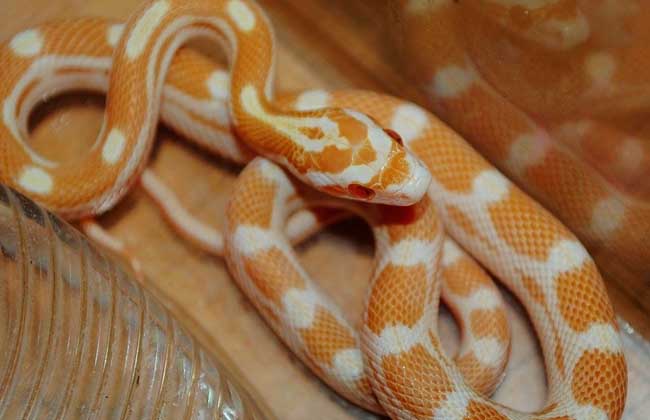
The corn snake generally refers to the corn snake (Pantherophis guttatus), also known as the red rat snake, millet snake, etc. It is a snake of the genus Pantherophis in the family Colubridae, and is known as the most popular pet snake. It comes in a wide variety of colors, has a gentle temperament, and has simple feeding habits. Adults are moderate in size and can easily be picked up and handled, so corn snakes are very suitable as a beginner species. Let's take a look below at how to best keep a corn snake!
Morphological characteristics of the corn snake
The corn snake has a total length of 80-120 cm, and can reach up to 182 cm at most. It has many colors; typically gray, grayish-brown to earthy yellow, orange, etc. can be seen. With these colors as the base, there are red or reddish-brown markings edged in black, and the belly has checkered markings of alternating dark and light. The ventral surface of the tail is in the form of straight stripes. Some gray individuals have black checkered patterns on the belly, so it is also called the "corn snake". The corn snake is the subspecies with the most variations; even snakes in the same clutch of eggs can have horizontal-band and longitudinal-band stripes. Various different body color variations have been bred, such as albino, yellow-removed type, red-removed type, colorless type, and longitudinal-stripe type.
How long is the lifespan of a corn snake?
The lifespan of a corn snake is not very long, generally around 14-20 years. If the living environment is good and the keeping conditions are superior, a corn snake can also live to over 20 years. This has a great deal to do with their living environment. Keeping corn snakes in captivity requires attention to temperature. The favorite temperature of corn snakes is around 30 degrees. When the temperature drops, digestive power decreases; this is also a characteristic of cold-blooded animals. If the keeping temperature for a corn snake is below 26°C, eating food can very easily lead to indigestion, and over time this causes enteritis. Therefore, the lifespan of a corn snake is closely related to the keeping environment we give it.
Living habits of the corn snake
The vast majority of corn snakes entering China are artificially bred variants produced through selective breeding. They should be fed according to artificial conditions. They should not be fed fish, eggs, etc. Artificially kept corn snakes mainly feed on small mammals, and white mice are often chosen. When young, feed them pinky mice; a 1-year-old snake should be fed small white pinky mice, gradually increasing in size. The temperature should be controlled at 28-31 degrees. Below 26 degrees, digestion is slow and feeding is not suitable. Below 24 degrees, enteritis is easily contracted.
Keeping methods for the corn snake
For keeping a corn snake, you can use a relatively simple, tall and wide, well-ventilated, and sturdy keeping box. Note that the top should be fitted with a secure lid to prevent escape. Inside the box, you can place dead wood, artificial turf or newspaper, a stone cave for hiding, etc., prepare dead branches for use when it sheds its skin, as well as a water bowl for drinking and bathing. There should be a reptile lamp for heat preservation. Feeding with small white mice is enough, once every 7-10 days. Do not feed prey that is too large in size or too many at a time, otherwise they will vomit. After each feeding, do not disturb them, so as to avoid making them vomit and causing death.
Precautions for corn snakes
1. Before the corn snake enters your home, all the preparatory work should be done well. You need to prepare a snake box, heating equipment, drinking equipment, and pinky mice of a suitable size as food. Do not wait until after you have bought the snake to consider these things. Because the environment has changed, the temperature, light, smell, and vibrations of a newly bought corn snake are all different from before. In addition, snakes are relatively sensitive to environmental factors and are prone to nervousness and hiding without coming out. Therefore, a newly bought corn snake needs to be allowed to rest quietly for a few days. Give it a quiet environment, clean water, and a hiding place. Be sure not to handle it or rush to feed it.
2. It is normal for a newly brought home corn snake not to eat. It needs a process of adapting to the new environment, and it will gradually eat. However, if your snake is too small, and if the pinky mouse is too large for your baby, it will not eat either. In that case, first feed only a mouse tail or half a mouse. Dipping it in mouse brain or lizard scent will make it more attractive to the snake. Do not stare at it fixedly. In the wild, snakes are very vulnerable to attack while eating, so if they notice another animal watching them, they will not be willing to eat.
3. Snakes are relatively independent animals and generally move about alone, only seeking each other out for mates during the mating season. If multiple snakes are kept together, it can easily cause the problem of snakes eating snakes. Putting different species of snakes in the same keeping box is something that absolutely should be avoided! Juvenile corn snakes will not mind living in a very small place. The key is that they have their own space and do not have a companion that often disturbs them.
4. The advantage of using newspaper as the bottom material of the corn snake box is that excrement is easy to find and cleaning is also very quick. Although from a visual effect standpoint it is not the best, newspaper should not be used as bedding right after reading it when it is new. It should be unfolded and sun-dried in the sun first. Do not use fine sand; fine sand is very easily inhaled into the respiratory tract and lungs. Do not use fir bark; it is toxic.