Do Mules Have Males and Females? A Complete Guide to Sex Differentiation in Mules
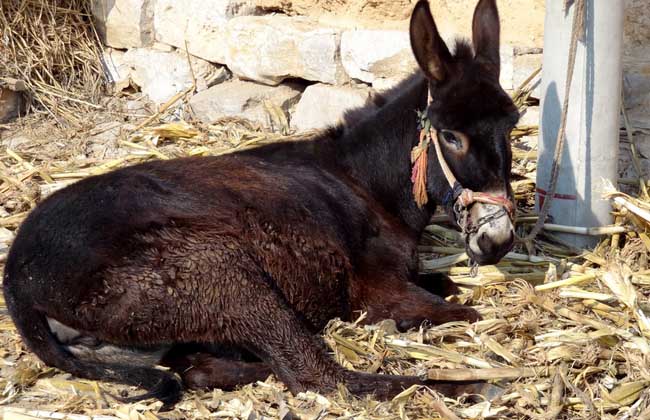
A mule is a hybrid of a horse and a donkey. The genes of a male donkey and a female horse combine more easily, so most mules are bred this way. The chance of genes from a male horse and a female donkey combining is very small; one horse took 6 years to successfully mate and get a donkey pregnant. Many friends can't help but ask: so do mules have males and females? Let's take a look together below!
Do mules have males and females?
Mules do have males and females. Mules are divided into male and female, but male mules and most female mules have no reproductive capacity, because their chromosomes do not form pairs (63 of them), and the germ cells cannot undergo normal division (that is, meiosis). Female mules have sexual function, and the uterus can carry an embryo, but getting a female mule pregnant is the most difficult part. Strictly speaking, the offspring produced by a male donkey and a female horse is called a horse mule (mule), and the offspring produced by a male horse and a female donkey is called a donkey mule (hinny).
Differences between mules and horses
1. A horse mule born from a horse is larger than a donkey mule, but both horse mules and donkey mules are smaller than horses and larger than donkeys.
2. At the base of the tail of both horse mules and donkey mules, there is a short section without long (as in length) hair, whereas the base of a horse's tail is entirely covered in very long hair.
3. A mule's ears are longer and wider than a horse's.
4. A horse has 32 pairs of chromosomes, a donkey has 31 pairs, and a mule has 31.5 pairs, with one unpaired, so it generally cannot reproduce.
Why can't mules reproduce?
1. Whether it is a horse mule or a donkey mule, their chromosome number is not quite normal. This is because donkey chromosome 2 is homologous to horse chromosome 1, donkey 13 to horse 11, and donkey 14 to horse 13. Donkey 16 plus donkey 25 corresponds to horse 5, and a horse has 32 pairs of chromosomes, while a donkey has 31 pairs. Although horses and donkeys are relatively closely related and their gametes can not only combine with each other but also develop into complete individuals, the chromosome number in their offspring's cells becomes 32+31, and no matter what, there is always one chromosome left alone.
2. Still, mules are lucky, because if this were the chromosome number in a horse's cells (in a horse it would be called monosomy 2n-1), it would basically not be able to survive. For a sexually reproducing diploid species, the viability of a pure haploid is better than this state. Conversely, if this were the chromosome composition in a donkey's cells, it would become trisomy, and the extra chromosome would definitely be present in three copies. A mule with 32+31 does not truly have a 31 pairs + 1 relationship. That is to say, during meiosis, it will not simply separate the 31 pairs of chromosomes from each other and then randomly assign the extra one. This is the trouble encountered by mules and other hybrid animals: during the process of chromosome separation, their chromosomes tend to separate randomly and assort freely. This is because for a trisomy that can survive, its fertility, although lower than normal, is still quite high; apart from that extra chromosome, all the rest can pair normally and separate from each other.
3. For the unfortunate mule (taking a female mule as an example), what is the chance of producing a normal egg? For instance, in an extreme case, its egg happens to contain 31 chromosomes from the donkey, or 32 chromosomes from the horse. Obviously such a probability is quite low (interested comrades can calculate it). Of course, the actual situation does not need to be this extreme; after all, the mule itself can survive, which means the egg can contain a harmonious combination of horse and donkey chromosomes.