What Animal Is a Mule? A Complete Guide to Mules
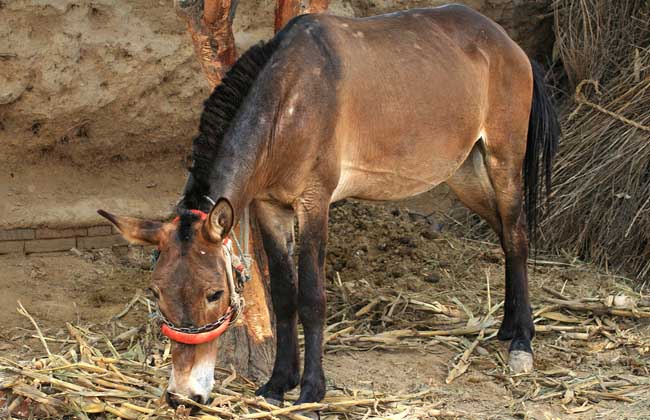
A mule is an animal, a hybrid of a horse and a donkey. The genes of a male donkey and a female horse combine more easily, so most mules are bred this way. The chances of genes from a male horse and a female donkey combining are very small; some horses took 6 years to successfully mate and get a donkey pregnant. Male mules and most female mules are infertile. The infertility is because the chromosomes do not pair up, so germ cells cannot divide normally. Female mules have sexual function, and the uterus can carry an embryo, but the hardest part is getting a female mule pregnant.
Mules come in male and female. The offspring of a male donkey and a female horse is called a "horse mule," while the offspring of a male horse and a female donkey is called a "donkey mule." The mule's thick head, long ears, thin limbs, small narrow hooves, short mane or none at all, chestnuts (horny growths) on the inside, and hairless hocks and tail base make it look like a donkey, while in height, body, neck shape, uniform braying coat, and teeth it looks like a horse, and its bray does not sound exactly like a donkey or a horse.
Horse mules are large, with the donkey's load-bearing capacity and resistance, and the horse's agility and running ability. Especially in remote rural farmland, horse mules are used far too much, because horse mules save much more fodder than horses and are also stronger than horses. They are a kind of draft animal that eats little and works hard, but their weakness is that they cannot run as fast as a horse, are not suited to running, and cannot reproduce.
The characteristics of the donkey mule are of course that it combines more of the donkey's advantages and some of the horse's advantages. It not only has very strong endurance and greater strength, but its food intake is also moderate, and it can be used for about 30 years. Its temperament is of course also good, gentle yet stubborn. It is small in size and generally not as strong as a horse mule or as convenient to use, but the difference is that the donkey mule can sometimes reproduce.
The chromosome numbers of both horse mules and donkey mules are somewhat abnormal. This is because donkey chromosome 2 is homologous to horse chromosome 1, donkey 13 with horse 11, and donkey 14 with horse 13. Donkey 16 plus donkey 25 corresponds to horse 5, and horses have 32 pairs of chromosomes, while donkeys have 31 pairs. Although horses and donkeys are relatively closely related, their gametes can not only combine with each other but can also develop into complete individuals, yet the number of chromosomes in their offspring's cells becomes 32+31, and no matter what, there is always one chromosome left alone.