Is the five-paced snake a protected animal? Detailed introduction to its protection level
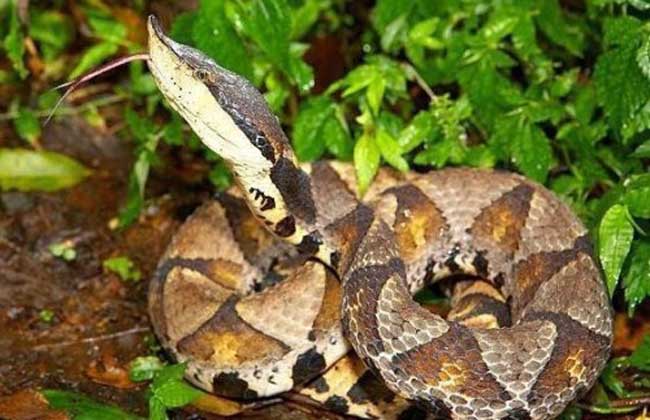
The five-paced snake, scientific name Deinagkistrodon acutus (sharp-nosed pit viper), has a total length of 120-150 cm, with large individuals reaching over 200 cm. Its head is large and triangular, clearly distinguishable from the neck. It lives in mountainous or hilly areas at altitudes of 100-1400 m. It is widely distributed in China, with the Wuyi Mountain area and the mountainous area of southern Anhui having the largest populations. Let us take a look below at whether the five-paced snake is a protected animal!
Is the five-paced snake a protected animal?
The five-paced snake is a protected animal. The five-paced snake is a national second-class endangered protected animal and a second-class protected animal in Anhui Province. According to the numbers of sharp-nosed pit viper dried snakes purchased over the years in the producing areas of each province and sample surveys in key producing areas, China still has 10 million sharp-nosed pit vipers in the wild, and about 10,000 raised artificially in snake farms.
What other names does the five-paced snake have?
The five-paced snake has many regional alternative names. Common alternative names include five-step-down, rock-head spot, white-flowered snake (Hunan, Jiangxi, Zhejiang), Qi snake (medicinal material name, Jiangxi, Anhui, Hunan, Zhejiang), five-paced snake (Zhejiang), five-paced dragon (Anhui, Jiangxi), hundred-paced snake (Guangxi, Hunan, Jiangxi, Taiwan, China), five-club snake, rock dragon (Chongqing), turning-over flower (Hunan, Jiangxi), chessboard snake, chessboard pattern, coiled snake, kasaya snake (northern Fujian), upturned-nose snake (Hunan, Jiangxi, Zhejiang), plowshare snake, three-day two-day sickness (Hunan, Jiangxi), upturned-nose snake (Leishan, Guizhou), plowshare craftsman (Xingyi, Guizhou), silk-releasing snake (Zhejiang), deaf old woman snake (Guangxi), blind snake (Jiangxi), lazy snake (Jiangxi), etc.
What habits does the five-paced snake have?
1. Environment: The hundred-paced snake mainly inhabits evergreen and deciduous mixed forests at altitudes of 400-700 m. In summer it likes to be active around ditches in mountain valleys. Its requirements for habitat conditions are coolness, ventilation, trees and water. It is also active in tea gardens, farmland and woodpiles. It can climb trees and can also enter human dwellings. In winter it mostly overwinters in natural holes formed by tree roots or old rat holes.
2. Activity: The annual activity cycle of the hundred-paced snake is about 9 months, from Awakening of Insects to Major Snow. The main factors affecting activity are temperature, humidity and food. When the air temperature is 20-30°C, it is most frequently active. When the air temperature reaches as high as 35-38°C, it mostly gathers toward the water's edge. At night it is relatively sensitive to illumination by pine torches and has an attacking response to torches. When illuminated by a flashlight, it shows almost no obvious tendency to move toward warmth.
3. Food: Stomach dissection of the hundred-paced snake revealed Niviventer confucianus, brown rat, yellow weasel and spiny-breasted frog. Its distribution in mountain valleys is related to the distribution and number of spiny-breasted frogs. Stomach dissection also revealed yellow-bellied rats, indicating that the sharp-nosed pit viper enters human dwellings. Bird feathers discharged after swallowing were also seen, identified as green woodpecker. In snake pools, frogs and white mice were fed to it, and young snakes were once seen catching the orthopteran insect camel cricket as food.
4. Reproduction: The secretion from the scent glands at the base of the female hundred-paced snake's tail has a special odor and can attract males. Before mating there is mate-chasing behavior, and during mating they entwine each other. Eggs are mostly laid in natural caves, with shallow, short and dry tunnel passages. At one terraced field, the cave opening seen was 10 cm, and the tunnel passage was only 25 cm. The number of eggs laid varies. Young female snakes lay eggs early but in small numbers, while old female snakes lay eggs late but in large numbers, generally 12-18 eggs. The eggs are white, oblong, with soft shells that feel like paper. The eggs weigh 16-18 g and measure 42-45×25-30 mm. When laid, the eggs are mostly arranged upright in a circle and stuck together. Usually laying is completed in 1-3 days, and the young snakes hatch in about 24 days. At hatching, the body length is 19 cm. After 10 days they begin the first shedding, and after 49 days the second shedding.
5. Hibernation: The hibernation period is about 3 months, from Major Snow to the Awakening of Insects of the following year. The overwintering caves are relatively deep. When there are many snakes, large and small snakes are together, and sometimes they also live mixed in the same cave with pit vipers. When the air temperature is 8°C, it is equal to the snake's body surface temperature. When the air temperature is higher than 8°C, the snake's body surface temperature is always slightly lower than the air temperature by 1°C. When the air temperature is lower than 8°C, the snake's body surface temperature is slightly higher than the air temperature by 1°C. When the snake's body surface temperature is above 11°C, it can bite people. Artificially raised young snakes, when the air temperature is below 17°C, remain coiled and motionless. At 12°C, when touched with tweezers, they show a state of opening the mouth to bite.