Which is more venomous, the five-paced pit viper or the cobra?
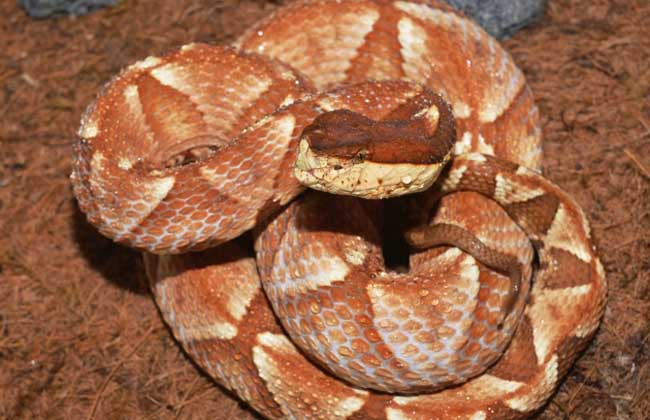
The five-paced pit viper and the cobra are both among the ten most highly venomous snakes in our country. The cobra is a mixed-venom snake, but its venom is mainly neurotoxic, while the five-paced pit viper is a highly venomous hemotoxic snake and is the representative hemotoxic snake. Bites from both of these snakes can lead to serious consequences. Let us take a look below at which is more venomous, the five-paced pit viper or the cobra!
Someone conducted an experiment in which a cobra and a five-paced pit viper faced off. As a result, they both bit each other. The cobra was quickly envenomated and could no longer move, while the five-paced pit viper was completely unaffected. In terms of venom yield, the cobra's venom is much less than that of the five-paced pit viper. In terms of toxicity per unit of venom, cobra venom is more potent than five-paced pit viper venom. However, as just mentioned, the five-paced pit viper's venom yield is very large. In our country, aside from the king cobra's venom yield, it is the five-paced pit viper that has the largest venom yield.
The five-paced pit viper is more ferocious than the cobra and strikes faster than the cobra. It is the fastest-striking venomous snake in the world. When a five-paced pit viper and a cobra of similar size are placed together, in less than one minute, the five-paced pit viper bites the cobra, while the cobra fails to bite the five-paced pit viper. The five-paced pit viper waits quietly nearby as the cobra dies within a few minutes. Of course, unlike the king cobra, the five-paced pit viper does not have antivenom in its body. If it is bitten by a cobra, it will also die. To kill an opponent without being killed by the opponent, it must far surpass the opponent in the speed of attack and dodging.
A five-paced pit viper bite is much more serious than a cobra bite. The mortality rate from five-paced pit viper bites is very high, much higher than that of cobra bites. Looking at the cobras in our country at present, the Zhoushan cobra is much less venomous than the Bengal cobra subspecies. Some subspecies of the Bengal cobra also have large venom yields and especially large body sizes, such as the Napo cobra in Yunnan, China, and the artificially kept Thai cobra and Vietnamese cobra, all of which are Bengal subspecies.
In the early stage after a five-paced pit viper bite, blisters of varying sizes appear on the affected limb. The more and larger the blisters, the more severe the envenomation. Afterwards, with the bite wound as the center, severe ulceration appears. Many people are disabled by five-paced pit viper bites, which is to say that five-paced pit viper bites are very serious, and most of those who do not die are left with disabilities. A cobra bite produces severe neurotoxic symptoms and can also cause muscle breakdown of the hemotoxic type. In particular, a Bengal cobra bite can cause large-area ulceration, though there is less ulceration than with a five-paced pit viper.