Soak fig cuttings in this kind of water and thick white roots shoot up vigorously, and in 2 years the branches are loaded with fruit.
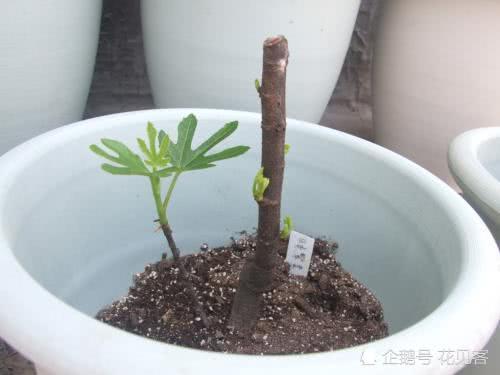
The fig is a flowering plant, and it has a certain ornamental value in itself. The fruit it produces can be eaten; in fact, what we eat is actually the flower. Because it tastes delicious and sweet, and has effects such as tonifying the spleen and stomach, it has been deeply loved by the broad community of flower growers in recent years.
Figs are mostly propagated by cuttings and division, with cuttings being the main method. Today Hua'er will also share with everyone the cutting propagation of figs: toss the branches into this kind of "water" and soak them, and thick white roots come surging out, and in 2 years the branches are loaded with fruit!
The cutting propagation of figs is generally most suitable in March or in summer. Depending on the season, the part of the branch chosen also differs. Nowadays semi-lignified green branches are generally used; choose a branch about the size of a thumb, usually 30-50cm in length, appropriately remove 3/4 of the leaves at the head, keeping only some healthy leaves at the top, and after pruning leave it to dry.
If you take it directly for cutting, the rooting speed is very slow, roughly about a month, and later growth is also relatively slow, with fewer fruits. So before cutting it is best to first soak it in willow water, because willow sap contains substances such as salicylic acid, which can promote the branch's rooting and sprouting, maintain its vitality, and let it grow continuously, working even better than rooting hormone.
The specific method: choose a few healthy, tender branches, crush them and put them in a larger container, then add clean water. After an hour, put the fig branches in to soak, and after soaking for half an hour they can be taken for cutting.
After cutting, it basically needs to be cultivated for one year first. The growing medium used is mostly nutrient soil, with leaf mold and garden soil as the base soil, mixed with some sand, and a layer of base fertilizer placed at the bottom to provide nutrients; insert it diagonally directly into the soil, at a depth between 1/3 and 2/3. After cutting, press the soil firm, then water thoroughly and move it to a cool, ventilated place, keeping the pot soil moist during care.
After about half a month the thick white roots come surging out. When you see the leaves on the branch regain their vitality and new buds differentiate, then you can let it get some scattered light to promote growth, and after two weeks it can basically be cared for normally.
Figs grow very fast, and in 2 years they can grow into a large plant, with the plant covered in fruit, big and delicious.
That is all for the introduction to fig cutting propagation. If fellow flower growers have other additions, you can share them with everyone in the comment section below. If you want to learn more about flower growing, you can follow Huajianke!