What are the key points of the cultivation method for rose campion?
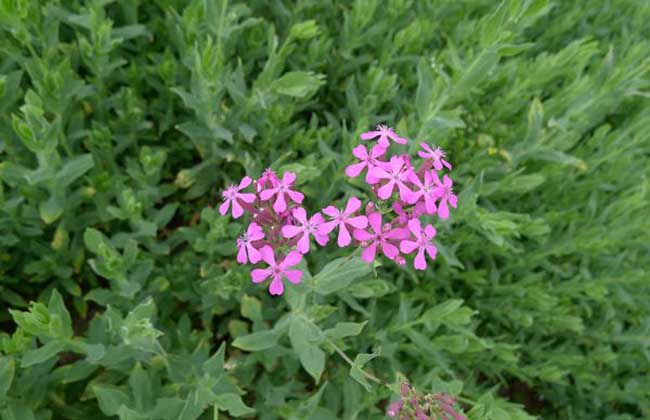
Rose campion, also known as clock campion, is an annual herbaceous plant of the genus Silene in the carnation family (Caryophyllaceae). It has high ornamental value and is cultivated in cities and gardens across our country for viewing; it can be used as a cut flower or to lay out flower borders, is suitable for configuring flower paths, flower borders, and embellishing rock gardens or used as ground cover, and can also be potted or used as a cut flower. Let's take a look together at the cultivation method for rose campion!
Growth habits of rose campion
Rose campion is native to southern Europe. It prefers warmth and sufficient light; full sun and partial sun are both ideal, and it grows poorly in shaded places. It is cold-tolerant and drought-tolerant, prefers loose, well-drained loam, likes sufficient sunlight and warmth but avoids high temperature and excessive moisture. The suitable growth temperature is about 15-25°C. The best cultivation soil is sandy loam with good drainage and aeration; full sun and partial sun are both ideal, and it grows poorly in shaded places.
Propagation method for rose campion
The suitable germination temperature for rose campion seeds is 15-20°C. After sowing, cover the seeds with 0.2 cm of fine soil and maintain moisture; they will germinate in about 1 week. Once the seedlings have more than 4-6 true leaves, transplant them. Direct sowing is also possible: scatter the seeds directly onto the cultivation site and thin them after the seedlings are established. For flower beds, the plant spacing is 20-30 cm; for pots, 1 plant per 4-5 inch pot.
Cultivation method for rose campion
1. Humidity: Rose campion likes relatively high air humidity. If the air humidity is too low, individual flowers will fade more quickly. It also fears rain, and the leaves need to be kept dry at night. The optimal relative air humidity is 65-75%.
2. Temperature: Rose campion likes a warm climate and avoids extreme heat. When the summer temperature is above 34°C, its growth is noticeably poor. It is not tolerant of frost and cold; when the winter temperature falls below 4°C, it enters dormancy or dies. The most suitable growth temperature is 15-25°C. It is generally sown in autumn and winter to avoid the high summer temperatures.
3. Light: Rose campion needs sufficient sunlight in spring, summer and autumn. When the temperature is relatively high, if it is kept in direct sunlight, the leaves will noticeably become smaller, the internodes of the branches will shorten, the lower leaves will yellow and drop, and growth will be very slow or it will enter a semi-dormant state. After keeping it indoors for a period during the flowering stage, move it to a shaded outdoor spot for a period, and alternate between the two to help the plant accumulate nutrients and continue flowering.
4. Fertilizer and water: Like other herbaceous flowers, rose campion has a relatively high demand for fertilizer and water, but the fertilization (and watering) principle of “light fertilizer applied frequently, small amounts with more applications, complete nutrition” should be followed. After fertilizing, keep the leaves and flowers dry at night. At the same time, manage fertilizer and water in the cycle of Hyponex → clear water → clear water → Hyponex → clear water → clear water.
5. Pruning: Every two months, cut off the branches with old and yellow leaves. As long as the temperature is suitable, it can bloom in all four seasons. Before flowering, generally pinch the tips twice to encourage more flowering branches to sprout. One to two weeks after potting, or when the seedlings are 6-10 cm tall and have more than six leaves, remove the growing tips, keeping the lower 3-4 leaves, to encourage branching. Three to five weeks after the first pinching, or when the side branches grow to 6-8 cm long, carry out the second pinching, that is, remove the growing tips of the side branches, keeping the lower 4 leaves of the side branches. After two pinchings, the plant shape will be more ideal and the number of flowers will also be greater.
6. Pests and diseases: Common pests and diseases of rose campion include stem rot, rust, and damage from aphids and whiteflies. For stem rot, spray with a 500-fold dilution of 50% thiophanate-methyl wettable powder; for rust, spray with a 2000-fold dilution of 50% carboxin wettable powder. For aphids and whiteflies, spray with a 1000-1500 fold dilution of 10% buprofezin, or a 3000-fold dilution of 1.8% abamectin.
Four-season management of rose campion
1. Spring and autumn: Spring and autumn are the peak growing seasons for rose campion. For outdoor cultivation, water every 1-4 days; shorten the interval on sunny days or during high temperatures, and lengthen the interval or skip watering on rainy days or during low temperatures. For indoor cultivation, water every 2-6 days; shorten the interval on sunny days or during high temperatures, and lengthen the interval or skip watering on rainy days or during low temperatures.
2. Summer: During the high-temperature period in summer, it often enters a dormant state and has little demand for fertilizer and water, so fertilizer and water may even need to be restricted. For outdoor cultivation, water every 3-5 days; shorten the interval on sunny days or during high temperatures, and lengthen the interval or skip watering on rainy days or during low temperatures. For indoor cultivation, water every 4-7 days; shorten the interval on sunny days or during high temperatures, and lengthen the interval or skip watering on rainy days or during low temperatures. Try to schedule watering in the morning when the temperature is lower, and keep the leaves dry at night. Also mist the plants frequently.
3. Winter: During the winter dormant period, the main task for rose campion is to control fertilizer and water. The interval for fertilizer and water management is about 7-10 days; shorten the interval on sunny days or during high temperatures, and lengthen the interval or skip watering on rainy days or during low temperatures. Try to schedule watering at noon on sunny days when the temperature is higher.