What are the cultivation methods for Sandersonia?
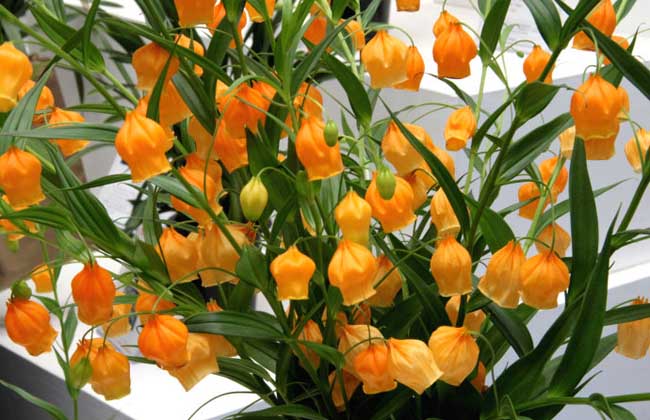
Sandersonia is also known as Christmas bells, Christmas bellflower, and Chinese lantern flower, among other names. It is a perennial bulbous herbaceous plant in the genus Sandersonia of the family Colchicaceae. It gets its name because its flower shape and color closely resemble Chinese palace lanterns. It originated in the eastern region of South Africa, usually growing in moist grasslands or forest edges, and has high ornamental value. Now let us take a look at the cultivation methods for Sandersonia!
Growth habits of Sandersonia
Sandersonia originated in South Africa, where the humid and rainy summer is its growing season, and the dry, rainless winter is its dormancy period. Because Sandersonia does not have strict requirements for temperature and sunlight, it is very suitable for field and greenhouse cultivation in temperate and subtropical regions. Sandersonia is a temperate crop; the growing medium should have good water permeability, and watering should be regular. The medium should be disinfected regularly with fungicides, and it is best to grow it in a well-ventilated greenhouse. The optimal soil temperature for growth is 15-22°C, and the optimal air temperature for growth is 12-28°C.
Propagation methods for Sandersonia
1. Sowing: Sandersonia seeds have a deep dormancy mechanism, and the germination rate is extremely low. Treatment with gibberellin can increase the germination rate to 20%. After the seeds sprout, after one growing season they can grow into small bulbs of 1-2 grams, and the small bulbs then need another 1-2 years to be grown into commercial bulbs for cut flower cultivation.
2. Bulb division: When propagating Sandersonia bulbs, each bulb has two growing points and can produce two new daughter bulbs. The bulbs produced by this method are larger, but the propagation rate is relatively low. The bulbs are planted in spring, and when the soil temperature is above 16°C, they will sprout in 2-3 weeks. If the climate is cool or the dormancy period is less than 16 weeks, it is recommended to force sprouting. Under suitable conditions, the plants can bloom in 45-60 days.
Cultivation methods for Sandersonia
1. Soil: Choose loose, fertile soil with good drainage. If the soil is low in acidity, quicklime should be used to improve it; this can both improve the soil and kill some pathogens and underground pests in the soil. If the soil is relatively alkaline, phosphate added to peat can be used for improvement, and the amount used depends on the specific situation.
2. Fertilization: When preparing the land for Sandersonia, spread fully decomposed organic fertilizer. Apply 375-600 kg/hectare of compound fertilizer + 30,000 kg/hectare of organic fertilizer or other decomposed organic fertilizer as base fertilizer, then evenly mix it into the top 30 cm of topsoil. In plots where other bulbous flowers have been grown, 800-fold trichlorfon should also be added to prevent root mite damage. A very high nutrient level is not required; generally no fertilizer is applied during the first three weeks of cultivation, and during this period ensuring good root development is most important.
3. Temperature: The most suitable soil temperature during the growing period of Sandersonia is 18-24°C. During the first three weeks, or at least before stem roots have grown out, the temperature should be low. When the temperature is above 20°C, it will lead to a decline in rooting quality, especially in summer, so keeping or promoting cool soil temperature is indispensable. If the daytime temperature is too high, it will reduce plant height, decrease the number of flower buds per stem, and produce blind flowers. If the nighttime temperature is below 15°C, it will cause bud drop and leaf yellowing, reducing ornamental value.
4. Light: Insufficient light is not conducive to flower bud formation in Sandersonia, and excessively strong light can also affect the quality of cut flowers. During the growing period, shading treatment and supplemental lighting measures are needed to change the adverse effects of light factors on plant growth. Shading in the early growth stage helps increase plant height, especially in summer. Use shade nets inside and outside the greenhouse and around it to avoid excessively high temperatures in the greenhouse, which can cause damage to plants and flower buds. From the flower bud differentiation stage to the emergence of flower buds is the sensitive period for leaf burn, and care should be taken that light and humidity do not change too much.
5. Water: Sandersonia is easily affected by high salinity, especially sodium salts. Too high salinity will lead to water deficiency. It is recommended to irrigate for 20-30 minutes every day starting from the 17th week after planting, and use a conductivity meter to regularly test soil electrical conductivity. Irrigate from the top during the first 8 weeks after planting, then change the bulb seat zone for the next 9 weeks, and stop watering 17 weeks after planting. Harvest the bulbs 4-6 weeks after stopping watering. When watering, be sure to pay attention to the amount of water, which must not exceed 20 cm.
6. Ventilation: In spring, summer, and autumn, temperatures are guaranteed. When the midday temperature is relatively high, the greenhouse film and roof windows can be opened in the morning for ventilation, and humidity can be adjusted in a slightly lower temperature environment to avoid sudden humidity changes during high-temperature periods. In winter, when the temperature is low, insulation measures should be taken. Air exchange must be carried out at noon when the outside temperature is high, with ventilation and air exchange carried out intermittently.
7. Pests and diseases: Common diseases of Sandersonia include gray mold, leaf spot, and root rot, mainly prevented and controlled through disinfection of bulbs and soil. If disease occurs during the growing period, fungicides such as amobam and carbendazim can be sprayed alternately at regular intervals every 7-10 days. Common pests are mainly underground pests such as root mites and aphids, controlled with phoxim and trichlorfon.