What does duckweed mean? A detailed explanation of duckweed's meaning
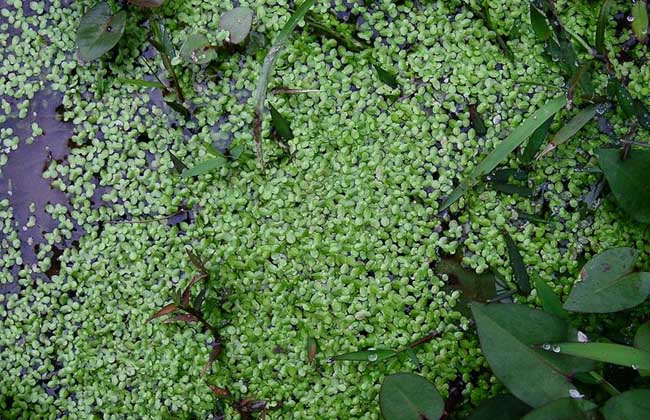
Duckweed, also known as qingping, tianping, shuipingcao and so on, is a floating aquatic plant of the genus Lemna in the family Lemnaceae, and is also used as a general term for plants of the family Lemnaceae; it is often used as a metaphor for a person's wandering life or frivolous character. The whole plant can be used as feed for livestock and poultry, and the whole plant with roots is used as medicine; it is cold in nature and pungent in taste, with the functions of inducing sweating and promoting eruption, clearing heat and promoting diuresis, and is mainly used to treat exterior pathogenic fever, measles, edema and other conditions.
The frond of duckweed is symmetrical, green on the surface, light yellow or greenish white or often purple on the back, nearly circular, obovate or obovate-elliptic, with entire margins, 1.5 to 5 mm long and 2 to 3 mm wide, slightly convex above or raised along the midline, with 3 veins that are indistinct; on the back it bears 1 pendent filiform root, the root is white, 3 to 4 cm long, the root cap is obtuse, and the root sheath is wingless.
On one side of the back of the duckweed frond there is a pouch, in which a new frond forms and emerges, connected to the parent body by a very short slender stalk, and then detaches. The female flower has 1 campylotropous ovule, the fruit is wingless and nearly top-shaped, and the seed has protruding endosperm and 12 to 15 longitudinal ribs. It generally does not bloom often and reproduces by buds.
Duckweed prefers a warm climate and humid environment, and avoids severe cold. It grows in paddy fields, ponds and marshes or other still water areas, often growing mixed with Spirodela polyrhiza, forming a floating community densely covering the water surface; because this species reproduces quickly, as Li Shizhen said, "one leaf overnight produces several leaves", it usually occupies an absolute dominance in the community.
Duckweed is propagated by seeds and by division. For seed propagation, harvest mature seeds and sow them immediately; wrap the seeds in yellow mud into small balls, with 2 to 3 seeds per ball, and throw them into the water surface of the cultivation area. Division propagation is carried out in spring and summer; scoop up some mother plants and scatter them into the water surface of the cultivation area. During cultivation, weed the water surface frequently, keep the cultivation water surface still, pay attention to irrigation, and prevent drought.
Duckweed is a good feed for pigs and ducks, and is also bait for grass carp; it contains a large amount of water-soluble vitamins such as vitamin B1, B2, and C. It can be used as medicine, with the effects of inducing sweating, dispelling wind, promoting water metabolism, clearing heat, and detoxifying, and treats seasonal hot abscess, indistinct macules, wind-heat painful rash, skin itching, edema, amenorrhea, sores and tinea, erysipelas, scalds and other conditions.