Pteris fern cultivation methods and care tips
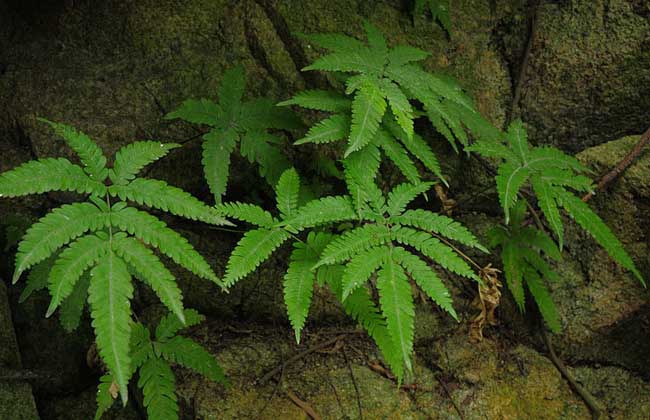
Pteris fern, also known as jinglancao, xiaoye fengweicao, etc., is a fern of the genus Pteris in the family Pteridaceae. Its tender leaves are edible and are called "fiddlehead fern". Grown in pots, it can accent desks, tea tables, windowsills and balconies, and is also suitable for hanging or wall-mounted displays in living rooms, studies and bedrooms. The whole plant can be used medicinally. Let's take a look at the cultivation methods of Pteris fern!
Growth habits of Pteris fern
Pteris fern is native to China as well as Europe, Africa and other places. It grows at the edges of bamboo forests, in river valleys, on walls, beside wells, in rock crevices and in damp mountain forest areas. It likes warm, humid and shady environments and dislikes waterlogging. It requires shade, humid air and well-drained soil. It is relatively cold-tolerant, with an optimum growth temperature of 10-26°C, and the overwintering temperature can drop as low as 0-5°C.
Propagation methods of Pteris fern
1. Spore propagation: Pteris fern has no seeds and usually reproduces by asexual spores. Since fresher spores germinate faster and have a higher germination rate, collect and sow them as soon as possible after the spores mature. Before sowing, disinfect the planting containers and substrate and keep them clean and hygienic. Research has found that using 1/2MS with sucrose added at a concentration below 2% as the culture medium gives the highest seedling formation rate. After the spores germinate and the seedlings grow to a certain size, they can be potted.
2. Division propagation: Division propagation is the most common propagation method for ferns. This method is simple and easy to carry out, but the survival rate of propagation is low. It is generally used when the propagation quantity is not large and is not suitable for large-scale production. For household potted Pteris fern, division is usually carried out in April and May. Before division, reduce watering to make it easier to remove the soil. After removing the soil, use a sharp tool to divide the plant into 3-4 clumps, then plant them separately in small pots and care for them carefully until new shoots emerge from the tuberous stem area and form new plants.
Cultivation methods of Pteris fern
1. Water and fertilizer: Pteris fern should keep the potting soil moist, and water should be supplied abundantly during the growing season. Generally, watering once every 2-3 days is sufficient. Although the soil should be kept moist, for Pteris fern a slight drying between waterings is harmless. Pteris fern should not be overwatered either, as too much water can cause leaf drop.
2. Temperature: The suitable temperature for Pteris fern is 16-28°C. Growth is poor above 30°C or below 15°C. In winter it must not go below 5°C. Winter care requires heating equipment. If no heating facilities are available, double-layer insulation facilities can be used. In winter, when the temperature drops to 22-24°C in the afternoon, the greenhouse should be sealed promptly. Summer care requires cooling equipment (exhaust fans and water curtains).
3. Humidity: Pteris fern likes high-humidity environments and cannot tolerate dryness. During care, water should be sprayed frequently on the plant and its growing environment to increase humidity. The suitable humidity is around 75-80%. Excessive dryness can cause the leaf edges to turn yellow and withered, or even the entire leaf to turn yellow and withered.
4. Light: Pteris fern likes warm, semi-shaded environments and is suitable for diffused light. It must not be exposed to direct sunlight, otherwise it tends to wilt and curl. After planting, controlling light at 2000-3000 Lux for 15 days is more suitable for the growth of small seedlings. In the first month after planting, controlling overall light at 3000-4000 Lux is more suitable. In the second month, controlling overall light at 6000-7000 Lux is more suitable. In the third, fourth and fifth months, controlling overall light at around 7000-8000 Lux is more suitable.
5. Pruning: During the rapid growth period of Pteris fern, growth is fast, and overly dense leaf clusters lead to weakened growth. Old leaves at the bottom have poor ventilation and light penetration, causing leaf withering, or water droplets accumulate on the leaves for a long time, making leaf rot likely. Therefore, during rapid growth, pruning and repotting should be carried out in time. It is best to prune in autumn, removing dead leaves and yellow leaves, ensuring both smooth air circulation among the plants and the overall good appearance of the plant.
6. Pests and diseases: Pteris fern is not easily affected by diseases and pests during the growing period. However, if the growing environment temperature is too low, ventilation and light penetration are poor, and air humidity is too high, it is very susceptible to gray mold and damping-off, accompanied by pests such as red spider mites, scale insects and slugs, causing the plant to wilt, droop, or even die.