How to care for Pachypodium? Keep this cultivation guide handy
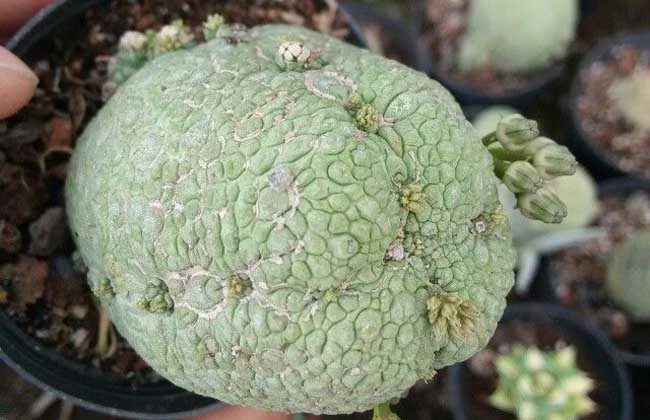
Pachypodium, also known as "Dianle Yu", is a succulent plant of the genus Pachypodium in the Apocynaceae family. Its fleshy stem is spherical when young and gradually becomes cylindrical, covered with dense triangular, hemispherical, or conical tubercles that resemble the spiral curls of hair on a Buddha's head. This is how it got the name "Buddha-head Jade". The plant has a peculiar shape and an elegant yet noble color. Let's take a look at how to cultivate Pachypodium!
Growth habits of Pachypodium
Pachypodium is native to southern Africa and distributed in South Africa, Namibia, and other places. It prefers a warm, dry, and sunny environment with good ventilation. It is slightly tolerant of partial shade and drought, but dislikes overly moist soil. It is not cold-hardy and also fears extreme heat. It grows well under conditions of warm winters and cool summers.
Propagation methods for Pachypodium
Pachypodium can be propagated by cutting off side shoots for cuttings. If there are no side shoots, you can cut off the upper part of the plant, let it dry for 5-7 days, and insert it into coarse sand or vermiculite. The lower part remains in the original soil and will soon produce many small plantlets. Once they grow a bit larger, remove them for cuttings. For clustered plants, division can also be done when repotting. If seeds can be collected, sowing can also be used for propagation.
Cultivation methods for Pachypodium
1. Light: Pachypodium's growing season is from March to May and September to November. Provide ample and stable light, and regularly rotate the pot so that every part of the plant receives even sunlight, preventing the fleshy stem from growing crooked. If light is inconsistent, the plant will grow unevenly in thickness, affecting its ornamental value.
2. Watering: Water Pachypodium by "watering thoroughly when dry". Be careful to prevent rain exposure. Apply a diluted decomposed liquid fertilizer or compound fertilizer once a month.
3. Repotting: Repot Pachypodium once every spring or autumn. The potting soil should be loose and fertile, contain an appropriate amount of lime, and have good drainage. You can mix 3 parts leaf mold, 1 part garden soil, 3 parts coarse sand or vermiculite, and add a small amount of bone meal.
4. Summer: During high temperatures in summer, Pachypodium enters a dormant or semi-dormant state. Although the fleshy stem stops growing, flowers continue to bloom. It can be moved to a bright location without direct sunlight for care. Water slightly, but not excessively. Enhance ventilation to prevent rot caused by stuffy, humid conditions.
5. Winter: In cold winter, Pachypodium also enters dormancy. It requires ample sunlight, strictly controlled watering, and the temperature must not drop below 10°C.