How to grow larkspur? Detailed guide to cultivation methods and precautions
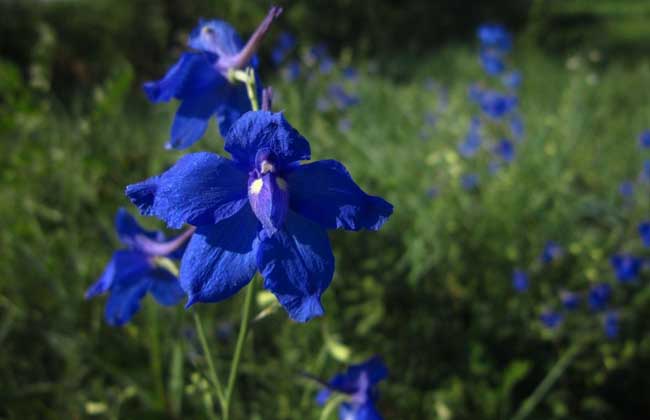
Larkspur is a perennial herbaceous plant of the genus Delphinium in the buttercup family (Ranunculaceae), native to southern Europe. It is cultivated in every province of China. It gets its name because its distinctive flower shape closely resembles little swallows. The flower diameter is about 4 cm, and its elegant form makes it highly appealing. It is often planted in flower beds and borders, and can also be used as a cut flower. Let us take a look at how to grow larkspur!
Growth habits of larkspur
Larkspur has strong adaptability to climate, with a moist and cool climate being most suitable. The optimum temperature for seed germination is 15°C. During the growing period, the optimum daytime temperature is 20-25°C, and at night 3-15°C. It likes light and can tolerate a little shade; during the growing period it can be placed in partial shade, but during the flowering period it needs full sunlight. It prefers fertile, moist, well-drained acidic soil, and can also tolerate drought and slightly tolerate waterlogging. A pH of 5.5-6.0 is best.
Propagation methods for larkspur
Larkspur can be propagated by seed or by cuttings. For autumn sowing, sow seeds from late August to early September, first sowing into an open-field seedbed, then moving into a cold frame or cold room to overwinter before winter, and planting out when spring is warm. In the south, direct sowing in the open field in early spring, with thinning to maintain a plant spacing of 25-5 cm. In the north, seedlings are generally raised in advance and planted out in mid-April; transplant when there are 2-4 true leaves, and plant out when there are 4-7 true leaves. Pay attention to drainage on rainy days. Cuttings are taken in spring; when new leaves have grown more than 15 cm, cut cuttings and insert them into sandy soil. Division can be done in both spring and autumn, generally once every 2-3 years.
Cultivation methods for larkspur
1. Care: After sowing larkspur, the soil must be kept moist. The simplest method is to cover with some grass, and gradually remove the cover as seedlings emerge.
2. Transplanting: When larkspur has grown 2 true leaves, transplant it with soil into a small pot, and change to another pot once the seedling has grown larger.
3. Watering: Water larkspur on the principle of watering when dry and letting it dry slightly between waterings. During the flowering period, water a little more appropriately to avoid the soil becoming too dry.
4. Fertilizing: When repotting larkspur, apply dry manure as a base fertilizer, and afterwards apply fully decomposed cake fertilizer water 1-3 times a month according to growth conditions.
5. Height control: After repotting larkspur, use paclobutrazol to control plant height. Specifically, apply 0.5% paclobutrazol once every 2 weeks.
6. Seed collection: Collect larkspur seeds in good time to prevent the seed pods from splitting after ripening.
7. Diseases: Common larkspur diseases include black spot, crown and root rot, and chrysanthemum leaf blight nematode, which harm leaves, flower buds and stems. They can be prevented and treated by spraying with 30% thiophanate-methyl wettable powder at 500 times dilution.
8. Pests: Common larkspur pests include aphids and noctuid moths. Spray with 10% chlormephos EC at 2000 times dilution to kill them.