How to grow lilacs? Detailed guide to cultivation methods and precautions
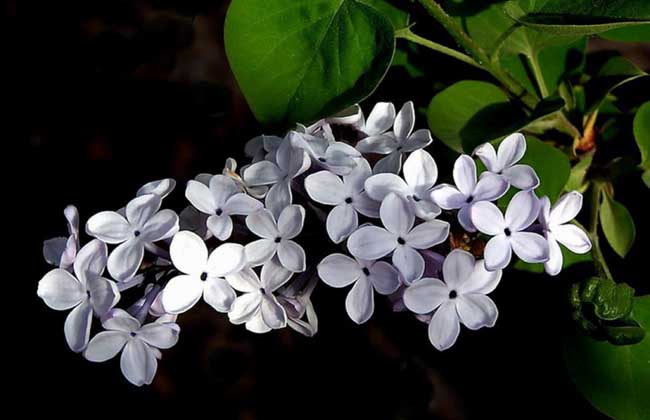
Lilac is the collective name for deciduous shrubs or small trees of the genus Syringa in the family Oleaceae. Many of its species have flowers that are raw materials for extracting essential oils and blending high-grade fragrances, and its branches and leaves are lush, with elegant, fragrant flowers, so it is widely cultivated in gardens for ornamental purposes and is a treasure of the garden. Let us take a look at the cultivation methods for lilacs!
Lilac growth habits
Lilac likes light and prefers warmth, humidity and plenty of sunshine. It tolerates slight shade, but grows weakly and blooms sparsely in shady or semi-shady places. It has a certain cold resistance and strong drought tolerance. It is not strict about soil requirements and tolerates poor soil, but prefers fertile, well-drained soil. It should not be planted in low-lying land, as waterlogging can cause disease and even death of the whole plant. Bare-root transplanting is done after leaf fall and before bud break, choosing a sunny spot with fertile soil and good drainage. It is mainly distributed in subtropical subalpine zones, on forest edges and under forests from the warm temperate zone to the temperate zone, and in sunny thickets of the cold temperate zone.
Lilac propagation methods
1. Grafting: Grafting is the main propagation method, and either bud grafting or scion grafting can be used. The rootstock is mostly European lilac or Ligustrum quihoui. In North China, bud grafting is generally carried out from late June to mid-July. Select plump dormant buds on strong current-year branches as scions, and use the shield bud grafting method without xylem, grafting onto the rootstock trunk 5-10 cm above the ground.
2. Sowing: Can be done in spring and autumn, either in indoor pots or in outdoor seedbeds. In the north, spring sowing is preferable, carried out in cold frames or pots in late March, with the temperature maintained at 10-22°C, and seedlings emerge in 14-25 days, with a germination rate of 40-90%. If sowing outdoors in spring, it can be done from late March to early April. Before sowing, the seeds need to be stratified in sand at 0-7°C for 2 months, and seedlings emerge half a month after sowing.
3. Cuttings: One month after flowering, select strong semi-lignified current-year branches as cuttings, about 15 cm long, treat with a 50-100 PPM indolebutyric acid aqueous solution for 15-18 hours, cover with plastic film after inserting, and roots will form after 1 month, with a rooting rate of 80-90%. Lignified branches can also be taken in autumn and winter as cuttings, generally buried outdoors and inserted in the following spring.
Lilac cultivation methods
1. Planting: Lilacs should be planted in a sunny spot with loose, well-drained soil. Generally, bare-root planting is done before spring bud break, with a plant spacing of 3 m. For 2-3 year old seedlings, the planting hole should be 70-80 cm in diameter and 50-60 cm deep. Apply 100 g of fully decomposed organic fertilizer and 100-150 g of bone meal per hole, mix thoroughly with the soil and use as base fertilizer.
2. Watering: After planting, water thoroughly, then water once every 10 days, and loosen the soil after each watering to conserve moisture. Irrigation can vary by region. In North China, April to June is the season when lilacs grow vigorously and bloom, so water thoroughly 2-3 times a month. After July, the rainy season begins, so pay attention to drainage and waterlogging prevention. By mid-November, before winter, water thoroughly.
3. Pruning: For large 3-4 year old seedlings planted, the above-ground branches should be heavily pruned, generally cutting the trunk at 30 cm above the ground, and abundant flowers can be produced the following year. Prune before spring bud break, mainly removing thin, weak branches and overly dense branches, while reasonably retaining renewal shoots. After flowering, remove the remaining flower spikes.
4. Fertilizing: Lilacs generally do not need fertilizing, or only a small amount. Avoid excessive fertilizing, otherwise it will cause excessive vegetative growth, thereby affecting flower bud formation and conversely reducing flowering. However, after flowering, some phosphorus, potassium and nitrogen fertilizer should be applied.
5. Pests and diseases: Lilac diseases include bacterial or fungal diseases, such as wilt disease, leaf blight, and verticillium wilt, as well as diseases caused by viruses. These diseases generally occur during periods of high temperature and high humidity in summer. Pests include caterpillars, stinging moths, leaf miners, large hornets, scale insects, etc., and should be controlled.