A Detailed Guide to the Cultivation Methods of the Clivia nobilis
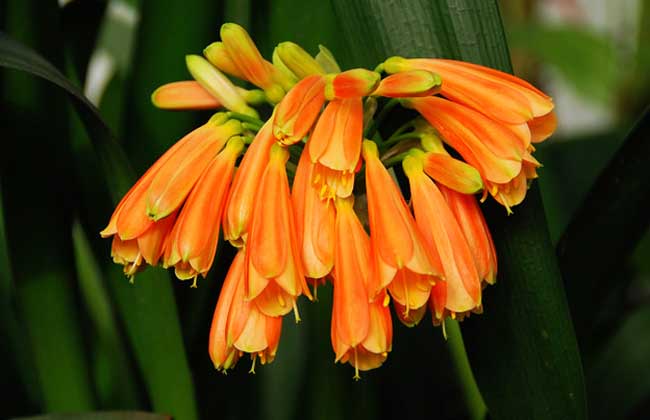
Clivia nobilis is a plant of the genus Clivia in the Amaryllidaceae family, distributed in southern Africa as well as in Hubei Province and other places in mainland China. It has already been introduced and cultivated artificially. Its leaves are narrow and long, and its flower stems are slightly shorter than the leaves. Its orange-yellow flowers hang downward in a barrel shape when in bloom. It is a potted flower used to decorate conference venues, adorn hotels, and beautify home environments during the Spring Festival. Let us take a look together at the cultivation methods of Clivia nobilis!
Growth Habits of Clivia nobilis
Clivia nobilis is native to southern Africa and has been introduced and cultivated in China for ornamental purposes. It prefers a warm and cool environment, requires ample sunlight in winter, and needs slight shading in summer. It requires loose, fertile leaf mold soil. When the indoor temperature drops below 5°C in winter, growth stops, or when it exceeds 30°C in summer, the flowering period is short and the color is pale. It requires air humidity of 70-80% and soil moisture content of 20-30%. Excessive soil moisture easily causes root rot.
Propagation Methods of Clivia nobilis
1. Division: For propagation by division of Clivia nobilis, after flowering each spring, the offset plants beside the mother plant are removed and replanted separately. If the offset has no fleshy roots, it can first be inserted into sand and potted after rooting.
2. Sowing: For propagation by sowing of Clivia nobilis, sow seeds indoors in pots in winter. The room temperature must be above 20°C, otherwise the seeds easily rot. They germinate 20-25 days after sowing, and seedlings grown from seed take 4-5 years to flower.
Cultivation Methods of Clivia nobilis
1. Soil: Clivia nobilis is suitable for soil rich in humus. This kind of soil has good air permeability, good water permeability, and is fertile with a slightly acidic pH of 6.5. Mixing about 20% sand grains into the leaf mold soil is beneficial for root development. When cultivating, the pot size should gradually increase as the plant grows. For cultivating one-year-old seedlings, a 3-inch pot is suitable. In the second year, switch to a 5-inch pot, and thereafter repot into a pot one size larger every 1-2 years. Repotting can be done in spring and autumn.
2. Fertilizing: Clivia nobilis likes fertilizer, but too much fertilizer can cause root rot. In addition to applying base fertilizer, topdressing should follow the method of “light fertilizer applied frequently.” Apply base fertilizer when repotting. In spring and autumn, apply fermented solid fertilizer once a month, and also apply liquid fertilizer once a week. It is best not to topdress, and the whole plant can rely on the nutrients accumulated in spring and autumn to grow slowly.
3. Light: Throughout the cultivation process of Clivia nobilis, try not to let the plant receive direct sunlight. About four hours a day under scattered sunlight is sufficient. Too strong light will make the leaves narrower. In summer, avoid high temperatures and direct sunlight, and place it in an environment with higher air humidity and shade, paying attention to ventilation. It is afraid of cold, so it should be moved indoors and placed in a well-lit position. It can overwinter safely at a room temperature of about 5°C.
4. Temperature: The suitable temperature for Clivia nobilis is 15-20°C. When it is above 25°C, the plant grows poorly, often with leggy leaves, affecting flower bud differentiation. At this time, pay attention to ventilation and cooling. When it is below 10°C, growth slows down. When it drops below 0°C, the plant will freeze to death. In summer, pay attention to cooling, which can promote flower bud differentiation. A large temperature difference between day and night is beneficial to the growth of Clivia, generally 6-10°C is suitable.
5. Watering: Potted Clivia nobilis should not be watered too much; keeping it moist is enough. From May to June during the plum rain season, prevent rain from washing over it, so as to avoid root and leaf diseases and rot. During the high-temperature period in summer, pay attention to spraying water to lower the temperature. In autumn, topdress appropriately to promote leaf growth. In winter, increase warmth and keep the soil moist, which is beneficial for flowering.
Pest and Disease Control of Clivia nobilis
1. Blight: Blight of Clivia nobilis mainly harms the leaves. Initially, light reddish-brown elliptical elongated spots appear, with a clear boundary between diseased and healthy tissue, and the surrounding tissue turns yellow. Remove diseased leaves promptly when found, appropriately increase potassium fertilizer, avoid excessive watering and water accumulation on leaves, and spray 50% carbendazim wettable powder at 1000 times dilution in the early stage of the disease.
2. Root rot: During the cultivation of Clivia nobilis, tools and substrate must be strictly sterilized. In the early stage of the disease, irrigate the roots with 400-600 micrograms/liter of penicillin and streptomycin. In severe cases, cut off all the rotten parts, soak the remaining parts in potassium permanganate solution for 1 hour, then wash them clean with water and replant.
3. Scale insects: For scale insect damage on Clivia nobilis, manual control can be used. Use bamboo sticks, small wooden sticks, small soft brushes, etc. to gently brush off the insects and sooty mold, then wash clean with water. During the nymph stage, spray jiemanling emulsion at 40-100 times dilution.