How to grow a Japanese red pine bonsai? Detailed growing methods
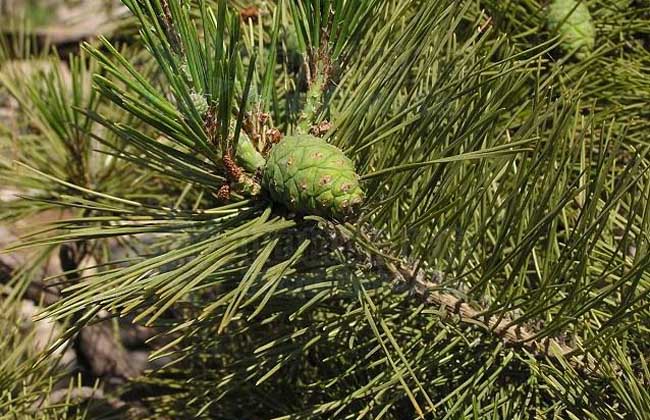
The Japanese red pine is also known as Japanese red pine, gray-fruited red pine, short-leaved red pine, etc. It is a tall tree of the genus Pinus in the family Pinaceae, with very high ornamental value. It is suitable for planting alone on both sides of gate entrances or beside paths and on lawns, and is often paired with red maple and laceleaf Japanese maple, with luxuriant leaves and green branches setting each other off beautifully. It is also an excellent tree for stump bonsai. Let us take a look together at the growing methods for Japanese red pine bonsai!
Ecological habits of the Japanese red pine
The Japanese red pine is a deep-rooted light-demanding tree species with strong wind resistance. It grows in temperate coastal mountainous areas and plains, with annual rainfall of more than 800 mm. It is more cold-tolerant than Masson pine and can tolerate poor soil. It can grow in neutral or acidic soil (pH 5-6) mountainous areas formed from weathered granite, gneiss and sandstone. It is not tolerant of saline-alkaline soil, and grows poorly on heavy clay loam with poor aeration.
Cultivated varieties of the Japanese red pine
1. Globe-crowned Japanese red pine: the trunk is short and small, branches cluster from the base and extend straight upward to form a spherical crown, and the leaves are relatively short and dense. It is often cultivated as a bonsai for ornamental purposes.
2. Umbrella-shaped Japanese red pine: a clustered large shrub, up to 4 m tall, with most trunks clustering upward from the base to form an umbrella-shaped crown. It is cultivated in Nanjing, Suzhou, Shanghai, Hangzhou and other places in China, and is a beautiful ornamental tree with very vigorous growth.
Propagation methods for the Japanese red pine
1. Sowing: collect seeds in October, expose the cones to the sun for several days and turn them frequently; when the cone scales crack open, the seeds come out on their own. After cleaning, store them dry, and sow in February to March by broadcasting or drilling. After sowing, cover with sifted yellow subsoil or burnt mud ash, just enough to hide the seeds, then cover with rice straw and keep the soil moist. Seedlings emerge in mid-April, and the straw should be removed in time. Before and after sowing, special attention should be paid to preventing damping-off and other diseases and pests. The following spring, they can be divided and planted for afforestation.
2. Grafting: for Japanese red pine grafting, black pine is used as the rootstock. Select robust 1-year-old branches as scions, and use the side grafting method from mid-to-late February to early March. After grafting, mound soil up to the top of the scion, and spray a little water in dry weather to prevent the scion from withering. After survival, gradually remove the branches and leaves of the rootstock. By mid-to-late October, all branches and leaves of the rootstock can be cut off, but some can also be left until the following year to cut. Weeping Japanese red pine can use the high grafting method, which grows quickly and takes shape early, but 5-6-year-old rootstocks should be selected.
Growing methods for the Japanese red pine
1. Watering: the Japanese red pine likes dryness and hates waterlogging, so watering must not be excessive. Water only when the soil is dry, and water thoroughly when watering. Properly controlling water during the growing period can make the branches and trunk thick and short and the needles short and small, adding ornamental value. During high summer temperatures, water can often be sprayed on the leaf surface, which is beneficial to growth.
2. Fertilizing: the Japanese red pine tolerates barren conditions and can still grow normally when the soil lacks fertilizer, and this also promotes a short trunk, dense branches and short leaves. However, properly applying 1-2 times of thin, well-rotted cake fertilizer water during the growing period is beneficial to healthy growth and increases resistance to diseases and pests.
3. Pruning: to maintain its beautiful and elegant tree shape, Japanese red pine bonsai needs proper pruning. During the growing period, pruning is mainly by bud pinching, 3-4 times each year. When new buds elongate but have not yet produced needles, about 1/2 of each terminal bud can be pinched off. If the bonsai does not need to increase branches, all terminal buds can be pinched off. For branches that affect the beauty of the tree shape, prune during the dormant period.
4. Repotting: Japanese red pine bonsai is generally repotted once every 3-5 years, preferably in February to March. When repotting, keep the original pot soil intact and remove it from the pot, remove 1/2 of the old soil, cut off overly long roots as well as dead and rotten roots, and at the same time prune some unnecessary branches and leaves to maintain balance between the upper and lower parts of the pot soil. If the original pot capacity is insufficient, replace it with a slightly larger new pot. The planting method is the same as for potting.