What are the cultivation methods for Brazilian cacti?
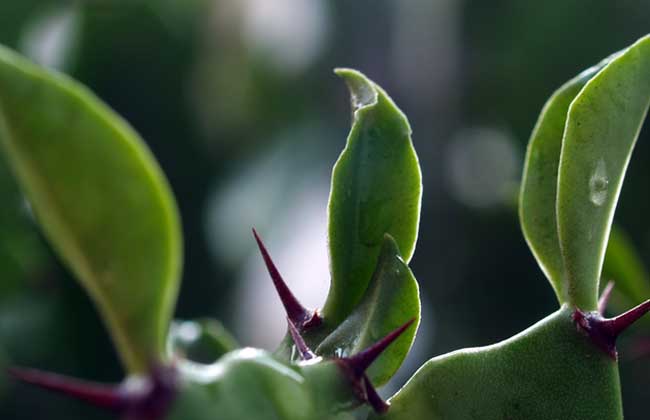
Brazilian cactus is a succulent plant of the genus Euphorbia in the family Euphorbiaceae, native to Brazil. It belongs to a type of cactus and is considered rather unusual from an ornamental perspective, because its leaves are very small and it does not bloom frequently, so strictly speaking it is actually a plant prized for its subjective "stems," with ornamental value similar to that of the pencil cactus. Let us take a look at the cultivation methods for Brazilian cacti below!
Ecological Habits of Brazilian Cacti
The Brazilian cactus plant has a triangular shape, is much branched, blue-green, 4 m to 5 m tall, with very short small spines on the ridge edges. It blooms white flowers in summer, 4 to 9 flowers, clustered on the upper areoles, opening by day and closing at night (potted plants generally do not bloom easily). The berry is small and round, blue-purple, and edible. It likes plenty of sunlight, is not cold-tolerant, but is drought-tolerant, and prefers dry loamy soil. It needs plenty of sunlight; the branches are blue-green, and the leaves resemble fish scales, glistening in the sunlight, with numerous bodies standing in a forest, like peaks and sharp swords, very spectacular.
Landscape Uses of Brazilian Cacti
1. Brazilian cactus is suitable for decorating homes and office environments, playing a good role in beautifying the environment and purifying the air. In the north, it should be kept indoors in pots during winter; in the south, it can be planted in the open ground, and can also be used as a fence, serving as both a green barrier and a way to beautify the courtyard, and in summer you can also enjoy the floral fragrance and fruit.
2. Brazilian cactus is known as the "universal rootstock." Using the cactus column as rootstock, it can be grafted with crown of thorns and Christmas cactus, producing exotic flowers and unusual plants in a variety of forms. The cactus column needs plenty of sunlight; the branches are blue-green, and the leaves resemble fish scales, glistening in the sunlight, with numerous bodies standing in a forest, like peaks and sharp swords, very spectacular, making it an excellent choice for potted flowers.
Propagation Methods for Brazilian Cacti
1. Cutting method: Brazilian cactus is a succulent plant. When cutting, a milky sap will flow out; it can be sealed with plant ash, then placed in a cool spot for 7 days to 10 days, and cuttings can be taken after the plant has shriveled. One way is to cut the cactus column into sections for cuttings, with both the upper and lower cuts sealed with plant ash, and the cutting length should be 20 cm to 25 cm. Another way is to use branches taken from the cactus column, which can be cut after drying; however, cuttings that are too small and tender do not root easily. This kind of cutting only has a small wound at the rooting site, and roots form quickly.
2. Cutting management: The cutting medium for Brazilian cactus should use vermiculite, perlite granules, and pure river sand, without mixing in soil. You can take cuttings as a single plant, or take multiple cuttings together in a concentrated way. After cutting, water only up to the cut edge of the cutting, and place it in a sunny spot. During the rooting period, water as little as possible, and do not water until dry. After 30 days to 40 days, roots will form.
Cultivation Methods for Brazilian Cacti
1. Soil: For potted care of Brazilian cactus, soil should first be prepared. It is recommended to choose soil with low clay content, mainly sandy soil. This kind of soil has good drainage, matching the plant's fear of cold and fear of water, while the loose spaces in sandy soil are more conducive to root respiration, giving the plant a higher survival rate.
2. Watering: Whether Brazilian cactus is watered correctly will directly affect the plant's survival. Daily watering should follow the method of watering when dry, keeping soil moisture at about 30%, and avoiding making the soil sticky, otherwise it will directly cause root rot. During the growing period, potted Brazilian cactus should be watered twice a week; for Brazilian cactus over one year old, watering should be kept to once every two days in spring and autumn, while in summer it should be once a day, and the leaf surface needs to be sprayed with clean water; in winter it can be controlled to once a week.
3. Temperature: In terms of temperature control, Brazilian cactus focuses on choosing the growing environment, so it is recommended to grow it mainly on a balcony, placing it in a spot with as much light as possible. The suitable temperature range is between 20 and 40°C.
4. Fertilizing: During the growing period of Brazilian cactus, it is recommended to choose organic fertilizer, and after the growing period it is recommended to choose a special fertilizer, mainly potassium fertilizer, nitrogen fertilizer, and flower fertilizer, but the fertilizer should be diluted, and its concentration must not be too high, otherwise root rot will occur.
5. Pruning: Brazilian cactus has good form, and does not need much pruning. Every two months, the newly sprouted tender buds should be removed, or they can be directly used for grafting propagation. When pruning, avoid directly causing large wounds on the plant, otherwise it will be difficult to heal. After each pruning, a small amount of nutrient solution can be sprayed.
6. Repotting: Brazilian cactus plants are relatively tall, so the soil should be changed once every year, and the pot should be changed once every two years. When changing the soil, you can mix half old soil and half new soil, which gives a higher rooting rate.
Note: The fleshy stems of Brazilian cactus have sharp spines, and the white milky sap in the stems is toxic, especially it must not get into the eyes. Therefore, in home cultivation, special attention should be paid to placing it appropriately, to avoid children and the elderly being pricked or poisoned. The sap of the cactus is toxic; as long as the branches and leaves are not broken, the milky white sap will not flow out. If you accidentally touch it, be sure to wash your hands immediately, and never put it in your mouth, because someone tried it, and shortly after putting it in the mouth, the mouth went numb.