Detailed Explanation of the Key Cultivation Techniques for Kousa Dogwood
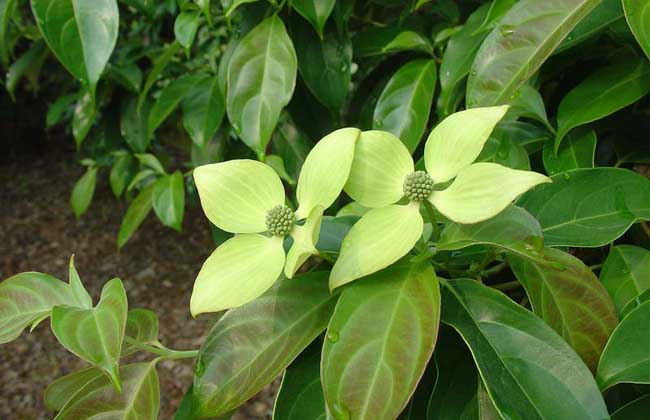
Kousa dogwood (Cornus kousa) is an extremely beautiful garden ornamental prized for its flowers, foliage, and fruit, and an excellent choice for landscaping. Also known as shizao, yangmei, and mountain lychee, it is a deciduous tree in the genus Cornus of the family Cornaceae. It gets its name from the two pairs of large yellow-white petal-like bracts surrounding each flower head, which shine in all directions. The tree has a handsome, neat form, and the showy bracts are highly ornamental. Let us take a look at the cultivation techniques for kousa dogwood below!
Growth Habits of Kousa Dogwood
Kousa dogwood prefers a warm climate and a shady, humid environment, and thrives in fertile, well-drained soil. It is highly adaptable and can tolerate a certain degree of cold, drought, and poor soil. It likes light but also tolerates partial shade, prefers a warm climate and a shady, humid environment, and does best in fertile, well-drained sandy soil. It tolerates low temperatures down to -15 degrees C and can be planted outdoors in the Jiangnan region, though leaf tips tend to dry out in summer.
Propagation Methods for Kousa Dogwood
1. Division: Propagate kousa dogwood by division in late spring when buds sprout or after leaf fall in winter. Separate the small plantlets growing at the base of the plant and transplant them for establishment.
2. Cuttage: Propagate kousa dogwood by cuttings during the growing season. From March to April, select 1- or 2-year-old branches, cut them into 5-6 cm lengths, and insert them into pure sand or sandy soil. Cover with a shade net and maintain humidity; roots will form in about 50 days.
3. Sowing: Soak kousa dogwood seeds in warm water 20 days before sowing to promote germination. Sow early in spring; germination occurs 3 months after sowing. Strengthen field management during the seedling stage, paying attention to timely watering, loosening the soil, weeding, and fertilizing to promote root growth.
Cultivation Techniques for Kousa Dogwood
1. Site preparation: When planting kousa dogwood in urban green spaces such as parks and courtyards, choose a wind-sheltered, sunny, warm, and humid location for block planting, and prepare the site in autumn or the following spring. For planting "around the four sides" (beside houses, roads, water, and villages), prepare the site and plant at the same time. For mountain planting, choose the middle-lower part of a semi-sunny slope, with loose, deep sandy loam or loam being best.
2. Planting: Kousa dogwood can be planted in both spring and autumn. In spring, plant before buds break; in autumn, plant after leaf fall. When planting seedlings, it is best to keep the root ball intact. Mound the soil 1-2 cm above the root collar, let the roots spread out naturally, hold the plant upright, and firm the soil. For block planting, the row spacing should be 3 x 4 (unit unclear in source).
3. Fertilizer and water: For 2-3 years after planting kousa dogwood, loosen the soil and hoe weeds 2-3 times each year. Each year before flowering, budding, and fruiting, loosen the soil, apply topdressing, and water according to tree size. Fertilize regularly 3-4 times a year and water 5-6 times a year; this promotes healthy growth, a longer flowering period, and larger, more beautiful flowers.
4. Pruning: Prune kousa dogwood generally after leaf fall in winter or before buds break in spring each year, following the principle of even branch distribution and robust growth. Pruning mainly involves heading back the branches, and secondly removing dead branches, diseased and pest-infested branches, inward-growing branches, weak branches, and poorly growing branches. In addition, gradually remove the basal branches during growth and head back the central leader to enhance upward growth. Because kousa dogwood has poor sprouting ability, heavy pruning should be avoided; simply maintain a rounded, umbrella-shaped form.
Pest and Disease Control for Kousa Dogwood
1. Angular leaf spot: Angular leaf spot mainly harms the leaves of kousa dogwood. In May, spray 1:2:200 Bordeaux mixture 3 times consecutively at 10-15 day intervals, or in the early stages of the disease, spray 2-3 times consecutively with 5% wettable thiophanate at 800-1000 times dilution and 75% chlorothalonil wettable powder at 500-8020 times dilution, at 7-10 day intervals.
2. Moths: The main moths harming kousa dogwood are nettle moths and bagworms, which chew the leaves and tender branches. Use 90% trichlorfon at 1000 times dilution or 50% phoxim at 1000 times dilution for timely control.
3. Aphids: Aphids mainly harm the tender leaves, shoot tips, flowers, and young buds of kousa dogwood. Use 40% dimethoate emulsion at 1500 times dilution, 70% wettable mieyaling powder at 800-1000 times dilution, or 50% wettable kangya powder or 50% pirimicarb aqueous solution at 1000-2000 times dilution for spraying.