Detailed Guide to Growing Cleome: Even Beginners Can Learn
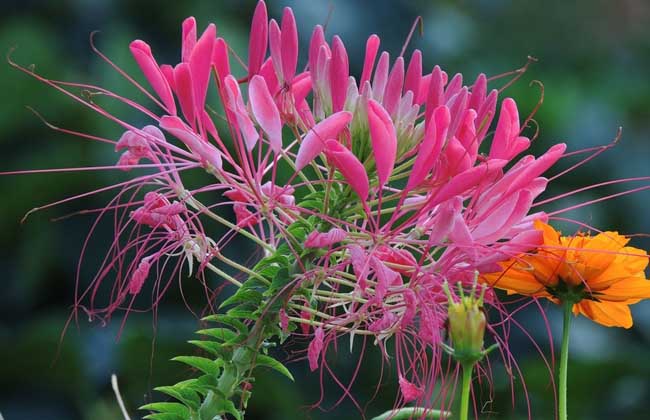
Cleome, also known as spider flower, purple dragon whiskers, spider plant, and so on, is an annual or biennial herbaceous plant of the genus Cleome in the Cleomaceae family. It is native to tropical America and is cultivated worldwide from the tropics to temperate zones for ornamental purposes. There are no wild populations in China, and it is commonly cultivated in major cities. It can be used to arrange flower beds and flower borders in summer and autumn, and can also be dwarfed for potted ornamental display. Now let us take a look at how to grow cleome!
Cleome's Growth Habits
Cleome has strong adaptability. It prefers high temperatures, is relatively tolerant of summer heat, and dislikes cold. It likes sunny locations, and can also grow well in semi-shaded spots. It is not demanding about soil. In fertile ground with sufficient water and fertilizer, the plants grow tall; ordinary soil with medium fertility can also support good growth; however, it grows poorly in sandy loam, somewhat heavy clay soil, or alkaline soil. It likes moist soil and is also relatively tolerant of drought, but dislikes waterlogging.
Cleome Propagation Methods
1. Sowing: For cleome propagation by sowing, sow the seeds in an open-field seedbed in mid-April, and seedlings emerge uniformly. The seedlings grow slowly, so thinning should be done promptly after sowing. Transplant when they have 2 to 3 true leaves. Plant out or pot up in June. During the growing period, apply fertilizer once every half month. If too much fertilizer is applied, the plants tend to grow leggy, affecting plant form and flowering. Generally, those sown in spring bloom in autumn, while those sown in autumn bloom indoors in winter and spring.
2. Cuttings: For cleome cuttings, use nutrient soil, river sand, peat soil, or similar materials. The optimal temperature for cutting roots to take is 18 to 25°C. Below 18°C, the relative air humidity must be kept at 75 to 85%. Humidity can be increased by misting the cuttings, and 50 to 80% of sunlight must be shaded out. After the root system develops, gradually remove the shade netting.
How to Grow Cleome
1. Soil: Cleome does not need special soil; preferably, use a well-drained sandy soil containing humus. Its root system is relatively developed, so use a somewhat deeper and larger pot, with a pot diameter of 20 cm to 30 cm being ideal. Apart from growing poorly in alkaline soil, it can grow in sandy soil and clay soil, and grows best in slightly acidic sandy loam. You can use equal parts leaf mold and vegetable garden soil mixed as the growing medium, requiring loose soil with good drainage.
2. Potting: When potting cleome seedlings, first place a 2 to 2 cm thick layer of coarse-grained substrate or ceramsite at the bottom of the pot as a drainage layer. On top of that, sprinkle a layer of fully decomposed organic fertilizer as base fertilizer, about 1 to 1 cm thick, then cover with another layer of substrate about 1 to 1 cm thick. Then place the plant in, so as to separate the fertilizer from the roots and avoid burning the roots.
3. Fertilizing: When transplanting cleome seedlings, first dig the planting hole, sprinkle a layer of organic fertilizer at the bottom of the planting hole as base fertilizer, about 4 to 6 cm thick, then cover with a layer of soil and place the seedling in, so as to separate the fertilizer from the roots and avoid burning the roots. After placing the seedling in, backfill the soil to cover the root system, firm the soil with your foot, and water thoroughly once. Apply a light fertilizer once at the initial planting stage.
4. Pinching: Before cleome blooms, generally pinch twice to encourage more flowering branches to sprout. One to two weeks after potting, or when the seedlings are 6 to 10 cm tall and have six or more leaves, remove the top shoot and keep the lower 3 to 4 leaves to encourage branching. Three to 5 weeks after the first pinching, or when the side branches grow to 6 to 8 cm long, carry out the second pinching, that is, remove the top shoots of the side branches and keep the 4 leaves below on the side branches.
5. Watering: Cleome can tolerate drought, but it grows better with higher air humidity. In midsummer, water daily and water thoroughly. It likes higher air humidity; if the air humidity is too low, individual flowers will fade faster. It also fears rain, and the leaves need to stay dry at night. The optimal relative air humidity is 65 to 75%.
6. Pests and Diseases: Cleome is often harmed by leaf spot disease and rust disease. For leaf spot disease, spray with a 500-fold dilution of 50% thiophanate wettable powder; for rust disease, spray with a 3000-fold dilution of 50% carboxin wettable powder for control. Cleome is prone to Lepidoptera pests at the seedling stage, and the insecticide abamectin at a 4000-fold dilution can be sprayed on the leaves.