How to grow Sempervivum arachnoideum 'Rubrum' (Chih Lian Hua) so it thrives
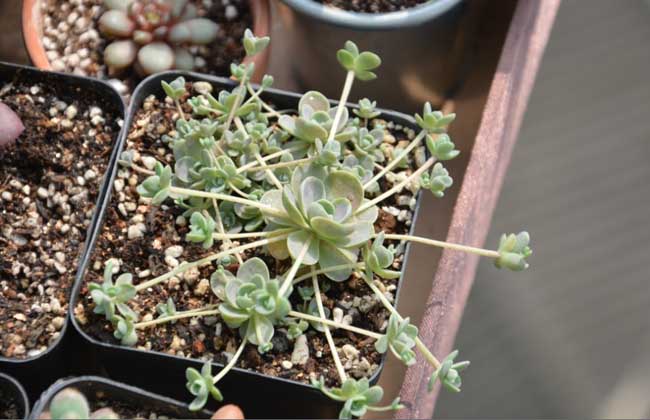
Chih Lian Hua is a succulent plant of the genus Orostachys in the Crassulaceae family, native to Hokkaido, Japan. Its leaf shape and color are quite beautiful and it has some ornamental value. Potted plants should not be placed next to computers or televisions, and it does not have the function of resisting radiation. Growing it indoors will cause Chih Lian Hua to become leggy, so please place it in an environment with abundant sunlight. Now let us take a look at how to grow Chih Lian Hua well!
The growth habits of Chih Lian Hua
Chih Lian Hua has strong habits, likes light, is cold-tolerant, and also tolerates moisture. It begins to go dormant after summer temperatures exceed 30 degrees. It grows rapidly in spring, summer, and autumn, yet its appearance is not attractive; it only reaches its best ornamental effect when in a dormant state. It can survive in severe cold, and as long as the winter does not drop below minus 28 degrees, it can overwinter safely.
Propagation methods of Chih Lian Hua
Chih Lian Hua is mainly propagated by cuttings. During the growing season, simply pull off the small offsets of Chih Lian Hua and place them on the soil surface, and they will quickly take root. Of course, the offsets should be slightly larger, as this makes success easier. Single leaves can also be propagated; after the leaf grows larger and falls onto the soil, with sufficient moisture it can also take root and grow into a new plant.
How to grow Chih Lian Hua well?
1. Soil: For Chih Lian Hua, the soil generally used is peat mixed with perlite and pumice added, in a ratio of 1:1:1. In order to isolate the plant from contact with the soil surface and also for better air permeability, clean granular river sand can be spread on top, with a river sand size of 3 to 5 mm and a sand layer thickness of about 5 mm.
2. Light: Chih Lian Hua is a light-loving plant, especially during the growing period, and full-day sunlight is best. During the dormancy period, however, shading should be provided to prevent prematurely breaking the dormancy period.
3. Water: For watering Chih Lian Hua, generally water thoroughly only when the soil is completely dry; if it is not dry, do not water. In the hot summer, generally water 4 to 5 times per month, without watering thoroughly, to maintain the plant's normal growth. Watering too much in summer makes it prone to rot. In winter, when the temperature is below 5 degrees, watering should be gradually stopped. Below 3 degrees, keep the potting soil dry, and try to keep it no lower than minus 20 degrees.
4. Pests and diseases: Chih Lian Hua rarely gets sick, but attention must be paid to insects, especially root mealybugs, because from the appearance alone it is impossible to tell whether there are root mealybugs. When root mealybugs are found, the infested plant must be thrown away, and the pot and soil must all be thrown away, then re-propagated by cuttings; otherwise it will affect other healthy plants.