How to grow and care for Graptopetalum paraguayense (moonstone succulent)
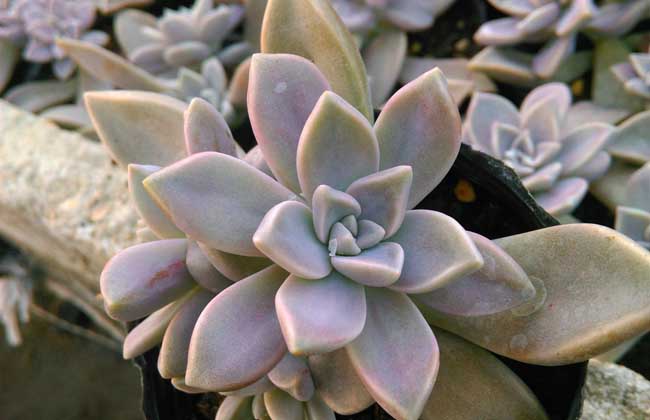
Graptopetalum paraguayense is one of the succulent plants introduced to China relatively early. Also known as jewel plant and stone lotus, it is a perennial evergreen subshrub in the genus Graptopetalum of the family Crassulaceae. Its plant form is relatively loose compared with other species in the same genus. Because of its strong vitality, fast growth and easy propagation, it is widely cultivated throughout China. Let us take a look at how to grow Graptopetalum paraguayense!
Growing habits of Graptopetalum paraguayense
Graptopetalum paraguayense likes plenty of sunlight, dislikes waterlogging and tolerates poor soil. It is best grown in well-drained sandy loam. Long-term insufficient light will cause the stem nodes to elongate and the leaves to become small and sparse, losing their ornamental value. In the spring and summer growing seasons, watering once to twice a week is sufficient. In autumn and winter, the amount of watering should be controlled according to the temperature of the growing environment. When the temperature is above 15°C, water once every two weeks; when it is below 10°C, keep the potting soil dry and basically stop watering.
Propagation methods of Graptopetalum paraguayense
Graptopetalum paraguayense is mostly propagated by cuttings. In the growing season, stem cuttings can be taken along with pruning, and leaf cuttings can also be used. Place the leaves flat on moist plain sandy soil, and after two weeks multiple adventitious buds and adventitious roots can be seen differentiating near the leaf veins at the base of the leaves. When doing leaf cuttings, the cutting bed should not be too wet, otherwise the leaves rot easily.
How to grow Graptopetalum paraguayense
1. Light: The more sufficient the light and the greater the temperature difference between day and night, the brighter and more lustrous the leaf color. When the temperature is suitable, it is best to place it outdoors for care to ensure sufficient light. When light is insufficient or the soil is too moist, it grows leggy: the whole plant becomes dull and green, the leaves become sparse and the spacing between them elongates, and upward growth accelerates, seriously affecting its ornamental value and possibly even causing death because the plant's photosynthesis is hindered.
2. Water: Because the plant has a high internal water content, Graptopetalum paraguayense rots easily in overly humid environments. Never water too much. To avoid water accumulating at the roots, it is best to choose a pot with drainage holes at the bottom. Beginners can use red clay pots with good breathability; glass containers absorb heat and have poor breathability, so use them with caution. Water about once every 10 days, and just water thoroughly each time. The watering frequency can be increased or decreased as appropriate according to climate differences in different regions and seasons.
3. Soil: It is best to grow it in sandy soil with good drainage and breathability, so as to facilitate the removal of excess water and the growth of the plant's roots. It can be prepared with 1 part pine needle soil, 1 part vermiculite, 1 part leaf mold and 1 part sandy soil. Repot once every 1 to 2 years in spring. Dead old roots and excessively lignified stems can be cut off to avoid affecting the plant's normal growth and water absorption.
4. Temperature: Under normal circumstances, growth stops or slight frost damage occurs below 5°C, and at 0°C and below the water in the leaves freezes and the cells die. When the temperature is too high (above 35°C) or too low (below 5°C) in winter and summer, the plant stops growing. At this time, watering should be temporarily reduced or stopped, and the watering frequency should be resumed once the temperature is suitable. In summer when temperatures are high, pay attention to ventilation and prevent long periods of direct sun exposure to avoid sunburn.
5. Pruning: Remove dried old leaves promptly to prevent them from piling up and causing bacteria to breed. When the plant grows leggy or too tall, you can prune the top branches and leaves to shape it and control the plant height, so as to maintain a beautiful plant form. The cut top parts can be dried at the wound and then inserted into slightly moist sandy potting soil to take root and become new plants. The stems and branches at the bottom can sprout more side shoots.